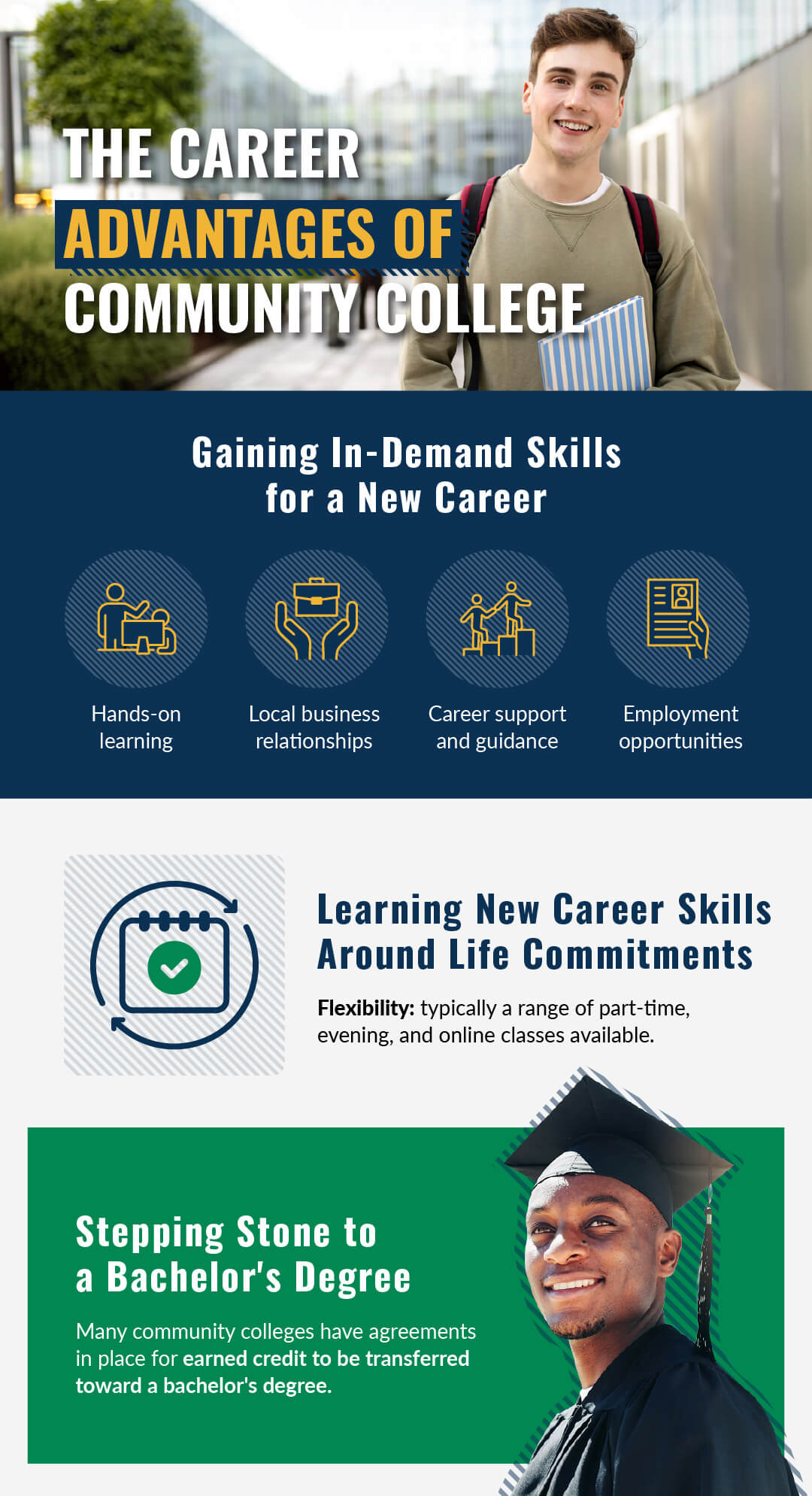
Choosing the right college is an important decision for students who want to continue their education, develop professional skills, and prepare for a successful career. However, attending a traditional four-year university is not the only way to achieve these goals. In the United States, community colleges provide an alternative that can make higher education more accessible, flexible, and affordable.
Understanding how community colleges work can help students decide whether this educational pathway fits their academic goals, financial situation, and future career plans. Community colleges offer associate degrees, professional certificates, technical training, and opportunities to transfer credits toward a bachelor’s degree.
For some students, a community college is a practical starting point before university. Others attend to gain job-ready skills, change careers, or complete additional education while working.
This guide explains what community colleges are, how admission and classes work, what programs they offer, how much they may cost, and how students can use them to prepare for further education or employment.
What Is a Community College?
A community college is an institution of higher education that generally offers two-year academic programs, associate degrees, certificates, and career-focused training. Most U.S. community colleges are publicly funded and serve students from surrounding communities, although their programs and admission policies vary.
Unlike many traditional universities, community colleges often provide several educational pathways within the same institution. Students can complete general education courses, study a technical subject, prepare for a particular occupation, or begin coursework toward a bachelor’s degree.
Common areas of study include:
- Business administration and accounting.
- Computer science and information technology.
- Healthcare and health-related programs.
- Engineering technology and skilled trades.
- Psychology and social sciences.
- Liberal arts and general studies.
- Early childhood education and other career-focused fields.
Many community colleges also offer evening classes, part-time enrollment, online courses, tutoring, and academic advising.
Although they are often associated with two-year education, some community colleges also offer bachelor’s degrees in selected fields. Program availability depends on the institution and applicable state policies.
Community colleges are particularly useful for students who want to explore their academic interests before committing to a longer or more specialized degree program.
How Do Community Colleges Work?
Community colleges operate through structured academic programs, admission procedures, course requirements, and graduation standards. Students select a program, register for the required classes, complete assignments and examinations, and earn credits toward a certificate or degree.
The exact process depends on whether a student is pursuing an associate degree, technical certificate, transfer program, or another qualification.
Here is how the process generally works in the United States.
1. Choose a Program of Study
The first step is selecting a program that matches your educational interests and career goals.
For example, a student interested in technology might choose information technology or computer science. Someone interested in business could study accounting, marketing, or business administration.
If you intend to transfer to a four-year university, look for a program designed around transferable academic credits.
Review the curriculum, admission requirements, course prerequisites, program duration, and available career services before applying.
2. Apply for Admission
Many community colleges have more accessible admission policies than selective four-year universities. Some use open-admission policies for eligible applicants, while specific programs may have additional academic requirements.
Students generally submit an application and provide the documents requested by the institution. Depending on the program, they may need academic transcripts, proof of previous education, placement assessments, or evidence of English proficiency.
International students may have additional requirements involving financial documentation, immigration status, and approved student enrollment.
Always check the college’s official admissions website because admission rules differ between institutions and programs.
3. Register for Classes
After admission, students work with an academic advisor or use the college’s registration system to choose courses.
Each course normally has a credit value, and students must complete the required number and type of credits to graduate.
A typical associate degree in the United States requires around 60 semester credits, although the exact requirement varies. Students pursuing technical programs or particular qualifications may follow different course structures.
Academic advisors can help students select the right classes, understand prerequisites, and avoid taking courses that do not count toward their intended degree.
4. Attend Classes and Complete Coursework
Community college classes may include lectures, laboratory sessions, workshops, practical training, online activities, group assignments, and examinations.
Students are expected to complete readings, assignments, projects, and assessments according to the course requirements.
Some programs emphasize academic study, while others include practical experience or supervised training.
For example, an information technology program may combine classroom instruction with computer laboratory exercises. A healthcare-related program may require specific clinical placements or practical competencies.
5. Earn Credits and Complete Graduation Requirements
Students earn academic credits by successfully completing courses. These credits count toward their selected degree or certificate when they satisfy the program requirements.
To graduate, students must complete the required courses, maintain any necessary academic standing, and meet the institution’s graduation rules.
Students who plan to transfer to a university should confirm that their credits will be accepted by the receiving institution.
Understanding this process early can help students make better academic decisions and avoid unnecessary delays.
What Degrees and Programs Do Community Colleges Offer?
Community colleges provide several educational pathways, allowing students to choose between academic study, professional training, and further education.
Associate Degrees
An associate degree typically takes about two years of full-time study in the United States.
Common examples include:
- Associate of Arts (AA).
- Associate of Science (AS).
- Associate of Applied Science (AAS).
Associate of Arts and Associate of Science programs often include general education and courses intended to support transfer to a bachelor’s degree. Associate of Applied Science programs usually emphasize career preparation, although transfer options vary.
Certificate Programs
Certificates focus on particular skills or subject areas. Depending on the program, they may take less than two years to complete.
Students may pursue certificates in areas such as computer support, accounting, office administration, manufacturing, or other technical fields.
A certificate can help students develop specific competencies, but its value depends on employer recognition, course content, and the requirements of the intended occupation.
Career and Technical Training
Many community colleges offer programs designed to prepare students for particular occupations.
These may include technical training, laboratory work, practical workshops, internships, or supervised placements.
Some fields require additional professional examinations, licensing, or certification after completing the college program.
Transfer Programs
Transfer programs allow students to complete some undergraduate coursework at a community college before moving to a four-year college or university.
This can be a useful option for students who want to earn a bachelor’s degree while potentially reducing their initial education costs.
However, students should confirm transfer requirements before selecting their courses.
How Long Does Community College Take?
The time required to complete community college depends on the type of program, course load, and academic progress.
| Program type | Typical study period |
|---|---|
| Short-term certificate | Several months to about one year, depending on the program |
| Associate degree | About two years of full-time study |
| Part-time associate degree | May take three years or longer |
| Transfer pathway to a bachelor’s degree | Often about two years at community college followed by approximately two years at a university |
These are general estimates for common U.S. pathways, not guaranteed completion times.
Students may need additional time if they attend part-time, repeat courses, change majors, or encounter scheduling limitations.
Some programs have prerequisites that must be completed before students can take advanced courses. Planning a course schedule with an academic advisor can help students understand the likely graduation timeline.
How Much Does Community College Cost?
One of the main reasons students consider community colleges is affordability. Tuition at many public two-year colleges is lower than tuition at four-year institutions, although actual expenses vary considerably.
The final cost depends on the college, state, residency status, program, financial aid, and whether a student needs accommodation or transportation.
Students should calculate the total cost of attendance rather than comparing tuition alone.
Important expenses may include:
- Tuition and mandatory fees.
- Textbooks and course materials.
- Computers, software, and equipment.
- Transportation and accommodation.
- Food and everyday living expenses.
- Program-specific training or examination costs.
Some students qualify for grants, scholarships, or other financial assistance. Eligibility depends on the funding program, institution, citizenship or residency status, and other conditions.
International students should carefully review tuition rates and available funding because they may not qualify for the same financial aid as eligible domestic students.
Can You Transfer From Community College to a University?
Yes. Many students attend community college before transferring to a four-year institution to complete a bachelor’s degree.
This is often called the 2+2 pathway: students complete approximately two years of study at a community college and then continue at a university for the remaining portion of a bachelor’s degree.
For example, a student may complete general education and introductory business courses at a community college before transferring to a university business program.
This pathway can help reduce education costs, but successful transfer requires careful planning.
How the Transfer Process Works
- Choose a potential bachelor’s degree program.
- Research universities that accept transfer students.
- Review transfer admission requirements and deadlines.
- Check which community college courses satisfy the university’s requirements.
- Meet with advisors at both institutions when possible.
- Apply for transfer admission and submit the required documents.
Not every course automatically transfers. Universities may require minimum grades, specific prerequisites, or particular associate degree programs.
Some institutions have formal transfer agreements that identify which courses count toward a bachelor’s degree. These arrangements can make planning easier.
Before enrolling at a community college, ask the intended university how your credits will apply to your chosen major. This is especially important for programs with strict course sequences, such as engineering or certain science degrees.
What Are the Benefits of Attending a Community College?
Community colleges can provide several advantages for students who want an accessible and flexible route into higher education.
1. Lower Initial Education Costs
Community colleges often have lower tuition rates than four-year institutions, particularly for eligible local students.
Completing the first portion of a bachelor’s degree at a community college may reduce total costs if the credits transfer successfully.
However, students should compare the full cost of both pathways, including living expenses and any additional semesters required after transferring.
2. Flexible Study Options
Many community colleges offer full-time and part-time enrollment, evening classes, and online courses.
This flexibility can help students balance education with employment, family responsibilities, or other commitments.
Class schedules and online options vary by institution, so students should check whether the courses they need are available at suitable times.
3. Career-Focused Training
Some community college programs are designed around practical skills and local workforce needs.
Students may gain experience through laboratory work, technical workshops, internships, or supervised training.
Career-focused programs can be useful for people seeking a new occupation or additional skills, although employment outcomes depend on the program and local job market.
4. Opportunities to Explore Different Subjects
Students who are uncertain about their academic direction may use community college courses to explore several subjects.
Introductory courses can help students identify their interests before choosing a major or transferring to a university.
It is still important to work with an advisor so that exploratory courses support a realistic academic plan.
5. Academic Support Services
Many community colleges offer tutoring, academic advising, writing assistance, career counseling, and other student support services.
These resources can help students adjust to college-level work and understand their educational options.
The services available differ across institutions, so review the support options before choosing a college.
What Are the Disadvantages of Community College?
Although community college can be an excellent option, it is not the right choice for every student.
Understanding potential challenges helps you make a balanced decision.
Limited Availability of Certain Programs
Some specialized majors, research opportunities, and professional programs are more readily available at four-year universities.
Students pursuing a specific career should confirm that the community college offers suitable preparation for their intended pathway.
Transfer Credits May Not Be Accepted
Students who intend to transfer may discover that some courses do not meet the receiving university’s requirements.
This can increase the time and cost needed to complete a bachelor’s degree.
Planning courses around a recognized transfer agreement can help reduce this risk.
Different Campus Experiences
Community colleges vary in campus facilities, student activities, housing options, and extracurricular opportunities.
Some students may prefer the residential experience, research facilities, or broader campus life available at certain universities.
Others value the flexibility and local focus of a community college.
Visit campus or review student services, clubs, facilities, and learning resources to determine which environment suits you.
Career Requirements May Demand Further Education
An associate degree or certificate does not qualify graduates for every professional role.
Some careers require a bachelor’s degree, a professional license, or additional training.
Research the qualifications required for your target occupation before selecting a program.
Community College vs. Four-Year University
Community colleges and four-year universities both provide higher education, but their program structures and typical student pathways differ.
| Feature | Community College | Four-Year University |
|---|---|---|
| Common qualifications | Certificates and associate degrees; some offer bachelor’s degrees | Bachelor’s, master’s, and doctoral degrees, depending on the institution |
| Typical associate degree duration | About two years | May offer associate programs, but bachelor’s study typically takes about four years |
| Tuition | Often lower for eligible students | Varies; can be higher, especially at some institutions |
| Class structure | Varies; may include smaller classes and practical training | Varies by institution and course |
| Transfer options | Can provide a pathway to a university | Accepts eligible transfer students under its policies |
| Career preparation | Technical training and selected academic pathways | Broad undergraduate and advanced academic pathways |
Neither institution type is automatically better. The right choice depends on your budget, career requirements, preferred learning environment, and long-term education plans.
A student pursuing a profession that requires a bachelor’s degree may benefit from a direct university route or a carefully planned community college transfer pathway.
A student seeking a short-term technical qualification may prefer a suitable community college program.
How Can International Students Attend Community College in the USA?
International students may attend eligible U.S. community colleges, provided they meet the institution’s admission requirements and applicable immigration rules.
For international applicants, the process generally involves researching suitable colleges, confirming eligibility, preparing academic documents, and meeting English-language requirements where applicable.
Step 1: Research Colleges and Programs
Choose colleges that offer the subject you want to study and confirm that they accept international students.
Review tuition fees, course availability, academic requirements, and whether the program supports your future educational goals.
Step 2: Check Admission Requirements
International applicants may need academic transcripts, proof of previous education, English-language test results, and other documents requested by the institution.
Requirements vary, so follow the official application instructions for each college.
Step 3: Prepare a Financial Plan
Estimate tuition, accommodation, food, transportation, health insurance where required, and other living expenses.
Review scholarship opportunities and confirm which funding sources are available to international students.
Step 4: Understand Student Visa Requirements
Students intending to study in the United States should review the relevant student visa requirements and confirm that the college and program support the required enrollment documentation.
Do not assume that admission automatically provides permission to enter the country or work.
Consult official U.S. government immigration resources and the college’s international student office.
Step 5: Plan for Transfer if Necessary
If your goal is a bachelor’s degree, identify possible transfer universities before selecting your courses.
Ask about articulation agreements, credit transfer, minimum grades, and the university’s admission requirements.
Who Should Consider Community College?
Community college may be suitable for several types of students.
Students seeking an affordable starting point: Those who want to manage initial education costs may consider beginning at a public community college before transferring, provided the full pathway is financially and academically appropriate.
Students interested in technical careers: Career-focused certificates and associate degree programs may provide relevant training for selected occupations.
Students who want flexible schedules: Part-time and evening options can help some students combine study with other responsibilities.
Students exploring different majors: Introductory courses can help students discover their interests before committing to a bachelor’s program.
Students returning to education: Adults who want to update their skills, pursue a new career, or complete additional qualifications may find community college programs useful.
However, students should compare their individual goals with the actual courses and services available. The best pathway is the one that meets your academic requirements and prepares you for your intended next step.
How to Choose the Right Community College
Selecting a community college requires more than comparing tuition prices. Students should evaluate the quality and suitability of the program, the institution’s recognition, available support, and future opportunities.
Consider these factors before applying:
- Accreditation and recognition: Confirm that the institution is appropriately accredited or recognized for your intended educational pathway.
- Program curriculum: Review required courses, practical training, and graduation requirements.
- Transfer agreements: If you want a bachelor’s degree, confirm how your credits will transfer.
- Total cost: Compare tuition, fees, housing, transportation, and other expenses.
- Academic support: Check the availability of advising, tutoring, career counseling, and other services.
- Class schedules: Make sure the program offers courses that fit your circumstances.
- Career outcomes: Investigate internships, employer connections, and relevant graduate outcomes where reliable data are available.
Frequently Asked Questions About Community Colleges
1. How do community colleges work in the USA?
Community colleges offer academic courses, associate degrees, certificates, and career-focused training. Students apply to a program, register for courses, earn credits, and complete the requirements for their chosen qualification. Eligible students may also transfer credits to a four-year university.
2. Is community college free in the United States?
Community college is not universally free. Tuition and fees depend on the institution, state, residency status, and program. Some students qualify for grants, scholarships, or other assistance that reduces their costs.
3. How long does it take to complete community college?
An associate degree commonly takes about two years of full-time study. Shorter certificate programs may take several months, while part-time study can extend the completion time.
4. Can you transfer from community college to a university?
Yes. Many universities accept transfer students from community colleges. The number of credits accepted depends on course equivalency, grades, program requirements, and transfer agreements.
5. Is a community college degree recognized?
Recognition depends on the institution, qualification, and country in which you want to use the credential. Check the college’s accreditation or official recognition and confirm whether the qualification meets your employer’s or receiving university’s requirements.
6. Can international students attend community college?
Yes, eligible international students can attend U.S. community colleges that accept international applicants and meet applicable student enrollment requirements. Applicants should check admission criteria, financial documentation, English-language requirements, and visa rules.
7. Is community college better than a university?
Neither option is universally better. Community college may be more affordable and flexible for some students, while a four-year university may offer a more direct route to certain bachelor’s programs or specialized opportunities. Compare both options against your goals and circumstances.
8. Can you get a job after community college?
Yes, some graduates find employment after earning an associate degree or certificate. Opportunities depend on the program, occupation, practical experience, local demand, and any required licensing or certification.
Conclusion
Understanding how community colleges work can help students identify an educational pathway that matches their goals, budget, and preferred learning environment.
Community colleges offer more than a lower-cost alternative to a four-year university. They provide associate degrees, certificates, career training, academic support, and opportunities to continue toward a bachelor’s degree.
For some students, a community college is a practical starting point for higher education. For others, it provides focused training or a flexible way to develop new skills while managing other responsibilities.
Before applying, compare program requirements, tuition costs, institutional recognition, and potential career outcomes. If you plan to transfer to a university, confirm that your courses will count toward your intended bachelor’s degree.
With careful research and academic planning, community college can be a valuable step toward further education, professional development, and long-term career goals.
Leave a Reply