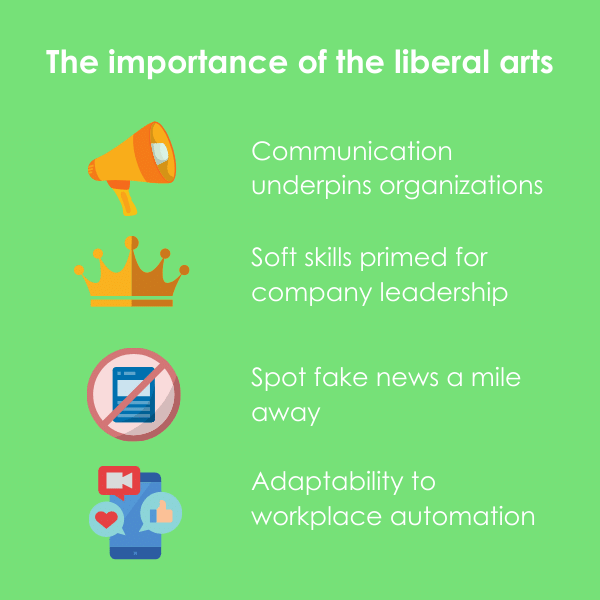
Choosing the right educational path is an important decision for students preparing for college and their future careers. While many degree programs focus on a specific profession or technical skill, a liberal arts education takes a broader approach. It encourages students to explore different subjects, understand diverse perspectives, and develop skills that can be applied in many areas of life.
The benefits of liberal arts education extend beyond academic knowledge. Students can strengthen their critical thinking, communication, creativity, research, and problem-solving abilities while learning how different subjects connect to real-world challenges.
Whether you are planning to attend college, exploring possible majors, or comparing degree options, understanding liberal arts education can help you make a more informed decision. This guide explains what liberal arts education means, its major benefits, potential career opportunities, and how to determine whether it is the right choice for you.
What Is Liberal Arts Education?
Liberal arts education is an approach to learning that combines broad academic knowledge with the development of intellectual and practical skills. Rather than concentrating exclusively on one narrow subject, students study different disciplines to understand the world from multiple perspectives.
These disciplines commonly include the humanities, social sciences, natural sciences, mathematics, and the arts. Depending on the college and degree program, students may also explore technology, languages, economics, history, literature, philosophy, and environmental studies.
For example, a student studying economics might also take courses in history, writing, statistics, and political science. This combination helps students understand not only economic principles but also the social, historical, and cultural factors that influence economic decisions.
Liberal arts education does not mean avoiding specialization. Many students choose a major while completing courses in other fields. The goal is to develop both subject-specific knowledge and transferable skills that remain useful across different situations.
Why Does Liberal Arts Education Matter?
Modern society presents challenges that often require more than technical knowledge alone. Professionals must communicate effectively, evaluate information, collaborate with others, and adapt to changing circumstances.
A liberal arts education encourages students to examine problems from different angles and connect ideas across academic disciplines. These abilities can support professional development, informed decision-making, and lifelong learning.
For example, a healthcare professional needs scientific knowledge but may also benefit from communication skills and an understanding of human behavior. Similarly, a business professional may use financial analysis alongside knowledge of culture, ethics, and consumer psychology.
The National Academies of Sciences, Engineering, and Medicine has discussed how integrating the arts and humanities with science and technology can support learning outcomes such as communication, teamwork, critical thinking, and problem-solving.
This broader approach makes liberal arts education relevant to students preparing for many different professional and personal responsibilities.
1. Develops Strong Critical Thinking Skills
One of the most important benefits of liberal arts education is the opportunity to strengthen critical thinking.
Students frequently examine complex questions, compare competing arguments, interpret evidence, and explain their conclusions. These activities encourage them to move beyond memorization and develop a deeper understanding of what they learn.
For example, a history assignment may ask students to compare different explanations for an important event. A science course may require them to evaluate experimental evidence, while a philosophy class may challenge them to examine the assumptions behind an argument.
Through these experiences, students can learn to:
- Distinguish reliable evidence from unsupported claims.
- Recognize bias and misleading information.
- Compare different viewpoints before reaching conclusions.
- Identify weaknesses in arguments.
- Make decisions based on evidence and logical reasoning.
Critical thinking is useful in many professional fields, including business, education, journalism, healthcare, public policy, and technology.
It is also valuable in everyday life, where people regularly encounter conflicting information and must decide which sources deserve their trust.
2. Improves Written and Verbal Communication
Clear communication is essential in education, employment, and personal relationships. Liberal arts programs often give students regular opportunities to write essays, deliver presentations, participate in discussions, and explain complicated ideas.
These activities help students organize their thoughts and communicate information to different audiences.
For example, a student researching climate change may need to summarize scientific findings in a written report and then explain those findings during a classroom presentation. Both tasks require an understanding of the subject and the ability to communicate it clearly.
Students can strengthen several important communication skills through liberal arts coursework:
- Academic and professional writing.
- Public speaking and presentation delivery.
- Active listening and discussion.
- Research-based argumentation.
- Adapting messages for different audiences.
These skills can support careers in marketing, management, public relations, teaching, consulting, research, and many other fields.
Strong communication also helps graduates collaborate with colleagues, explain decisions, and present ideas confidently.
3. Encourages Creativity and Innovation
Creativity is not limited to artists, designers, or writers. It also plays a role in scientific discovery, business development, engineering, and everyday problem-solving.
Liberal arts education encourages students to explore different ideas, question familiar assumptions, and make connections between subjects.
For instance, studying literature can help students interpret human experiences, while learning psychology can introduce concepts about motivation and behavior. Combining these perspectives may help a student develop more thoughtful approaches to storytelling, product design, or customer communication.
Creative thinking can help students:
- Generate different solutions to a problem.
- Explore unfamiliar perspectives.
- Connect ideas across disciplines.
- Adapt existing concepts to new situations.
- Develop original projects and research questions.
In professional environments, these abilities may support innovation and help teams respond to challenges that do not have obvious solutions.
4. Builds Research and Problem-Solving Abilities
Liberal arts students often complete research assignments that require them to locate information, assess sources, identify patterns, and present evidence-based conclusions.
These activities teach students how to investigate a question systematically instead of relying on assumptions.
Consider a student researching the effects of social media on young people. The student may examine academic studies, compare research methods, evaluate statistical findings, and identify limitations in the available evidence.
This process develops a structured approach to problem-solving.
Students learn to define a question, gather relevant information, consider alternative explanations, and support their conclusions with appropriate evidence.
These skills can be useful in research, business strategy, public administration, education, communications, and other fields where people must analyze information before making decisions.
Research and problem-solving abilities also encourage independent learning, helping graduates continue developing their knowledge after college.
5. Promotes Cultural Awareness and Empathy
Understanding people from different backgrounds is increasingly important in education, workplaces, and communities.
Liberal arts subjects such as history, literature, anthropology, philosophy, and sociology introduce students to different cultures, traditions, social structures, and human experiences.
Reading literature from another country, for example, may help students understand how historical events and cultural expectations influence people’s lives. Studying sociology can encourage them to examine how communities, institutions, and social conditions affect individual behavior.
These experiences can help students become more aware of perspectives that differ from their own.
Cultural awareness and empathy may support:
- More effective communication across cultures.
- Better teamwork in diverse environments.
- Greater appreciation of different viewpoints.
- More thoughtful responses to social issues.
- Stronger interpersonal and relationship-building skills.
These abilities are useful in international business, education, healthcare, diplomacy, community work, and other professions involving diverse groups of people.
6. Provides Flexibility Across Different Career Paths
Another important benefit of liberal arts education is career flexibility.
Some degree programs prepare students for specific professions, while liberal arts programs may develop a broader combination of analytical, communication, research, and interpersonal skills.
These transferable skills can be applied in different industries, although the qualifications required for each role vary.
For example, a graduate with a history degree might pursue opportunities in research, education, communications, public service, or related areas. A graduate with an English degree may explore writing, editing, publishing, marketing, or content development.
Students can further expand their options through internships, professional certifications, technical training, work experience, and specialized postgraduate study.
However, a liberal arts degree does not automatically qualify graduates for every profession. Fields such as medicine, nursing, and licensed engineering may require specific degrees, professional examinations, or additional credentials.
The advantage is that liberal arts education can provide a broad foundation that students build upon as their interests and career goals evolve.
7. Supports Lifelong Learning and Adaptability
Professional knowledge and workplace expectations can change over time. Graduates may need to learn new technologies, move into different roles, or develop skills that were not central to their original degree.
Liberal arts education encourages students to ask questions, evaluate new information, and understand unfamiliar concepts.
These habits can support lifelong learning.
For example, a communications graduate working in digital marketing may later need to learn analytics tools or understand emerging online platforms. Skills in research, writing, and critical thinking can help that person learn new techniques and apply them effectively.
Adaptability does not replace specialized expertise. Instead, it helps people build on their existing knowledge when circumstances change.
Students can strengthen this ability by taking challenging courses, exploring different subjects, participating in practical projects, and remaining open to constructive feedback.
8. Encourages Ethical Reasoning and Responsible Decision-Making
Professional decisions can involve questions about fairness, responsibility, privacy, and the consequences of human actions.
Liberal arts disciplines such as philosophy, political science, history, and literature can help students examine these issues from multiple perspectives.
For example, a student studying business may explore how companies balance profitability with environmental responsibility. A technology student may consider privacy concerns associated with collecting personal data.
These discussions encourage students to examine the possible consequences of their choices rather than focusing only on immediate results.
Ethical reasoning can help graduates recognize competing interests, explain their decisions, and consider how their actions affect other people.
Although ethical judgment can be developed through many educational approaches, exposure to different perspectives and structured debate can provide useful opportunities to practice it.
9. Creates a Strong Foundation for Further Education
A liberal arts education can also prepare students for advanced study in a range of academic and professional fields.
Students develop skills in reading, research, writing, analysis, and presenting arguments. These abilities can be valuable when completing research projects, preparing graduate applications, or studying complex subjects.
For example, students interested in law may benefit from experience evaluating arguments and interpreting texts. Those considering graduate research may develop useful foundations in academic writing and evidence analysis.
Medical and other professional programs may accept applicants from different undergraduate backgrounds, depending on their admission requirements. However, students must complete the required prerequisite courses and meet all relevant entry standards.
Before choosing an undergraduate major with the intention of pursuing further education, review the admission criteria for your intended postgraduate program.
Planning early can help you combine the broad benefits of liberal arts education with the specific qualifications required for your next academic step.
10. Helps Students Become Informed and Engaged Citizens
Education can contribute to personal development as well as professional preparation.
Liberal arts courses often explore history, government, economics, culture, ethics, and social institutions. These subjects can help students understand how communities function and why people disagree about important issues.
Students may learn to evaluate public information, compare policy arguments, understand historical context, and participate in constructive discussions.
For example, a political science assignment might ask students to compare policy proposals and assess the evidence supporting different positions.
Such activities can encourage informed participation in community discussions and public life.
An understanding of diverse perspectives can also help students engage respectfully with people who hold different beliefs or experiences.
What Careers Can You Pursue With a Liberal Arts Degree?
A liberal arts degree can support several career directions, depending on the major, coursework, practical experience, and additional qualifications a student develops.
Potential career areas include:
| Career field | Possible roles | Useful complementary skills |
|---|---|---|
| Communications | Writer, editor, communications assistant | Writing, research, digital tools |
| Business | Sales, operations, business support | Data analysis, teamwork, organization |
| Education | Teaching support, educational program coordination | Communication, subject knowledge |
| Public service | Program assistant, community outreach | Research, policy awareness, communication |
| Marketing | Content specialist, marketing coordinator | Writing, analytics, creativity |
| Research | Research assistant, information analyst | Data interpretation, critical thinking |
| Human resources | HR assistant, recruitment coordinator | Interpersonal communication, organization |
These examples are illustrative rather than guaranteed career outcomes. Actual eligibility depends on the employer, location, degree requirements, experience, and relevant professional credentials.
Students can improve their preparation by gaining internship experience, creating a portfolio, learning useful digital tools, and developing a clear understanding of the industries they want to enter.
When comparing career paths, review current job descriptions to identify the skills and qualifications employers commonly request.
Liberal Arts Education vs. Specialized Education
Students sometimes compare liberal arts education with specialized degree programs when deciding what to study.
Both approaches can provide valuable preparation, but they emphasize different aspects of learning.
| Feature | Liberal arts education | Specialized education |
|---|---|---|
| Main focus | Broad knowledge and transferable skills | Concentrated study in a particular field |
| Course structure | Often includes several disciplines | Often emphasizes subject-specific courses |
| Skill development | Analysis, communication, research, adaptability | Technical or professional knowledge, depending on the program |
| Career preparation | May support several career directions | May provide a more direct route to certain occupations |
| Examples | History, philosophy, interdisciplinary studies | Nursing, accounting, mechanical engineering |
The distinction is not absolute. Many specialized programs include general education courses, while liberal arts students can develop expertise through their majors and electives.
The best choice depends on your interests, career plans, finances, and the qualifications required for your intended profession.
Students who want broad academic exploration may appreciate liberal arts education. Those preparing for a profession with strict educational requirements may need a specific degree or accredited training pathway.
Is Liberal Arts Education Worth It?
Whether liberal arts education is worth the investment depends on your goals and how you use the opportunities available during college.
Its potential value includes developing transferable skills, exploring multiple disciplines, preparing for further education, and building a broad understanding of the world.
However, students should also consider tuition fees, financial aid, employment goals, and the practical experience they will gain during their studies.
A liberal arts degree may be especially suitable for students who enjoy reading, writing, research, discussion, and examining questions from different perspectives. It can also appeal to students who want to explore several interests before committing to a particular career direction.
To make the most of the degree, combine academic learning with internships, relevant projects, networking, and practical skills that match your intended career.
Before enrolling, review the university’s curriculum, academic support services, graduate outcomes where available, and opportunities for career development.
The goal is not simply to earn a degree but to build a combination of knowledge and skills that supports your future plans.
How to Make the Most of a Liberal Arts Education
Students can gain more value from a liberal arts program by approaching college as an opportunity to explore, practice, and develop useful abilities.
Choose Courses Strategically
Select courses that complement your major and support your interests. For example, a literature student interested in publishing might explore communications or digital media, while a sociology student interested in public policy might study economics or statistics.
Participate in Research and Projects
Research papers, presentations, group assignments, and independent projects provide opportunities to apply classroom learning. Keep examples of your strongest work when appropriate for a professional portfolio.
Gain Practical Experience
Look for internships, volunteering, part-time work, campus activities, or community projects related to your interests. Practical experience can help you understand workplace expectations and demonstrate your skills to employers.
Develop Digital and Technical Skills
Depending on your intended career, consider learning spreadsheet analysis, presentation software, digital communication tools, data visualization, or introductory programming.
These skills can complement a broad academic background and help you meet the requirements of particular roles.
Build Professional Connections
Attend career events, communicate with professors, join relevant student organizations, and connect with professionals in your preferred industry.
Career conversations can help you identify opportunities and understand which additional skills or qualifications may be valuable.
Reflect on Your Goals Regularly
Your interests may change as you gain experience. Review your academic progress, explore new opportunities, and speak with an academic advisor when you need guidance.
A flexible approach can help you connect your education with realistic professional and personal goals.
Frequently Asked Questions About Liberal Arts Education
1. What are the main benefits of liberal arts education?
The main benefits include developing critical thinking, communication, creativity, research, problem-solving, cultural awareness, and adaptability. These skills can support academic progress, professional development, and lifelong learning.
2. Is liberal arts education useful in today’s job market?
Yes, it can be useful because many roles require people to analyze information, communicate clearly, work with others, and solve problems. However, employability also depends on the chosen major, relevant experience, employer requirements, location, and any additional qualifications needed.
3. What subjects are included in liberal arts education?
Common subjects include literature, history, philosophy, languages, political science, sociology, psychology, mathematics, natural sciences, and the arts. The exact curriculum depends on the institution and degree program.
4. Can you get a good job with a liberal arts degree?
Graduates may pursue opportunities in communications, marketing, education, business, public service, research, and other areas. Career prospects vary by major, experience, location, and employer requirements. Internships and complementary technical skills can help students prepare for specific roles.
5. What is the difference between liberal arts and liberal arts education?
The liberal arts refer to a broad group of academic disciplines, including the humanities, social sciences, sciences, and mathematical subjects. Liberal arts education is the teaching approach that uses these disciplines to develop broad knowledge and transferable skills.
6. Is liberal arts education better than STEM education?
Neither approach is automatically better. STEM programs emphasize science, technology, engineering, and mathematics, while liberal arts education often places greater emphasis on learning across multiple disciplines. Many students benefit from combining technical knowledge with communication, ethical reasoning, creativity, and critical thinking.
7. Who should consider a liberal arts degree?
Students who enjoy exploring different subjects, researching questions, communicating ideas, and understanding human experiences may find liberal arts education appealing. It can also suit students interested in careers that value transferable skills, provided they plan for any additional qualifications their preferred roles require.
Conclusion
The benefits of liberal arts education go beyond studying a variety of subjects. This educational approach can help students develop critical thinking, communication, creativity, research, cultural awareness, and the ability to adapt to new challenges.
These skills can support many professional paths while helping students become thoughtful learners and informed members of their communities. However, a successful educational experience also depends on choosing suitable courses, gaining practical experience, and understanding the qualifications required for your intended career.
If you are considering a liberal arts degree, take time to compare university programs, examine course requirements, and research possible career opportunities. Combine broad academic learning with practical skills and real-world experience to make your education more relevant to your goals.
By developing both a broad understanding of the world and deeper knowledge in your chosen field, you can build a strong foundation for continued learning and future opportunities.
Leave a Reply