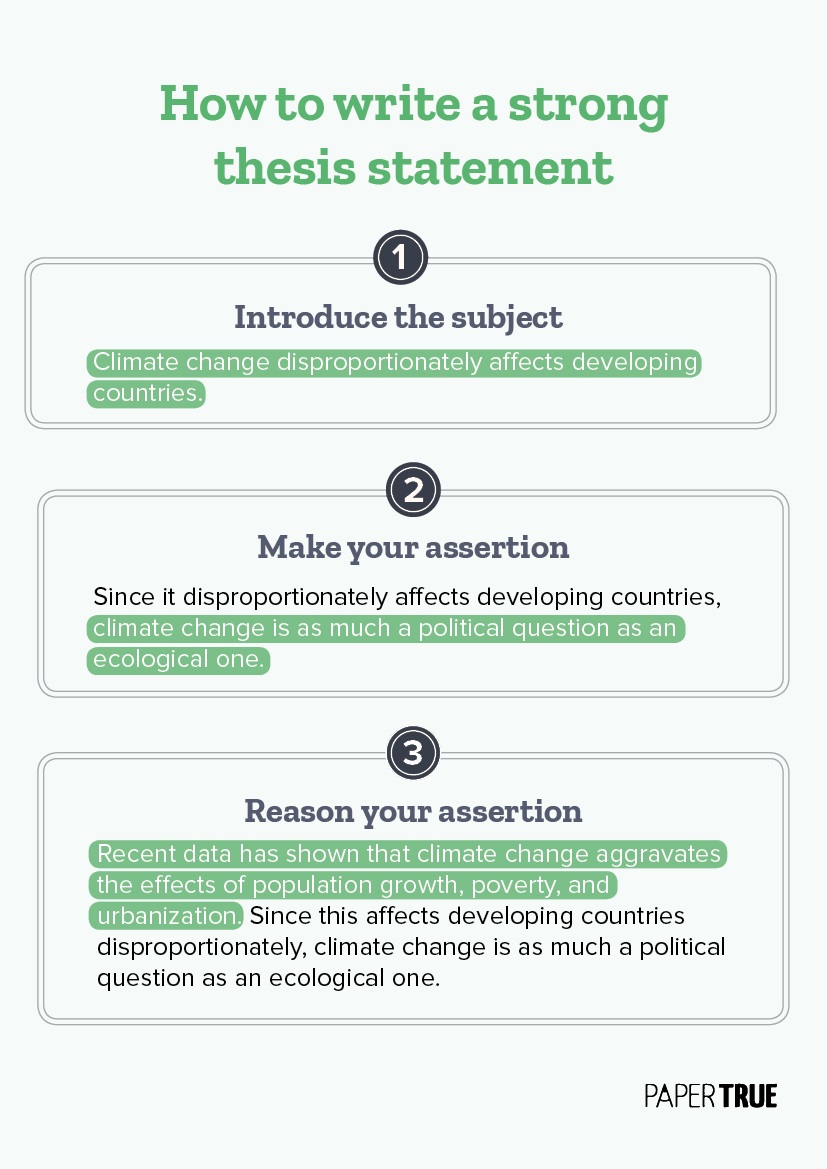
Writing a strong academic paper begins with a clear understanding of what you want to communicate. Whether you are preparing a college essay, research paper, argumentative assignment, or literary analysis, your central idea helps determine how the entire paper will develop. This is where a thesis statement becomes essential.
A well-written thesis statement gives your paper direction, communicates its main point, and helps readers understand what they can expect from your discussion. Without one, an academic paper may contain useful information but lack a clear argument or consistent focus.
Learning how to write a thesis statement is an important academic skill because it helps students organize their thoughts, evaluate evidence, and communicate ideas more effectively. A strong thesis is not simply a description of a topic. It expresses a specific idea, interpretation, or claim that the paper will explain or support.
In this guide, you will learn what a thesis statement is, why it matters, how to develop one step by step, and how to improve weak statements with practical examples. These techniques can help students write clearer essays and produce more focused academic papers.
What Is a Thesis Statement?
A thesis statement is a sentence, or occasionally a short group of sentences, that communicates the central idea or main claim of an academic paper. It tells readers what the paper will explain, analyze, interpret, or argue.
In an argumentative essay, the thesis usually presents a position that the writer will support with evidence. In an analytical paper, it may explain an interpretation of a text, event, or problem. In an explanatory paper, it identifies the main idea that the discussion will develop.
For example, consider this statement:
Weak thesis: Social media affects students.
This statement introduces a topic but does not explain what the writer intends to demonstrate.
A stronger version would be:
Strong thesis: Excessive social media use can interfere with students’ academic performance by interrupting concentration, reducing available study time, and encouraging frequent task switching.
The stronger statement identifies a specific issue and explains the main points the paper will examine.
A thesis statement should match the assignment, the available evidence, and the length of the paper. A short essay generally needs a focused claim, while a lengthy research project may require a more complex argument.
Why Is a Strong Thesis Statement Important?
A thesis statement serves as a guide for both the writer and the reader. It helps keep an academic paper focused and makes the purpose of the discussion easier to understand.
1. It Gives Your Paper a Clear Direction
Without a central claim, students may include too many unrelated details or move between ideas without explaining how they connect.
A thesis provides a starting point for deciding which information belongs in the paper. Each major section should contribute to developing, explaining, or supporting the central idea.
For example, if your thesis focuses on the effects of sleep on student learning, information about memory, concentration, and classroom performance may be relevant. An unrelated discussion of university sports may distract from the main argument.
2. It Helps Organize Your Main Points
A clear thesis makes it easier to plan the body paragraphs of an essay.
If your thesis identifies three major reasons supporting a position, those reasons can help determine the structure of the paper. You can organize the discussion around each reason and provide evidence to support it.
This does not mean every thesis must list three points. The structure should depend on the topic and assignment.
3. It Helps Readers Understand Your Argument
Readers should not have to guess what an academic paper is trying to demonstrate.
A strong thesis communicates the paper’s purpose early enough for readers to follow the discussion. It establishes expectations about the subject, the writer’s position, and the general direction of the analysis.
4. It Improves the Writing and Revision Process
A thesis gives you a standard against which you can evaluate your draft.
During revision, ask whether each paragraph supports the central idea. If a section does not contribute to the paper’s purpose, you may need to revise it, move it, or remove it.
Your thesis may also change as you research and write. Revising it to reflect your strongest evidence is a normal part of developing an effective academic argument.
How to Write a Thesis Statement Step by Step
Developing a strong thesis takes more than choosing a topic and turning it into a sentence. The following steps can help you move from a general subject to a clear, focused statement.
Step 1: Understand the Assignment
Before writing your thesis, read the assignment instructions carefully.
Determine whether your instructor expects you to argue a position, compare ideas, analyze a text, explain a process, evaluate evidence, or investigate a research question.
Different assignments require different kinds of thesis statements.
For example:
- An argumentative essay requires a position that can be supported with reasons and evidence.
- A comparison paper identifies a meaningful similarity or difference between subjects.
- A literary analysis presents an interpretation of a text.
- An explanatory paper establishes the central idea or explanation that will guide the discussion.
Pay attention to the required length, subject boundaries, and assessment criteria. A thesis that is appropriate for a short essay may be too narrow for a longer research paper.
Step 2: Choose a Specific Topic
Start with a subject that fits your assignment and interests you enough to investigate.
Broad topics can be difficult to manage because they contain too many possible directions. Narrowing your focus helps you develop a meaningful argument within the available space.
For example:
- Broad topic: Online education
- Narrower topic: Online education and student engagement
- Focused topic: How instructor feedback influences student engagement in online courses
The focused topic provides a more manageable starting point for research.
Consider the information you can reasonably collect and the questions your paper needs to answer. Your topic should be specific enough for detailed discussion without becoming so narrow that you cannot find sufficient evidence.
Step 3: Develop a Research Question
Turn your topic into a question that encourages investigation.
A research question helps you identify what you want to understand or explain before committing to a final claim.
For example:
Topic: Student engagement in online education
Research question: How does instructor feedback influence student engagement in online courses?
This question gives you a direction for research. You can examine studies, course experiences, and relevant evidence to determine what answer your paper can support.
Avoid questions that are so broad that they cannot be answered effectively within the assignment. A focused question makes it easier to identify relevant evidence and develop a clear argument.
Step 4: Research the Topic and Evaluate Evidence
Before finalizing your thesis, examine reliable information related to your research question.
Use appropriate academic materials, such as scholarly articles, books, course readings, official reports, and credible research publications. Evaluate whether the sources are relevant, current enough for your topic, and supported by evidence.
Look for patterns, disagreements, explanations, and unanswered questions.
For example, research on online education may suggest that timely feedback helps students understand mistakes and clarify expectations. You should also investigate whether the effects vary by subject, course design, or type of feedback.
Avoid selecting evidence only because it supports what you already believe. A strong academic argument considers the available information carefully and acknowledges important limitations.
Step 5: Form a Clear Main Claim
After exploring the topic, write a sentence that answers your research question.
Your first version does not need to be perfect. It is a working thesis that you can refine as you develop your argument.
For example:
Research question: How does instructor feedback influence student engagement in online courses?
Working thesis: Instructor feedback is important for online students.
This is a starting point, but it is too general to guide a detailed academic paper.
A more focused version would be:
Improved thesis: Timely, specific instructor feedback can strengthen student engagement in online courses by clarifying learning expectations, helping students correct mistakes, and encouraging continued participation.
The improved version communicates a clear claim and identifies the main ideas that the paper can investigate.
Make sure your statement reflects what the evidence actually supports rather than promising conclusions you cannot demonstrate.
Step 6: Make the Thesis Specific and Focused
A strong thesis avoids vague words and general statements.
Expressions such as “many things,” “a lot of problems,” or “important effects” do not tell readers precisely what the paper will discuss.
Replace broad language with concrete ideas.
Weak thesis: Technology has changed education in many ways.
Stronger thesis: Digital learning platforms can expand access to educational materials, but their effectiveness depends on reliable technology, accessible course design, and meaningful instructor support.
The stronger statement identifies specific benefits and limitations. It also creates a clear structure for the discussion.
Your thesis should be narrow enough to address thoroughly within the required word count.
Step 7: Check Whether Your Thesis Can Be Supported
A thesis should not simply state an obvious fact. It should establish a meaningful idea that requires explanation, analysis, interpretation, or evidence.
For an argumentative essay, the claim should generally be open to reasonable discussion rather than being universally accepted or easily verified.
For example:
Weak thesis: Water freezes at low temperatures.
This is a basic scientific fact, not a useful argument for most academic essays.
Stronger thesis: Schools in regions with frequent winter weather should establish clear closure policies that balance student safety, transportation risks, and continuity of learning.
The second statement presents a position that can be examined using evidence and reasoning.
For explanatory and analytical assignments, a thesis does not always need to take a controversial position. It still needs to communicate a clear purpose and a meaningful interpretation or central idea.
Step 8: Revise the Thesis After Drafting
Your understanding of a topic may change as you write.
You might discover that one of your original points lacks evidence, another is more important than expected, or the paper’s strongest argument differs from your initial idea.
After completing a draft, read your thesis and compare it with the actual content.
Ask yourself:
- Does the thesis accurately represent the paper?
- Is the central claim clear?
- Does the evidence support the statement?
- Are the main sections relevant to the claim?
- Has the scope become too broad or too narrow?
Revise the thesis whenever necessary. The final statement should reflect the argument you actually developed.
Characteristics of an Effective Thesis Statement
Although thesis statements vary across disciplines, strong examples often share several important characteristics.
Clarity
Readers should understand the main idea without having to interpret confusing wording.
Use precise language and avoid unnecessary phrases that delay the point.
Specificity
A thesis should identify the particular issue, relationship, or interpretation the paper will examine.
Instead of saying that education is important, explain which aspect of education you are discussing and what you want readers to understand about it.
Focus
A thesis should establish one central idea rather than combine several unrelated arguments.
If a sentence contains multiple claims that require separate discussions, consider narrowing the scope or explaining how the claims connect.
Evidence-Based Reasoning
A strong academic thesis should be supported by appropriate evidence, logical reasoning, or careful analysis.
Avoid making claims that go beyond what your research can establish.
Appropriate Scope
The thesis must fit the assignment’s purpose and length.
A short essay cannot thoroughly examine every cause of a worldwide social problem. A more focused question can produce a clearer and more convincing discussion.
Relevance to the Assignment
Even a well-written statement can be ineffective if it does not answer the assigned question.
Return to the instructions and make sure the thesis directly addresses the task.
Types of Thesis Statements With Examples
Different academic assignments require different approaches. Understanding the main types can help you select an appropriate structure.
1. Argumentative Thesis Statement
An argumentative thesis takes a position on an issue and establishes a claim that the paper will defend with evidence.
Example:
Universities should expand access to recorded lectures because recordings allow students to review difficult concepts, revisit missed explanations, and prepare more effectively for examinations.
This statement presents a position and identifies reasons that can be explored in the body of the paper.
Use an argumentative thesis when your assignment asks you to persuade readers, evaluate a policy, defend a position, or recommend a change.
2. Analytical Thesis Statement
An analytical thesis presents an interpretation of a text, event, idea, or set of evidence.
Example:
The novel portrays social inequality through differences in characters’ opportunities, relationships, and access to education.
This statement explains how the paper will interpret the text rather than merely summarize its content.
Analytical theses are common in literature, history, cultural studies, and research that examines patterns or relationships.
3. Explanatory Thesis Statement
An explanatory thesis identifies the central explanation or information that a paper will develop.
Example:
Effective online learning depends on clear course organization, regular opportunities for practice, and timely feedback from instructors.
The statement provides a central idea for an explanatory discussion.
An explanatory thesis is useful when the assignment asks you to describe a process, clarify a concept, or explain how something works.
4. Comparative Thesis Statement
A comparative thesis establishes a meaningful similarity or difference between two or more subjects.
Example:
Although traditional and online courses can cover the same academic material, they differ in scheduling flexibility, classroom interaction, and the level of independent time management required from students.
This statement identifies the comparison and establishes the main dimensions of the discussion.
A strong comparative thesis should explain why the similarities or differences matter, rather than simply listing them.
5. Cause-and-Effect Thesis Statement
A cause-and-effect thesis explains a relationship between an event, action, condition, or outcome.
Example:
Frequent interruptions during study sessions can reduce academic productivity by breaking concentration, increasing task-switching, and making it harder to complete complex assignments.
This statement identifies a possible cause and several effects that can be investigated.
Make sure the evidence supports the relationship you claim. A correlation between two factors does not automatically prove that one causes the other.
Strong and Weak Thesis Statement Examples
Comparing weak statements with improved versions is one of the easiest ways to understand what makes a thesis effective.
Example 1: Academic Performance
Weak: Students should study more.
Why it is weak: It is vague and does not explain which study behaviors matter or why they are important.
Strong: Students can improve their academic preparation by combining regular review sessions, retrieval practice, and timely feedback instead of relying entirely on last-minute revision.
Why it is stronger: It identifies specific approaches and establishes a focused claim that can be explained with evidence.
Example 2: Environmental Protection
Weak: Pollution is a serious problem.
Why it is weak: It states a broad observation without identifying the paper’s main argument.
Strong: Cities can reduce plastic waste by expanding convenient recycling facilities, limiting unnecessary single-use packaging, and improving public education about waste disposal.
Why it is stronger: It identifies practical measures that can be evaluated in the paper.
Example 3: Online Education
Weak: Online education is good for students.
Why it is weak: The statement does not explain what makes online education beneficial or acknowledge that outcomes may depend on circumstances.
Strong: Online education can improve access for students with work or family responsibilities when courses provide flexible scheduling, accessible learning materials, and regular instructor support.
Why it is stronger: It identifies particular benefits and explains the conditions under which they may occur.
Example 4: Literature Analysis
Weak: The main character changes throughout the story.
Why it is weak: It describes an event without offering a meaningful interpretation.
Strong: The protagonist’s changing attitude toward responsibility reveals how personal loss challenges the character’s earlier assumptions about independence and success.
Why it is stronger: It presents an interpretation that can be supported through close analysis of the text.
Example 5: Technology in Education
Weak: Technology is changing schools.
Why it is weak: It is too broad and does not establish a clear purpose.
Strong: Educational technology is most useful when teachers integrate digital tools into purposeful learning activities rather than using them as substitutes for instruction and feedback.
Why it is stronger: It presents a focused position and creates a basis for analysis.
Where Should You Place a Thesis Statement?
In many academic essays, the thesis statement appears near the end of the introductory paragraph. This placement allows the introduction to establish the topic and context before presenting the paper’s main idea.
A typical introduction may include three elements:
- Background: Introduce the subject and provide necessary context.
- Focus: Narrow the discussion toward the specific question or issue.
- Thesis: State the central claim, interpretation, or purpose of the paper.
For example, an essay about student time management might begin by explaining that university students balance classes, assignments, and personal responsibilities. It could then introduce the challenge of managing competing demands before presenting a thesis about which time-management strategies are most useful.
However, thesis placement depends on the assignment, discipline, and writing style. Some research papers establish their purpose through several sentences, and some longer academic works develop a central argument across a paragraph or section.
Follow your instructor’s requirements and ensure that readers can identify the paper’s main purpose.
Common Thesis Statement Mistakes to Avoid
Even students who understand their topics can weaken an academic paper by making avoidable mistakes.
1. Writing a Thesis That Is Too Broad
A thesis about the importance of education, the effects of technology, or the history of science may cover far more material than a single paper can reasonably address.
Narrow the subject by focusing on a particular group, situation, time period, problem, or relationship.
2. Stating Only a Fact
A factual statement may be accurate but offer little direction for an analytical or argumentative paper.
Move beyond simply identifying information. Explain its significance, present an interpretation, or establish a claim that requires support.
3. Using Vague Language
Words such as “good,” “bad,” “interesting,” and “important” may be too general unless the paper defines what they mean.
Replace vague descriptions with specific claims and measurable or observable details when appropriate.
4. Including Too Many Unrelated Ideas
A thesis that combines several unrelated subjects can make the paper difficult to organize.
Identify the main point that connects your ideas. If two claims do not support the same purpose, consider separating them or choosing one as the paper’s central focus.
5. Making Claims Without Evidence
A thesis should not promise a conclusion that the available research cannot support.
Use credible sources, evaluate opposing evidence, and adjust your statement when the information does not justify your original claim.
6. Treating the First Draft as Final
Your first thesis is a starting point, not a permanent decision.
Research and drafting often reveal a more precise argument. Review your thesis after developing the main sections and revise it to reflect the final paper.
7. Ignoring the Assignment Instructions
A thesis may sound impressive but still fail if it answers the wrong question.
Check the assignment requirements before writing and again during revision. Make sure your claim matches the requested type of analysis and the expected scope.
A Simple Thesis Statement Formula
A formula can help students who are struggling to develop a first draft. It should be used as a starting point rather than a rule that every academic paper must follow.
For an argumentative essay, try this structure:
Topic + clear position + main reason or supporting logic
For example:
Topic: University attendance policies
Position: Universities should provide reasonable flexibility in attendance requirements.
Supporting logic: Students may face illness, accessibility needs, or unavoidable personal circumstances.
Possible thesis: Universities should provide reasonable flexibility in attendance policies because consistent academic participation can be encouraged without treating every unavoidable absence as a disciplinary issue.
Another useful structure for an analytical paper is:
Subject + interpretation + significance
For example:
Subject: A novel’s central character
Interpretation: The character’s decisions reveal a conflict between personal ambition and family responsibility.
Significance: This conflict shapes the character’s development throughout the story.
Possible thesis: The protagonist’s conflict between personal ambition and family responsibility drives the character’s development and reveals the personal costs of pursuing success without considering others.
Not every thesis needs to follow a fixed formula. Use these structures to clarify your thinking, then revise the wording so it sounds natural and accurately reflects your argument.
How to Check and Improve Your Thesis Statement
Before submitting an academic paper, review your thesis using the following checklist.
- Does it answer the assignment question?
- Does it communicate one clear central idea?
- Is it specific enough for the paper’s length?
- Does it present an interpretation, explanation, or claim appropriate to the assignment?
- Can the main idea be supported by evidence or analysis?
- Does the body of the paper develop the thesis?
- Have I removed vague or unnecessary wording?
- Does the final thesis reflect what I actually wrote?
If you cannot answer yes to several of these questions, revise the statement before finalizing your paper.
You can also ask a classmate or instructor to read the thesis on its own. If they cannot identify the paper’s main point, the statement may need greater clarity or focus.
Frequently Asked Questions
1. How do you write a thesis statement for an academic paper?
Start by understanding the assignment, selecting a focused topic, and developing a research question. Examine relevant evidence, write a clear answer to your question, and revise it to make sure the statement fits the paper’s purpose and scope.
2. How long should a thesis statement be?
Many academic essays use a single sentence, but the appropriate length depends on the complexity of the topic and the assignment. Aim for enough detail to communicate your central idea clearly without including unnecessary information.
3. Where does a thesis statement go in an essay?
A thesis statement commonly appears near the end of the introduction. However, placement can vary by discipline and assignment, so follow the instructions provided by your instructor.
4. Can a thesis statement be a question?
A research question helps guide investigation, but it is generally not a substitute for the thesis statement in an argumentative or analytical essay. The thesis normally presents the answer, interpretation, or claim that the paper will develop.
5. Does every academic paper need a thesis statement?
Many academic papers benefit from a clear central claim or controlling idea, but not every assignment requires a traditional argumentative thesis. Lab reports, reflective writing, descriptive tasks, and other specialized formats may organize their purpose differently. Follow the assignment requirements.
6. What is the difference between a thesis statement and a topic sentence?
A thesis statement establishes the central idea or claim of the entire paper. A topic sentence introduces the main idea of an individual paragraph and shows how that section contributes to the overall discussion.
7. Can I change my thesis statement while writing?
Yes. Revising your thesis is a normal part of academic writing. As you examine evidence and develop your argument, you may discover a more precise or better-supported central idea. Your final thesis should accurately reflect the completed paper.
8. What makes a thesis statement strong?
A strong thesis is clear, focused, relevant to the assignment, and appropriate to the paper’s purpose. It communicates a meaningful central idea and provides a direction for the explanation, analysis, or evidence that follows.
Conclusion
Learning how to write a thesis statement can make academic writing more organized, purposeful, and effective. A strong thesis communicates the central idea of a paper, helps readers understand its direction, and gives the writer a clear standard for developing and revising the argument.
Begin by understanding the assignment, narrowing your topic, developing a research question, and examining the available evidence. Then write a specific claim that fits the paper’s purpose and can be supported through explanation, analysis, or research.
Remember that a thesis does not need to be perfect in the first draft. Review it as your understanding develops, remove vague language, and make sure every major section contributes to the central idea.
A strong academic paper starts with a clear purpose. When your thesis statement is focused, meaningful, and supported by evidence, the rest of the writing process becomes easier to plan and manage.
Leave a Reply