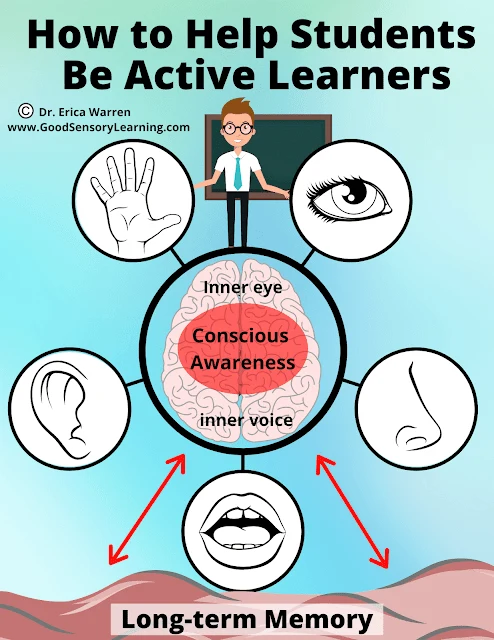
Learning is more than listening to a teacher, reading a textbook, or copying information into a notebook. To understand a subject deeply, students need opportunities to think, ask questions, solve problems, explain ideas, and apply what they learn.
This is where active learning becomes valuable. By participating directly in the learning process, students can identify gaps in their knowledge, connect new concepts with existing information, and develop stronger problem-solving skills.
The best active learning techniques for students do not always require special technology, expensive resources, or long study sessions. Simple activities such as explaining a concept in your own words, answering practice questions from memory, discussing a difficult topic with a classmate, and solving real-world problems can make studying more purposeful.
Whether you are a school student, college learner, university student, or someone taking online courses, active learning can help you move beyond memorization and develop a deeper understanding of your subjects.
In this guide, you will discover what active learning means, why it matters, which techniques students can use, and how to build an effective active learning routine.
What Is Active Learning?
Active learning is an approach to education in which students actively engage with information rather than simply receiving it. It involves thinking, recalling, discussing, questioning, practicing, and applying knowledge.
In a traditional lecture, a student might listen to an explanation of a scientific concept and copy the teacher’s notes. With active learning, the student might also predict an outcome, answer questions about the concept, explain it to a classmate, and solve a related problem.
Both listening and reading can be useful parts of learning. However, students also need opportunities to work with information and check whether they truly understand it.
Active learning can take place in classrooms, libraries, study groups, laboratories, and online learning environments. It can involve individual activities or collaboration with other students.
The central idea is simple: students learn by doing something meaningful with the material, not just by looking at it repeatedly.
Why Are Active Learning Techniques Important for Students?
Active learning can support better understanding by giving students regular opportunities to practice, receive feedback, and recognize what they still need to learn.
1. They Help Students Understand Difficult Concepts
Reading a definition may help you recognize a concept, but explaining it without looking at your notes requires a deeper level of understanding.
Active learning encourages students to examine ideas, identify relationships, and connect theory with examples.
For instance, a biology student learning about ecosystems could draw a food web and explain how a change in one population might affect other organisms. This activity requires the student to understand how different parts of the system interact.
2. They Strengthen Long-Term Memory
Students often forget information when they review it only once or depend entirely on rereading.
Retrieval practice, which involves bringing information to mind without immediately checking the answer, is a useful active learning method. Practice questions, flashcards, and short quizzes can help students strengthen recall and identify gaps in their knowledge.
Reviewing the answers afterward is important because feedback helps correct misunderstandings.
3. They Develop Critical Thinking Skills
Active learning encourages students to examine evidence, compare different explanations, evaluate arguments, and make reasoned decisions.
These skills are useful across academic subjects. A history student may compare competing explanations for an event, while a mathematics student may solve a problem using more than one method.
Instead of accepting information without examination, students learn to ask why an explanation makes sense and what evidence supports it.
4. They Improve Problem-Solving Abilities
Many academic tasks require students to apply knowledge rather than simply repeat definitions.
Active learning provides opportunities to practice these skills before examinations or real-world situations.
For example, an engineering student might analyze why a design fails, identify possible causes, and suggest improvements. A business student might evaluate a case study and recommend a solution to a company problem.
Regular practice helps students become more comfortable approaching unfamiliar challenges.
5. They Encourage Independent Learning
Students who regularly test their understanding become better at recognizing their strengths and weaknesses.
They can identify which topics they understand, which require additional practice, and when they need assistance from an instructor.
This awareness supports independent learning because students become more capable of planning their own study sessions and choosing appropriate strategies.
10 Effective Active Learning Techniques for Students
Students can use several active learning techniques depending on their subject, learning goals, available time, and study environment. The following methods are practical for both classroom learning and independent study.
1. Retrieval Practice: Test Yourself From Memory
Retrieval practice involves recalling information without looking at the original material.
Instead of reading the same chapter several times, close your textbook and try to answer questions about the main ideas.
For example, after studying a chapter about the human circulatory system, ask yourself:
- What are the main functions of the circulatory system?
- How does blood move through the heart?
- What is the difference between arteries and veins?
- How does the circulatory system support other organs?
Write your answers before checking the textbook. Then compare your responses with the correct information and review anything you missed.
You can use flashcards, blank-page summaries, practice tests, or questions created from your class notes.
Why it works: Retrieval practice makes you actively reconstruct information and reveals whether you can remember it without prompts.
Best for: Exam preparation, vocabulary, scientific concepts, historical facts, formulas, and definitions.
2. Think-Pair-Share: Learn by Discussing Ideas
Think-Pair-Share is a collaborative technique in which students consider a question individually, discuss their answers with a partner, and then share their ideas with a larger group.
It encourages participation because students have time to organize their thoughts before speaking.
A simple process is:
- Think: Read a question and develop your own answer.
- Pair: Discuss your reasoning with another student.
- Share: Present your conclusions and consider other perspectives.
For example, students studying environmental science might discuss which actions could reduce plastic waste in their community. Each student proposes an idea, explains the reasoning, and compares possible solutions with a partner.
The goal is not simply to agree with one another. Students should explain their thinking, ask questions, and examine different viewpoints.
Best for: Classroom discussions, literature, social sciences, ethics, and topics with multiple possible interpretations.
3. Teach the Concept to Someone Else
Teaching another person is a useful way to discover whether you understand a subject clearly.
Choose a concept you have recently studied and explain it to a classmate, family member, or study partner using simple language.
Try to avoid reading directly from your notes. Instead, explain the idea in your own words and provide an example.
For instance, a student studying fractions could explain why two-fourths is equal to one-half by using a drawing or a practical example.
If you cannot explain a particular step, return to your learning material and identify what is missing from your understanding.
You can also use the technique alone by pretending to teach an imaginary student or recording a short explanation.
Why it works: Explaining a concept requires you to organize information, identify important details, and connect ideas logically.
Best for: Complex concepts, mathematics, science, language learning, and examination revision.
4. Mind Mapping: Connect Related Ideas
Mind mapping is a visual technique that helps students organize information and understand relationships between concepts.
To create a mind map, write the main topic in the center of a page. Draw branches for major ideas and add smaller branches for supporting details, examples, and related concepts.
For example, a mind map about climate change might include greenhouse gases, rising temperatures, environmental impacts, human activities, and possible solutions.
Students can use words, arrows, short phrases, and simple drawings to show how the ideas connect.
A mind map should not become a page filled with copied textbook paragraphs. Its purpose is to organize knowledge in a form that is easier to understand and review.
After creating the map, cover your notes and try to reproduce its main branches from memory.
Best for: Biology, history, literature, geography, project planning, and subjects with many connected ideas.
5. Practice Problems: Apply What You Learn
Solving practice problems is particularly useful when a subject requires students to apply rules, formulas, procedures, or analytical methods.
Reading a worked example can help you understand a process, but you also need to attempt similar problems independently.
For mathematics, this might mean solving equations without checking the solution after every step. For chemistry, it could involve balancing chemical equations. For programming, it could mean writing a small program that applies a recently learned concept.
When you make a mistake, do not simply replace your answer with the correct one. Identify where your reasoning went wrong.
Ask yourself whether you misunderstood the question, selected the wrong method, made a calculation error, or skipped an important step.
Best for: Mathematics, physics, chemistry, accounting, programming, and technical subjects.
6. Case-Based Learning: Solve Real-World Problems
Case-based learning asks students to apply academic knowledge to realistic situations.
Instead of studying a concept only in theory, students examine a problem, consider relevant evidence, evaluate alternatives, and develop a possible solution.
For example, a business student might analyze a company experiencing declining sales. The student could examine customer preferences, pricing, marketing decisions, and competition before recommending a strategy.
A healthcare student might work through a fictional patient scenario, while an environmental science student could evaluate ways to reduce pollution in a local area.
A useful case study should encourage students to explain their decisions rather than simply guess the expected answer.
Best for: Business, healthcare education, law, environmental studies, engineering, and social sciences.
7. Group Study With Defined Roles
Group study can become more effective when students work toward a clear goal rather than meeting only to read their notes together.
Assign each member a role. One student can prepare questions, another can explain difficult concepts, another can check answers, and another can summarize the group’s conclusions.
For example, a group preparing for a history examination might divide a topic into major events, causes, consequences, and important individuals. Each member explains one section and answers questions from the others.
Rotate roles during later sessions so that everyone practices different skills.
Group study works best when all participants contribute and disagreements are resolved by checking reliable course material.
Best for: Exam preparation, collaborative assignments, language practice, and subjects that benefit from discussion.
8. The Feynman Technique: Explain Ideas in Simple Language
The Feynman Technique is a study approach based on explaining a concept as clearly as possible, using simple language and examples.
Begin by selecting a topic. Write a short explanation as though you were teaching someone who has never studied it before.
When you encounter complicated wording, unexplained steps, or gaps in your explanation, identify those areas and review them.
Then rewrite your explanation so that it is clearer and more complete.
For example, rather than memorizing a complex definition of photosynthesis, explain how plants use light energy to convert water and carbon dioxide into sugars, while releasing oxygen.
Check your explanation against your textbook or class material to ensure that simplifying the language has not introduced errors.
Best for: Scientific concepts, theories, difficult readings, and topics that seem easy to recognize but hard to explain.
9. Question-Based Reading: Read With a Purpose
Passive reading can make it easy to reach the end of a chapter without remembering its central ideas.
Question-based reading gives you a specific goal before you begin.
First, review the chapter title, headings, diagrams, and summary. Then turn the headings into questions.
For example, if a heading is “Causes of World War I,” ask yourself which political, economic, and social factors contributed to the conflict.
As you read, look for answers and write short explanations in your own words. After finishing the section, close the book and answer your original questions from memory.
If a question remains unanswered, return to the relevant section and investigate further.
Best for: Textbooks, academic articles, history, literature, social sciences, and independent reading assignments.
10. Reflective Learning: Review What You Understand
Reflection helps students evaluate their learning process and make better decisions about what to study next.
At the end of a lesson or study session, take a few minutes to answer three questions:
- What were the most important ideas I learned?
- Which concept is still confusing?
- What should I practice or review next?
Write short, honest answers. The purpose is to recognize your progress and identify the next step, not to create a long report.
For example, after a physics lesson, you might understand the basic formula but struggle to determine which values belong in it. Your next study session can focus on identifying variables in practice questions.
Best for: All subjects, independent learning, project work, and long-term academic improvement.
How to Choose the Right Active Learning Technique
Not every technique serves the same purpose. Choose your method based on what you need to learn or improve.
| Learning goal | Recommended technique |
|---|---|
| Remember facts and definitions | Retrieval practice and flashcards |
| Understand difficult concepts | Teaching someone else and the Feynman Technique |
| Connect related information | Mind mapping |
| Improve calculation and application skills | Practice problems |
| Develop reasoning and decision-making | Case-based learning |
| Explore different viewpoints | Think-Pair-Share |
| Prepare with classmates | Group study with defined roles |
| Understand textbook chapters | Question-based reading |
| Identify learning gaps | Reflective learning |
You can combine multiple methods during a single study session. For example, read a section, create a mind map, answer questions from memory, and explain the most difficult concept to a study partner.
The best approach depends on the subject and the outcome you want to achieve.
How to Use Active Learning in Different Subjects
Active learning becomes more useful when techniques are matched to the demands of each academic discipline.
Active Learning for Mathematics
Mathematics requires students to understand procedures and apply them accurately.
Try solving problems without immediately looking at worked solutions. Explain why each step is necessary, compare different solution methods, and keep a record of recurring mistakes.
After learning a formula, practice identifying situations in which it should be used.
Active Learning for Science
Science students can make predictions, interpret data, draw diagrams, and explain cause-and-effect relationships.
For example, before studying the results of an experiment, predict what might happen and explain why. After examining the evidence, compare the results with your prediction.
This process encourages students to connect scientific concepts with observations.
Active Learning for History and Social Sciences
Use timelines, compare competing explanations, analyze primary sources, and explain relationships between causes and consequences.
Instead of memorizing dates alone, ask why an event happened, which factors influenced it, and how its effects differed among groups of people.
Active Learning for Language Learning
Language students benefit from producing and using the language rather than only reading rules.
Practice recalling vocabulary, writing original sentences, summarizing short passages, listening actively, and speaking with a partner.
Review mistakes and reuse unfamiliar words in different contexts.
Active Learning for Online Courses
Online students can use active learning even without a physical classroom.
Pause recorded lessons to summarize important points, answer questions before checking the instructor’s explanation, complete practice activities, and discuss difficult concepts with classmates.
After finishing an online module, write down what you learned and identify which topics need further review.
How Teachers Can Encourage Active Learning in the Classroom
Teachers play an important role in creating opportunities for students to participate meaningfully in their education.
Ask Questions That Require Reasoning
Questions that ask students to explain, compare, predict, or justify an answer can encourage deeper thinking than questions requiring only simple recall.
For example, after explaining a scientific process, a teacher might ask students to predict what would happen if one condition changed.
Include Short Activities During Lessons
Teachers can break up longer explanations with brief activities such as individual reflection, paired discussion, short quizzes, or problem-solving exercises.
These activities allow students to process information and reveal misconceptions before moving to the next topic.
Encourage Students to Explain Their Reasoning
When students provide an answer, ask them how they reached their conclusion.
This helps reveal whether they understand the underlying idea or have simply memorized a response.
It also gives teachers useful information about which concepts need additional explanation.
Provide Constructive Feedback
Students need opportunities to check their understanding and correct mistakes.
Feedback should identify what is accurate, explain what needs improvement, and offer a useful next step.
A classroom environment in which students can ask questions and learn from mistakes encourages participation and intellectual growth.
Make Activities Accessible to Different Learners
Some students may feel comfortable speaking in front of a class, while others may need time to write their ideas first.
Combining individual reflection, written responses, paired discussion, and group activities gives students different ways to participate.
Clear instructions and realistic time limits also help students understand what is expected.
Common Active Learning Mistakes to Avoid
Active learning is most useful when activities are connected to clear learning goals. Simply adding more tasks to a study session does not automatically improve understanding.
1. Mistaking Activity for Learning
Highlighting every sentence, copying notes, or repeatedly rewriting definitions may feel productive without revealing whether you understand the material.
Include tasks that require you to recall, explain, apply, or evaluate information.
2. Skipping Feedback
Attempting practice questions is helpful, but repeatedly practicing incorrect answers can reinforce misunderstandings.
Check your responses, review explanations, and ask for help when necessary.
3. Choosing Techniques That Do Not Match Your Goal
Mind maps can help organize related ideas, but they may not provide enough practice for a mathematics examination.
Similarly, flashcards can help with terminology but may not fully prepare you to evaluate a complex argument.
Choose methods that match the knowledge or skill you need to develop.
4. Trying Too Many Techniques at Once
Using several new study methods simultaneously can make it difficult to determine which ones are helpful.
Begin with one or two techniques and use them consistently. Add other methods as you become comfortable.
5. Ignoring Difficult Topics
Students may repeatedly practice material they already understand because it feels easier and more rewarding.
Use practice questions and reflection to identify weak areas. Give those topics additional attention while continuing to review familiar material.
A Simple 30-Minute Active Learning Study Routine
Students who want to begin using active learning can start with a short, structured session.
Minutes 1–5: Set a goal.
Choose one specific concept or topic. Decide what you want to understand or be able to explain by the end of the session.
Minutes 6–12: Study the material.
Read a short section, review class notes, or watch part of a lesson. Focus on the main ideas rather than trying to memorize every detail immediately.
Minutes 13–20: Recall and explain.
Close your materials and write down what you remember. Explain the concept in your own words or draw a diagram showing the relationships between ideas.
Minutes 21–26: Apply your knowledge.
Answer practice questions, solve a problem, or create an example that demonstrates the concept.
Minutes 27–30: Check and reflect.
Compare your answers with the learning material. Correct mistakes and write down one topic you should review in your next session.
You can repeat this routine for different subjects or extend the time when a topic requires more practice.
Frequently Asked Questions
1. What are the best active learning techniques for students?
Useful techniques include retrieval practice, Think-Pair-Share, teaching concepts to others, mind mapping, practice problems, case-based learning, question-based reading, and reflective learning. The best choice depends on the subject and your learning objective.
2. How does active learning improve student understanding?
Active learning encourages students to recall information, explain ideas, apply concepts, and identify mistakes. These activities provide opportunities to connect new knowledge with what students already know and correct misunderstandings through feedback.
3. Is active learning better than passive learning?
Active learning can be particularly useful for developing understanding, applying knowledge, and checking what you remember. Listening to explanations and reading textbooks can still be valuable, especially when learning unfamiliar material. Combining clear instruction with active practice is often a practical approach.
4. Can students use active learning at home?
Yes. Students can test themselves, explain concepts aloud, solve practice problems, create mind maps, summarize readings, and review their mistakes independently. These activities do not require a classroom or a study group.
5. How can active learning help students prepare for exams?
Active learning helps students identify knowledge gaps and practice using information before an examination. Retrieval practice, practice tests, explaining difficult concepts, and solving subject-specific problems can make revision more purposeful.
6. How long should students spend on active learning?
There is no single ideal duration. A student might begin with a 20- or 30-minute session and adjust according to the difficulty of the material, available time, and concentration level. Consistent practice and clear goals matter more than following a fixed duration.
7. Does active learning work for online education?
Yes. Online students can pause lessons to answer questions, complete interactive exercises, participate in discussion groups, explain concepts in writing, and test their knowledge without referring to their notes.
8. What is the difference between active learning and memorization?
Memorization focuses on retaining information, while active learning includes activities that require students to engage with and use that information. Memorization can be one part of learning, but explaining concepts, solving problems, and applying knowledge help students develop a broader understanding.
Conclusion
Active learning helps students become participants in their education rather than relying entirely on reading, listening, or memorizing information. By recalling ideas, explaining concepts, solving problems, discussing questions, and reflecting on mistakes, learners can develop a clearer understanding of their subjects.
The most effective active learning techniques for students are those that match their learning goals. Retrieval practice can support recall, mind mapping can organize connected ideas, teaching others can reveal gaps in understanding, and practice problems can strengthen application skills.
You do not need to use every technique at once. Begin with one method, apply it to a current subject, and review whether it helps you understand the material more clearly.
The key to effective learning is not simply spending more time studying. It is using that time to think, practice, question, and apply what you learn.
Leave a Reply