Blog

  • How to Stay Motivated During Online Classes

    How to Stay Motivated During Online Classes

    Online classes offer flexibility, convenience, and opportunities to learn from almost anywhere. However, studying through a computer or mobile device can also make it difficult to maintain focus, follow a schedule, and stay motivated throughout the semester. Without the structure of a physical classroom, students may struggle with procrastination, distractions, isolation, or competing responsibilities.

    Learning how to stay motivated in online classes can help students build better study habits, manage their time, and make steady progress toward their educational goals. The key is not to feel motivated every minute of the day. Instead, it is to develop a routine and environment that make it easier to keep learning, even when enthusiasm is low.

    In this guide, you will discover practical ways to stay motivated during online classes, improve concentration, manage assignments, and create a more productive online learning experience.

    Why Is It Difficult to Stay Motivated in Online Classes?

    Online learning requires students to manage more of their learning independently. While some courses have scheduled live lectures, others allow students to watch recordings, complete readings, and submit assignments at their own pace.

    This flexibility can be helpful, but it also creates challenges.

    1. Too Many Distractions

    When studying at home, students may be distracted by social media, mobile notifications, television, household responsibilities, or conversations with family members. Switching between coursework and unrelated activities can make it harder to concentrate on a lesson.

    2. Lack of a Fixed Routine

    Traditional classrooms provide a regular schedule. Online students may need to create that structure themselves. Without planned study hours, it can be tempting to postpone lectures or assignments until deadlines approach.

    3. Feeling Isolated

    Online students may have fewer opportunities for spontaneous conversations with classmates and instructors. Without regular interaction, learning can feel lonely, especially during demanding courses or examination periods.

    4. Difficult or Overwhelming Coursework

    Long lectures, complicated topics, and large assignments can make students feel overwhelmed. When a task seems too difficult, putting it off may feel easier than getting started.

    5. Balancing Study With Other Responsibilities

    Many online learners also manage employment, family commitments, personal responsibilities, or other courses. Trying to balance everything without a realistic plan can reduce energy and motivation.

    Understanding these challenges is the first step toward finding practical solutions.

    12 Effective Ways to Stay Motivated in Online Classes

    1. Set Clear and Achievable Learning Goals

    One of the most effective ways to maintain motivation is to know what you want to accomplish. A clear goal gives your study sessions a purpose and helps you measure progress.

    Start with a long-term academic goal, such as completing a degree, improving your grades, learning a professional skill, or preparing for a future career. Then divide that goal into smaller weekly and daily targets.

    For example, instead of setting a vague goal like “study biology,” create a specific target:

    • Watch one biology lecture.
    • Review the notes for 20 minutes.
    • Complete ten practice questions.
    • Write down three concepts that need more attention.

    Smaller goals make difficult tasks feel more manageable. They also help you recognize your progress, which can encourage you to continue.

    Practical tip: Write down three important learning tasks at the beginning of each study day. Complete the most important task first when possible.

    2. Create a Consistent Study Schedule

    A regular schedule helps turn studying into a habit rather than a decision you must make repeatedly.

    Choose specific times for attending live classes, watching recorded lectures, completing assignments, reviewing notes, and preparing for exams. Add these activities to a calendar or planner, along with their deadlines.

    Try to study at a time when you usually feel alert. Some students concentrate better in the morning, while others prefer the afternoon or evening.

    A simple daily schedule might look like this:

    TimeActivity
    9:00–9:30 a.m.Review notes and check deadlines
    9:30–10:30 a.m.Attend an online lecture
    10:30–10:45 a.m.Take a short break
    10:45–11:30 a.m.Complete practice questions
    11:30 a.m.–12:00 p.m.Work on an assignment

    Adjust this example to fit your own classes, energy levels, and responsibilities. The goal is to create a realistic routine that you can maintain consistently.

    For more guidance, students can also read about time management skills for students.

    3. Design a Dedicated Study Space

    Your learning environment can influence how easily you begin and continue your work. If possible, choose a quiet, comfortable place where you can attend classes and complete assignments without frequent interruptions.

    Your study area does not need to be a separate room. A desk, table, or organized corner may be enough.

    To create a more productive study space:

    • Keep your laptop, notebook, pens, and other learning materials nearby.
    • Make sure your screen and chair are comfortable to use.
    • Reduce background noise where possible.
    • Keep unrelated items away from your immediate workspace.
    • Tell family members or housemates when you need uninterrupted study time.
    • Check that your internet connection and course login work before class begins.

    Using the same place regularly may also help you associate that environment with learning. If your home is noisy, consider a library or another suitable location with fewer distractions.

    4. Remove Digital Distractions

    Digital distractions are especially challenging during online learning because the device used for studying also provides access to entertainment, messaging, and social media.

    A quick notification can interrupt a lecture or lead to several minutes of unrelated browsing. Repeated interruptions can make it harder to follow complex information.

    Try these strategies to protect your attention:

    • Silence nonessential notifications during study sessions.
    • Close tabs that are unrelated to your coursework.
    • Place your phone out of reach if you do not need it for class.
    • Use a website blocker when social media becomes difficult to resist.
    • Avoid switching between unrelated tasks while watching lectures.
    • Check messages during planned breaks instead of continuously.

    If you need your phone for two-factor authentication or class activities, keep it available but turn off unnecessary alerts.

    The goal is not to eliminate technology. It is to use technology intentionally so that it supports your education instead of competing for your attention.

    5. Break Large Assignments Into Smaller Tasks

    A major assignment can seem intimidating when you think about everything that needs to be completed. Breaking it into smaller steps gives you a clear starting point and makes progress easier to track.

    For example, a research paper might involve the following tasks:

    1. Understand the assignment requirements.
    2. Choose a topic.
    3. Find reliable academic sources.
    4. Develop an outline.
    5. Write the first draft.
    6. Review the arguments and evidence.
    7. Edit the final version.
    8. Submit the paper before the deadline.

    Assign a realistic time frame to each step. Instead of planning to finish the entire paper in one evening, work on one manageable part at a time.

    This approach also helps you identify problems earlier. If you discover that you do not understand a topic or cannot find a suitable source, you have time to ask for assistance before the deadline.

    6. Use Short, Focused Study Sessions

    Studying for several hours without a break can leave you mentally tired, particularly when you are watching recorded lectures or reading difficult material.

    Try dividing your study time into focused sessions. One option is to work for 25 minutes and then take a five-minute break. After several sessions, take a longer break if needed.

    You can adjust the timing based on your concentration and the type of task. A demanding problem-solving activity may require a different rhythm from reviewing flashcards.

    During a focused session:

    • Choose one task to complete.
    • Set a timer if it helps you stay on track.
    • Avoid checking unrelated notifications.
    • Take notes or answer questions rather than passively watching.
    • Use the break to stretch, drink water, or rest your eyes.

    Short sessions can make it easier to begin when motivation is low. Over time, experiment with different session lengths to find what works best for you.

    7. Participate Actively in Online Classes

    Motivation often improves when students take an active role in learning. Simply opening a lecture and letting it play in the background may make it difficult to remember the material.

    Instead, look for opportunities to interact with the course content and other learners.

    You can:

    • Take notes in your own words.
    • Write down questions during lectures.
    • Participate in discussion boards.
    • Answer questions during live sessions.
    • Complete practice quizzes after lessons.
    • Explain a difficult concept to a classmate.
    • Review instructor feedback and apply it to your next assignment.

    Active participation can also make online classes feel less isolated. University teaching resources emphasize that interaction, community, and meaningful engagement can support students’ motivation and learning experience.

    If you are unsure about a topic, ask your instructor for clarification rather than waiting until exam preparation begins.

    8. Connect With Classmates and Instructors

    Online learning does not mean you have to study alone. Building connections with classmates can provide encouragement, accountability, and opportunities to discuss difficult topics.

    Consider forming a small online study group. Members can meet once or twice a week to review notes, discuss assignments, or prepare for exams.

    To make a study group useful:

    • Agree on a clear purpose for each meeting.
    • Choose a convenient and consistent meeting time.
    • Share questions and explanations respectfully.
    • Divide revision topics when preparing for a test.
    • Keep the discussion focused on learning.

    You can also contact your instructor during virtual office hours or through the course’s official communication platform. Ask specific questions about instructions, challenging concepts, or feedback on your work.

    If you begin falling behind, reaching out early can help you identify a solution before the problem becomes more difficult to manage.

    9. Reward Yourself for Making Progress

    Rewards can make a study routine feel more satisfying. They do not need to be expensive or elaborate; a small break or enjoyable activity may be enough.

    For example, you might reward yourself after completing a lecture, submitting an assignment, or finishing a week of planned study sessions.

    Possible rewards include:

    • Taking a short walk.
    • Listening to your favorite music.
    • Enjoying a snack or drink.
    • Spending time on a hobby.
    • Watching an episode of a show after finishing your priorities.
    • Taking a longer break after completing a challenging project.

    Choose rewards that fit your schedule and do not interfere with your next important task.

    It is also useful to recognize effort, not only grades. Completing a difficult reading, asking for help, or returning to a task after a setback can all represent meaningful progress.

    10. Look After Your Physical and Mental Well-Being

    Motivation is harder to maintain when you are exhausted, hungry, stressed, or constantly working without rest. Academic productivity depends partly on having enough energy to concentrate and process information.

    Try to build a sustainable routine that includes:

    • A consistent sleep schedule.
    • Regular meals and water breaks.
    • Physical movement during the day.
    • Time away from screens.
    • Breaks between demanding tasks.
    • Social contact and enjoyable activities outside coursework.

    Avoid planning every minute of your day around school. Leaving some flexibility can help you manage unexpected responsibilities without abandoning your entire schedule.

    If you regularly feel overwhelmed, exhausted, or unable to manage your workload, consider speaking with an academic adviser, student support service, or another appropriate professional. Asking for help is a practical step toward maintaining progress, not a sign of failure.

    11. Track Your Progress Every Week

    When assignments and lectures keep coming, it is easy to focus only on what remains unfinished. Reviewing your progress can help you see how far you have come and identify areas that need attention.

    Set aside 10–15 minutes once a week to review your coursework.

    Ask yourself:

    • Which assignments or lessons did I complete?
    • What did I find difficult?
    • Which deadlines are approaching?
    • What should I prioritize next week?
    • Do I need help with a topic or assignment?
    • Is my current study schedule realistic?

    Use your answers to adjust your plan. If you consistently miss evening study sessions because you are tired after work, consider moving important tasks to a time when you have more energy.

    A weekly review helps you respond to problems rather than repeating the same ineffective routine.

    12. Remember Why You Started Learning

    Daily coursework can sometimes feel disconnected from your bigger goals. Remembering why you enrolled in a course can help you reconnect with its value.

    Perhaps you want to earn a degree, qualify for a new job, develop practical skills, explore a subject you enjoy, or prepare for further education.

    Write down your main reason for studying and keep it somewhere you can see. You can also connect each course to a broader goal by asking how the knowledge or skills may help you in the future.

    At the same time, allow your goals to develop. You do not need to have every detail of your future career decided to benefit from learning.

    When motivation drops, focus on the next achievable action instead of expecting yourself to feel inspired immediately.

    How to Stay Motivated in Online Classes When You Feel Overwhelmed

    Even with a good routine, some weeks will be more difficult than others. You may have multiple deadlines, personal responsibilities, or a subject that takes longer to understand than expected.

    When everything feels overwhelming, try the following approach.

    Step 1: Write Down Everything You Need to Do

    List your upcoming assignments, quizzes, lectures, and other responsibilities. Getting tasks out of your head and onto paper or a digital planner can make the situation feel more manageable.

    Step 2: Identify the Most Important Task

    Review deadlines, grade requirements, and the amount of work involved. Choose one task that needs your attention first rather than trying to do everything at once.

    Step 3: Reduce the Task to a Small First Step

    If you need to write an essay, start by opening the assignment instructions and identifying the main requirements. If you need to prepare for an exam, begin with one topic or a short set of practice questions.

    Step 4: Work for a Short, Defined Period

    Set aside 15 or 20 minutes to begin. You do not need to finish the entire task during this period. The purpose is to create momentum.

    Step 5: Ask for Help if You Need It

    If you are stuck because instructions are unclear, you do not understand the material, or your workload has become unmanageable, contact your instructor or academic adviser. You may be able to access tutoring, study resources, or other support.

    Remember that being productive does not mean working constantly. Sometimes the best way to continue learning is to reassess your plan, take a proper break, and return with a clearer idea of what to do next.

    Common Mistakes That Reduce Motivation in Online Learning

    Recognizing unhelpful habits can make it easier to build a better routine.

    Waiting Until You Feel Motivated

    Motivation naturally changes from day to day. If you wait until you feel completely ready, you may delay important work.

    Better approach: Start with a small action, such as reviewing one page of notes or completing one practice question.

    Setting Unrealistic Goals

    Planning to study for six hours after a demanding workday may not be realistic. Repeatedly missing ambitious targets can make you feel discouraged.

    Better approach: Set achievable goals and increase your workload gradually when your schedule allows.

    Multitasking During Lectures

    Watching a lecture while scrolling through social media or responding to unrelated messages can divide your attention.

    Better approach: Focus on one learning activity at a time and schedule separate periods for messages and other responsibilities.

    Comparing Yourself With Other Students

    Classmates may have different schedules, experience, learning needs, and responsibilities. Comparing your progress with theirs can create unnecessary pressure.

    Better approach: Measure your improvement against your own previous performance and focus on the next step in your learning plan.

    Ignoring Feedback

    Feedback can help you understand mistakes and improve future assignments. Ignoring it may cause you to repeat the same problems.

    Better approach: Review feedback carefully, identify one or two areas to improve, and apply those lessons to your next task.

    Sacrificing Rest to Catch Up

    Staying up late repeatedly may leave you tired and less prepared to concentrate the next day.

    Better approach: Plan ahead where possible, prioritize urgent tasks, and maintain a sustainable balance between study and rest.

    A Simple Weekly Routine for Online Students

    A weekly plan can help you manage coursework without feeling that you must study every hour of the day. Use the following example as a starting point and adjust it to your course requirements.

    DayMain Focus
    MondayReview course announcements and plan the week
    TuesdayAttend lectures and complete essential readings
    WednesdayWork on assignments and practice difficult concepts
    ThursdayParticipate in discussion boards or study groups
    FridayReview notes and complete upcoming tasks
    SaturdayCatch up on coursework or prepare for exams
    SundayRest, review progress, and prepare for the next week

    This schedule is flexible rather than mandatory. If your live classes take place on different days, organize your tasks around those commitments.

    The most important elements are knowing what is due, setting aside time for independent study, and leaving enough flexibility to deal with unexpected events.

    Benefits of Staying Motivated During Online Classes

    Developing consistent learning habits can support your academic experience in several ways.

    Better Time Management

    A clear schedule makes it easier to balance classes, assignments, and personal responsibilities.

    Improved Focus

    Reducing distractions and working toward specific goals can help you use study time more effectively.

    Greater Independence

    Online learning encourages students to plan, monitor, and adjust their own learning process. These skills can also be useful in professional and personal settings.

    More Consistent Academic Progress

    Breaking assignments into smaller tasks and reviewing deadlines regularly can reduce last-minute pressure and help you keep up with coursework.

    Stronger Connections With Others

    Communicating with classmates and instructors can provide academic support and make online learning feel more connected.

    These benefits do not happen automatically. They develop through practice, reflection, and a willingness to adjust strategies when something is not working.

    Frequently Asked Questions

    1. How can I stay motivated in online classes every day?

    Set a realistic daily goal, follow a consistent study schedule, reduce distractions, and break large tasks into smaller steps. You do not need to feel motivated every day; building repeatable habits can help you continue working when enthusiasm is low.

    2. Why do I lose motivation during online classes?

    Common reasons include digital distractions, an irregular routine, difficult coursework, limited social interaction, fatigue, and competing responsibilities. Identifying the main cause can help you choose a practical solution.

    3. How can I stop procrastinating on online assignments?

    Start by dividing the assignment into small, clearly defined tasks. Set an early personal deadline, work for a short period, and remove distractions before you begin. If you are avoiding the assignment because you do not understand it, ask your instructor for clarification.

    4. What is the best study routine for online students?

    The best routine is one that fits your course schedule, personal responsibilities, and energy levels. Plan specific study periods, review deadlines regularly, take breaks, and reserve time for assignments and revision.

    5. How can I focus during long online lectures?

    Close unrelated tabs, silence unnecessary notifications, take notes, and write down questions as you listen. When the format allows it, pause recordings at suitable points to review important concepts rather than watching passively.

    6. How can I stay motivated while studying online and working full-time?

    Plan study sessions around your work schedule and prioritize tasks according to deadlines and importance. Use short study periods when appropriate, avoid overloading your calendar, and communicate with your instructor if work or personal circumstances are affecting your progress.

    7. Does studying with classmates help online students stay motivated?

    It can. Study groups provide opportunities to discuss difficult topics, share explanations, prepare for exams, and encourage one another. Keep meetings focused on specific learning goals so that they support rather than replace independent study.

    8. What should I do if I fall behind in an online course?

    Review all upcoming deadlines, identify the most urgent tasks, and create a realistic catch-up plan. Contact your instructor or academic adviser early if you need clarification or support. Avoid trying to complete everything at once without considering your available time.

    9. How can I avoid burnout during online learning?

    Create a manageable schedule, take regular breaks, protect your sleep, and leave time for activities outside coursework. If you feel persistently overwhelmed, consider seeking help from an appropriate student support service or professional.

    10. Is motivation more important than discipline in online classes?

    Both can be helpful, but they serve different purposes. Motivation provides a reason to begin, while routines and self-management skills help you continue when motivation fluctuates. A realistic plan can make consistent learning easier.

    Conclusion

    Learning how to stay motivated in online classes is about creating habits that make studying more manageable. Clear goals, a consistent schedule, an organized study space, fewer distractions, active participation, and regular progress reviews can all help you maintain momentum.

    You do not have to change every habit at once. Begin with one or two strategies that address your biggest challenge, practice them consistently, and adjust your routine as you learn what works best.

    Online learning requires effort and independence, but you do not have to manage every challenge alone. Connect with classmates, ask instructors for help, and use the academic resources available to you. With realistic goals and steady effort, you can build a more productive learning routine and move closer to your educational goals.
  • Undergraduate vs Graduate Studies: Which Path Is Right for You?

    Undergraduate vs Graduate Studies: Which Path Is Right for You?

    Choosing the right educational path is an important decision for students planning their academic and professional futures. Some students are preparing to enter college after high school, while others are considering advanced education to specialize in a subject, develop professional skills, or qualify for new career opportunities.

    Understanding the difference between undergraduate and graduate studies can help you decide which qualification best matches your goals, budget, and interests.

    The comparison of undergraduate vs graduate studies involves more than the level of education. These pathways differ in admission requirements, course structure, research expectations, program duration, and potential career outcomes.

    Undergraduate education generally provides foundational knowledge and prepares students for their first professional opportunities. Graduate education builds on previous academic experience and allows students to explore a subject in greater depth.

    This guide explains how both educational levels work, compares their main differences, and provides practical advice to help you choose the right path for your future.

    What Are Undergraduate Studies?

    Undergraduate studies are the first stage of higher education that students typically pursue after completing secondary school or an equivalent qualification.

    In the United States, undergraduate education includes associate degrees and bachelor’s degrees. Other countries may use different degree structures, entry requirements, and terminology.

    The most common undergraduate qualification is a bachelor’s degree, such as a Bachelor of Arts (BA), Bachelor of Science (BS or BSc), Bachelor of Business Administration (BBA), or Bachelor of Engineering (BEng).

    Undergraduate programs introduce students to a field of study while helping them develop essential academic and professional skills.

    Students may study subjects such as business, computer science, engineering, psychology, education, biology, economics, or communications.

    Depending on the institution and program, undergraduate education may include:

    • Lectures, tutorials, and laboratory sessions.
    • General education and major-specific courses.
    • Individual assignments and group projects.
    • Presentations and written examinations.
    • Internships, practical training, or research projects.
    • Electives that allow students to explore additional interests.

    For example, a student pursuing a bachelor’s degree in computer science may study programming, mathematics, databases, algorithms, and software development before selecting more specialized courses.

    The primary goal is to establish a strong academic foundation and prepare students for employment or further education.

    What Are Graduate Studies?

    Graduate studies are advanced academic programs that students generally pursue after completing a qualifying undergraduate degree.

    In the United States, graduate education commonly includes master’s degrees and doctoral degrees. Some institutions also offer graduate certificates, graduate diplomas, and other advanced qualifications.

    Graduate programs allow students to deepen their knowledge of a particular subject, develop specialized professional skills, or conduct original research.

    Common graduate qualifications include:

    • Master of Arts (MA): Often focuses on humanities, social sciences, or related disciplines.
    • Master of Science (MS or MSc): Commonly emphasizes scientific, technical, or analytical subjects.
    • Master of Business Administration (MBA): Focuses on business management and organizational leadership.
    • Doctor of Philosophy (PhD): Primarily emphasizes advanced research and original contributions to knowledge.
    • Professional doctorates: Prepare students for advanced practice or research in particular professions, depending on the program.

    The structure of graduate education varies considerably. Some master’s programs emphasize coursework and professional application, while others include substantial research or a thesis. Doctoral programs typically involve extensive independent research and a dissertation or equivalent scholarly work.

    For example, a student who completes a bachelor’s degree in psychology may pursue a master’s degree in counseling, research, or another related field. Someone interested in an academic research career may later consider doctoral study.

    Graduate education can provide advanced expertise, but the qualification needed for a particular career depends on the profession and the requirements of employers or licensing authorities.

    Undergraduate vs Graduate Studies: Key Differences

    Although both educational levels contribute to academic and professional development, they serve different purposes.

    FeatureUndergraduate StudiesGraduate Studies
    Typical entry pointAfter secondary school or equivalentUsually after a qualifying bachelor’s degree
    Common qualificationsAssociate and bachelor’s degreesMaster’s and doctoral degrees
    Main focusFoundational knowledge and broader studyAdvanced specialization or research
    Admission requirementsSecondary-school qualifications and program criteriaPrevious degree, academic record, and program-specific requirements
    Learning styleStructured courses, assignments, exams, and projectsAdvanced coursework, independent study, research, or professional projects
    Typical durationOften 2 years for an associate degree or 3–4 years for a bachelor’s degree, depending on the systemOften 1–2 years for a master’s degree; doctoral study may take several additional years
    Career purposeEntry into many professional fields or preparation for further studySpecialized roles, career progression, or research and academic pathways
    Education costsVary by degree and institutionVary by program, institution, funding, and study duration

    These are general comparisons rather than universal rules. Program lengths, degree names, and admission requirements differ across countries and universities.

    1. Differences in Admission Requirements

    Admission requirements are among the most important differences between undergraduate and graduate education.

    Undergraduate Admission Requirements

    Students applying for undergraduate programs generally need to demonstrate that they have completed secondary education or an accepted equivalent qualification.

    Depending on the institution, applicants may need to provide:

    • High school transcripts or examination results.
    • Proof of graduation or an equivalent qualification.
    • English-language proficiency results, when required.
    • Standardized test scores, if applicable.
    • Personal statements, recommendations, or other supporting documents.

    Some programs have additional requirements for subjects such as engineering, science, art, or other specialized fields.

    International students may also need to provide translated academic records and meet applicable visa and financial documentation requirements.

    Graduate Admission Requirements

    Graduate programs generally require applicants to have completed a relevant undergraduate qualification or another qualification accepted by the institution.

    Additional requirements may include:

    • University transcripts and degree certificates.
    • A statement of purpose or research proposal.
    • Academic or professional references.
    • A résumé or curriculum vitae.
    • English-language proficiency results, where required.
    • Standardized examinations for certain programs.
    • Relevant professional experience for selected courses.

    Research-focused programs may also ask applicants to identify a research interest or potential supervisor.

    Admission standards differ considerably between institutions. Some graduate programs accept students from related academic backgrounds, while others require specific prerequisite courses or professional qualifications.

    Before applying, review the official admission requirements for your chosen program instead of assuming that every university follows the same process.

    2. Differences in Course Structure and Learning Style

    Undergraduate and graduate programs often use different teaching methods because students are expected to develop different levels of knowledge and independence.

    Undergraduate Learning Experience

    Undergraduate education usually combines structured instruction with assignments, examinations, and practical learning.

    Students often take several courses each semester, including introductory subjects, general education requirements, and classes related to their major.

    Professors provide guidance through lectures, tutorials, office hours, and feedback on assignments.

    For example, a business undergraduate may study accounting, marketing, economics, management, and business communication before focusing on a particular specialization.

    This structure helps students establish broad knowledge while developing essential academic habits.

    Graduate Learning Experience

    Graduate education generally places greater emphasis on advanced analysis, independent learning, specialized coursework, and research or professional application.

    Students may participate in seminars, analyze academic literature, complete advanced projects, or collaborate with faculty on research.

    For example, a graduate student in data science may investigate advanced analytical methods, evaluate research findings, and apply statistical techniques to a complex problem.

    Graduate students are often expected to take more responsibility for planning their studies, managing their time, and identifying areas where additional knowledge is needed.

    However, not every graduate program is research-intensive. Professionally oriented master’s programs may focus more heavily on applied projects, practical training, or workplace-related skills.

    3. Differences in Program Duration

    The time needed to complete a degree depends on the country, institution, subject, enrollment status, and specific program requirements.

    In the United States, an associate degree commonly takes about two years of full-time study, while a bachelor’s degree typically takes around four years.

    In some other countries, bachelor’s degrees commonly take three years, while certain professional programs require longer.

    Graduate programs are generally shorter than a full undergraduate degree, although doctoral programs can involve several additional years of study and research.

    Common examples include:

    • Associate degree: Often about two years in the United States.
    • Bachelor’s degree: Usually three to four years in many education systems.
    • Master’s degree: Often one to two years of full-time study, depending on the country and program.
    • Doctoral degree: Frequently several years, depending on research progress, program structure, and the discipline.

    Part-time study, internships, prerequisite courses, and thesis requirements can affect completion time.

    When planning your education, check the published program duration and determine whether it reflects full-time or part-time enrollment.

    4. Differences in Tuition Fees and Financial Investment

    Education costs can influence whether students continue to graduate school after completing an undergraduate degree.

    Undergraduate education may involve several years of tuition, housing, books, transportation, and other expenses. Graduate education requires an additional financial commitment, although the total cost depends on the length and structure of the program.

    Some graduate students receive scholarships, research assistantships, teaching assistantships, employer sponsorship, or other financial support. Availability and eligibility vary by university, country, and academic discipline.

    Before enrolling in either educational pathway, consider the following expenses:

    • Tuition and mandatory fees.
    • Accommodation and living costs.
    • Books, equipment, and software.
    • Research expenses or professional training costs.
    • Examination, certification, or licensing fees.
    • Lost income if full-time study limits your ability to work.

    Students should also investigate whether the qualification is necessary for their intended career.

    For example, a master’s degree may be valuable for a specialized role, but another student may be able to enter the workforce after a bachelor’s degree and develop further skills through professional experience.

    Compare the total expected cost with realistic career requirements rather than assuming that a higher qualification always provides a better financial return.

    5. Differences in Career Opportunities

    Undergraduate and graduate degrees can lead to different professional opportunities, but the relationship between qualifications and employment depends on the field.

    Career Opportunities After Undergraduate Studies

    A bachelor’s degree may qualify graduates for entry-level professional positions in business, technology, education, communications, finance, and other industries.

    Potential roles depend on the major, practical experience, location, and employer requirements.

    For example, a computer science graduate may pursue software development or IT-related roles, while a business graduate may apply for positions in marketing, operations, sales, or management support.

    Some professions require additional licensing, accredited training, or postgraduate education.

    Career Opportunities After Graduate Studies

    A graduate qualification may help students pursue more specialized roles, advanced professional responsibilities, research positions, or academic careers.

    For example, a master’s degree may support progression into specialized analytical, management, or research roles, depending on the program and employer.

    Doctoral qualifications are commonly important for independent research careers and many university faculty positions, although requirements vary by institution and discipline.

    A graduate degree does not automatically guarantee a promotion or higher salary. Relevant work experience, professional skills, employer expectations, and industry conditions remain important.

    Before investing in additional education, review job descriptions for your preferred roles and identify whether a graduate degree is required, preferred, or unnecessary.

    6. Does Graduate Education Lead to Higher Earnings?

    Graduate education may improve earning opportunities in some fields, but the outcome depends on the degree, occupation, location, and individual’s experience.

    In many labor markets, people with advanced qualifications earn more on average than those with lower levels of education. However, averages do not predict the salary of an individual graduate, and outcomes differ across industries.

    A graduate degree may be particularly useful when it provides access to specialized occupations, advanced responsibilities, or professional credentials.

    For example, certain research, healthcare, engineering, and academic roles require advanced education. In other fields, practical experience, a strong portfolio, or professional certifications may be equally important for career development.

    Consider these questions before enrolling in graduate school:

    • Does your target career require an advanced degree?
    • Will the program teach skills that employers value?
    • What is the total tuition and living cost?
    • Can you study part-time while working?
    • Are scholarships or assistantships available?
    • What career outcomes do reliable program data show?

    A realistic financial plan can help you decide whether additional education is a sensible investment for your circumstances.

    7. Undergraduate vs Graduate Studies for International Students

    International students should consider academic requirements, language proficiency, education costs, and immigration rules when choosing between undergraduate and graduate studies.

    Undergraduate applicants generally need to meet the entry requirements for a first higher-education qualification. Graduate applicants usually need a recognized prior degree and must satisfy the admission criteria for their intended advanced program.

    Requirements differ by country and university.

    Factors to Consider

    Academic recognition: Confirm that your previous qualifications are accepted by the institution you want to attend.

    English-language requirements: Check whether you need an English-language examination or whether the university accepts another form of proof.

    Financial planning: Estimate tuition, living expenses, insurance, and other costs for the full duration of your program.

    Scholarship opportunities: Research funding options for international students, including university scholarships and eligible research assistantships.

    Student visa requirements: Consult the official immigration authority for your destination country and confirm that your intended program meets applicable requirements.

    Future career plans: Research whether the degree is recognized in your intended employment country and whether the profession requires additional licensing.

    International students should also review official guidance about post-study work eligibility rather than assuming that a degree automatically provides permission to remain or work in another country.

    Planning these details early can reduce uncertainty and help you select an appropriate academic pathway.

    8. Can You Pursue Graduate Studies in a Different Field?

    Yes, some universities allow students to pursue graduate studies in a field different from their undergraduate major.

    However, eligibility depends on the program and the relationship between your previous education and the subject you want to study.

    For example, a student with a bachelor’s degree in mathematics may be eligible for certain graduate programs in data science, economics, or analytics, provided the student meets the required prerequisites.

    A student interested in a professional field may need to complete specific foundational courses before admission.

    Some programs welcome applicants from diverse academic backgrounds, while others require an undergraduate degree in the same or a closely related discipline.

    If you want to change fields, review the curriculum and admission criteria carefully. Contact the admissions office to ask whether your previous education satisfies the requirements and whether prerequisite courses are available.

    Relevant work experience, professional training, and additional coursework may strengthen your application, but they do not replace formal requirements unless the institution explicitly allows it.

    9. Should You Work Before Starting Graduate School?

    Students do not always need to begin graduate school immediately after completing their undergraduate degree.

    Some graduates continue directly into a master’s or doctoral program, while others spend time working before deciding whether further education is necessary.

    Both approaches can be reasonable.

    Benefits of Continuing Immediately

    Starting graduate school directly after undergraduate education may help students maintain academic momentum, continue research, and complete their qualifications sooner.

    This approach may suit students pursuing academic research or careers with clear postgraduate requirements.

    Benefits of Gaining Work Experience First

    Working before graduate school can help students understand their industry, develop practical skills, and identify the knowledge they need to advance.

    Professional experience may also help applicants explain their goals more clearly when applying to certain graduate programs.

    For example, someone interested in business leadership may benefit from workplace experience before choosing a specialized master’s degree or MBA program.

    However, work experience is not required for every graduate qualification, and some programs are designed for students who are beginning their professional careers.

    The right timing depends on your academic interests, financial circumstances, professional goals, and the entry requirements of your intended program.

    10. How to Decide Which Educational Path Is Right for You

    Choosing between undergraduate and graduate studies starts with understanding your current academic stage and your long-term goals.

    Use the following steps to evaluate your options.

    Step 1: Identify Your Current Qualification

    If you have completed secondary school and have not yet earned a higher-education degree, an undergraduate program is usually the next step.

    If you already hold a bachelor’s degree, you may be eligible to apply for graduate education, subject to program requirements.

    Step 2: Define Your Career Goals

    Research the qualifications needed for the occupations that interest you.

    Some careers accept bachelor’s degree holders, while others require advanced education, professional certification, or a specific accredited program.

    Step 3: Compare Program Requirements

    Review the curriculum, entry criteria, course structure, research opportunities, internships, and expected completion time.

    Choose a program that provides the knowledge and experience relevant to your intended career.

    Step 4: Calculate Your Budget

    Estimate tuition, living expenses, and other costs. Consider financial aid and the potential impact of studying full-time on your income.

    Step 5: Evaluate Your Readiness

    Graduate education often requires greater independence and deeper engagement with a specific subject.

    Consider whether you are ready to specialize in a field, conduct research, or complete advanced professional coursework.

    Step 6: Speak With Academic Advisors

    University advisors can explain entry requirements, possible study pathways, credit recognition, and funding options.

    Their guidance can help you avoid applying to programs that do not match your qualifications or goals.

    Step 7: Review Your Options Before Committing

    Compare several institutions and programs rather than making a decision based only on reputation or degree title.

    Check official course information, costs, admission criteria, and career requirements before submitting an application.

    A structured comparison can help you select a pathway that fits your circumstances.

    Common Mistakes to Avoid When Choosing Between Undergraduate and Graduate Studies

    Students sometimes make education decisions based on incomplete information. Avoid these common mistakes when planning your next academic step.

    Assuming a graduate degree guarantees a higher salary: Earnings depend on occupation, experience, location, and employer requirements as well as education.

    Applying without meeting prerequisites: Graduate programs may require specific academic backgrounds, grades, examinations, or professional experience.

    Ignoring the total cost: Tuition alone does not represent the full financial commitment. Include housing, materials, and other expenses.

    Choosing a degree only for its reputation: A respected institution is not necessarily the best fit if the program does not support your goals or budget.

    Overlooking professional licensing requirements: Some careers require accredited programs, examinations, supervised experience, or other qualifications beyond a general degree.

    Continuing education without a clear purpose: Graduate study can be valuable, but students should understand how the program relates to their intended career or research interests.

    Careful research helps you make a decision based on your actual needs rather than assumptions.

    Frequently Asked Questions

    1. What is the difference between undergraduate and graduate studies?

    Undergraduate studies generally lead to an initial higher-education qualification, such as an associate or bachelor’s degree in the United States. Graduate studies usually follow a bachelor’s degree and include advanced qualifications such as master’s and doctoral degrees.

    2. Is a bachelor’s degree undergraduate or graduate?

    A bachelor’s degree is an undergraduate qualification in the United States and many other education systems. It commonly provides the academic foundation needed to apply for graduate programs.

    3. What degrees are included in graduate studies?

    Graduate studies commonly include master’s degrees and doctoral degrees. Depending on the institution and country, graduate education may also include graduate certificates, graduate diplomas, and other advanced qualifications.

    4. How long do undergraduate and graduate studies take?

    In many systems, a bachelor’s degree takes about three to four years of full-time study. A master’s degree often takes one to two years, while doctoral study may take several additional years. Actual duration depends on the country, program, subject, and study schedule.

    5. Is graduate school harder than undergraduate school?

    Graduate school often involves more specialized coursework, independent learning, and advanced research or professional projects. However, the difficulty depends on the subject, program structure, and individual student’s strengths and experience.

    6. Can I work while completing graduate studies?

    Yes, many graduate students work while studying, particularly in part-time or flexible programs. However, the workload varies, and research-intensive programs may require substantial time commitments. International students should check applicable visa and employment rules before accepting work.

    7. Is graduate school worth the investment?

    Graduate school may be worthwhile when the qualification supports your career goals, provides valuable expertise, or is required for your intended profession. Compare tuition, opportunity costs, employment requirements, and realistic career outcomes before enrolling.

    8. Can I change my field when applying for graduate studies?

    Some graduate programs accept students from different undergraduate backgrounds, while others require a closely related degree or prerequisite courses. Check the admission criteria and ask the university whether your previous education meets the requirements.

    9. Should I pursue a master’s degree immediately after my bachelor’s degree?

    That depends on your goals. Continuing immediately may suit students pursuing research or careers requiring advanced qualifications. Others may benefit from gaining work experience before deciding which graduate program would be most useful.

    Conclusion

    Understanding undergraduate vs graduate studies can help you make better decisions about your education and future career.

    Undergraduate programs generally establish foundational knowledge, develop academic skills, and prepare students for employment or further study. Graduate programs build on previous qualifications through advanced coursework, specialized training, research, or professional development.

    Neither pathway is automatically the right choice for everyone. Your decision should depend on your current qualification, intended career, financial circumstances, academic interests, and the requirements of your chosen profession.

    If you are beginning higher education, research undergraduate programs that offer a strong foundation in your preferred subject. If you already have a bachelor’s degree, investigate whether graduate study will help you achieve a specific professional or academic goal.

    By comparing program requirements, costs, duration, and realistic career opportunities, you can choose an educational path that supports your long-term ambitions.

  • What Is a Community College and How Does It Work?

    What Is a Community College and How Does It Work?

    Choosing the right college is an important decision for students who want to continue their education, develop professional skills, and prepare for a successful career. However, attending a traditional four-year university is not the only way to achieve these goals. In the United States, community colleges provide an alternative that can make higher education more accessible, flexible, and affordable.

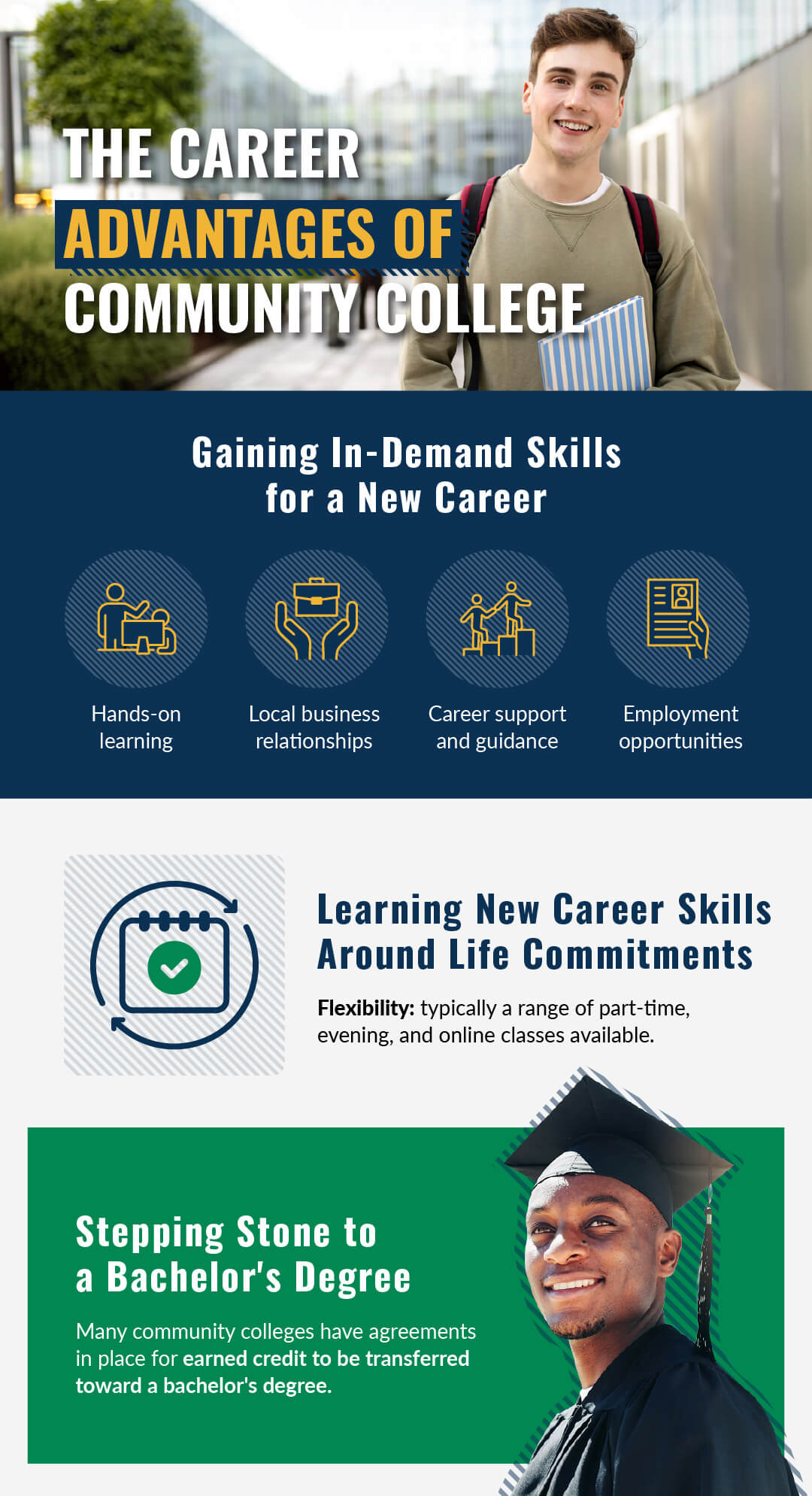
    Understanding how community colleges work can help students decide whether this educational pathway fits their academic goals, financial situation, and future career plans. Community colleges offer associate degrees, professional certificates, technical training, and opportunities to transfer credits toward a bachelor’s degree.

    For some students, a community college is a practical starting point before university. Others attend to gain job-ready skills, change careers, or complete additional education while working.

    This guide explains what community colleges are, how admission and classes work, what programs they offer, how much they may cost, and how students can use them to prepare for further education or employment.

    What Is a Community College?

    A community college is an institution of higher education that generally offers two-year academic programs, associate degrees, certificates, and career-focused training. Most U.S. community colleges are publicly funded and serve students from surrounding communities, although their programs and admission policies vary.

    Unlike many traditional universities, community colleges often provide several educational pathways within the same institution. Students can complete general education courses, study a technical subject, prepare for a particular occupation, or begin coursework toward a bachelor’s degree.

    Common areas of study include:

    • Business administration and accounting.
    • Computer science and information technology.
    • Healthcare and health-related programs.
    • Engineering technology and skilled trades.
    • Psychology and social sciences.
    • Liberal arts and general studies.
    • Early childhood education and other career-focused fields.

    Many community colleges also offer evening classes, part-time enrollment, online courses, tutoring, and academic advising.

    Although they are often associated with two-year education, some community colleges also offer bachelor’s degrees in selected fields. Program availability depends on the institution and applicable state policies.

    Community colleges are particularly useful for students who want to explore their academic interests before committing to a longer or more specialized degree program.

    How Do Community Colleges Work?

    Community colleges operate through structured academic programs, admission procedures, course requirements, and graduation standards. Students select a program, register for the required classes, complete assignments and examinations, and earn credits toward a certificate or degree.

    The exact process depends on whether a student is pursuing an associate degree, technical certificate, transfer program, or another qualification.

    Here is how the process generally works in the United States.

    1. Choose a Program of Study

    The first step is selecting a program that matches your educational interests and career goals.

    For example, a student interested in technology might choose information technology or computer science. Someone interested in business could study accounting, marketing, or business administration.

    If you intend to transfer to a four-year university, look for a program designed around transferable academic credits.

    Review the curriculum, admission requirements, course prerequisites, program duration, and available career services before applying.

    2. Apply for Admission

    Many community colleges have more accessible admission policies than selective four-year universities. Some use open-admission policies for eligible applicants, while specific programs may have additional academic requirements.

    Students generally submit an application and provide the documents requested by the institution. Depending on the program, they may need academic transcripts, proof of previous education, placement assessments, or evidence of English proficiency.

    International students may have additional requirements involving financial documentation, immigration status, and approved student enrollment.

    Always check the college’s official admissions website because admission rules differ between institutions and programs.

    3. Register for Classes

    After admission, students work with an academic advisor or use the college’s registration system to choose courses.

    Each course normally has a credit value, and students must complete the required number and type of credits to graduate.

    A typical associate degree in the United States requires around 60 semester credits, although the exact requirement varies. Students pursuing technical programs or particular qualifications may follow different course structures.

    Academic advisors can help students select the right classes, understand prerequisites, and avoid taking courses that do not count toward their intended degree.

    4. Attend Classes and Complete Coursework

    Community college classes may include lectures, laboratory sessions, workshops, practical training, online activities, group assignments, and examinations.

    Students are expected to complete readings, assignments, projects, and assessments according to the course requirements.

    Some programs emphasize academic study, while others include practical experience or supervised training.

    For example, an information technology program may combine classroom instruction with computer laboratory exercises. A healthcare-related program may require specific clinical placements or practical competencies.

    5. Earn Credits and Complete Graduation Requirements

    Students earn academic credits by successfully completing courses. These credits count toward their selected degree or certificate when they satisfy the program requirements.

    To graduate, students must complete the required courses, maintain any necessary academic standing, and meet the institution’s graduation rules.

    Students who plan to transfer to a university should confirm that their credits will be accepted by the receiving institution.

    Understanding this process early can help students make better academic decisions and avoid unnecessary delays.

    What Degrees and Programs Do Community Colleges Offer?

    Community colleges provide several educational pathways, allowing students to choose between academic study, professional training, and further education.

    Associate Degrees

    An associate degree typically takes about two years of full-time study in the United States.

    Common examples include:

    • Associate of Arts (AA).
    • Associate of Science (AS).
    • Associate of Applied Science (AAS).

    Associate of Arts and Associate of Science programs often include general education and courses intended to support transfer to a bachelor’s degree. Associate of Applied Science programs usually emphasize career preparation, although transfer options vary.

    Certificate Programs

    Certificates focus on particular skills or subject areas. Depending on the program, they may take less than two years to complete.

    Students may pursue certificates in areas such as computer support, accounting, office administration, manufacturing, or other technical fields.

    A certificate can help students develop specific competencies, but its value depends on employer recognition, course content, and the requirements of the intended occupation.

    Career and Technical Training

    Many community colleges offer programs designed to prepare students for particular occupations.

    These may include technical training, laboratory work, practical workshops, internships, or supervised placements.

    Some fields require additional professional examinations, licensing, or certification after completing the college program.

    Transfer Programs

    Transfer programs allow students to complete some undergraduate coursework at a community college before moving to a four-year college or university.

    This can be a useful option for students who want to earn a bachelor’s degree while potentially reducing their initial education costs.

    However, students should confirm transfer requirements before selecting their courses.

    How Long Does Community College Take?

    The time required to complete community college depends on the type of program, course load, and academic progress.

    Program typeTypical study period
    Short-term certificateSeveral months to about one year, depending on the program
    Associate degreeAbout two years of full-time study
    Part-time associate degreeMay take three years or longer
    Transfer pathway to a bachelor’s degreeOften about two years at community college followed by approximately two years at a university

    These are general estimates for common U.S. pathways, not guaranteed completion times.

    Students may need additional time if they attend part-time, repeat courses, change majors, or encounter scheduling limitations.

    Some programs have prerequisites that must be completed before students can take advanced courses. Planning a course schedule with an academic advisor can help students understand the likely graduation timeline.

    How Much Does Community College Cost?

    One of the main reasons students consider community colleges is affordability. Tuition at many public two-year colleges is lower than tuition at four-year institutions, although actual expenses vary considerably.

    The final cost depends on the college, state, residency status, program, financial aid, and whether a student needs accommodation or transportation.

    Students should calculate the total cost of attendance rather than comparing tuition alone.

    Important expenses may include:

    • Tuition and mandatory fees.
    • Textbooks and course materials.
    • Computers, software, and equipment.
    • Transportation and accommodation.
    • Food and everyday living expenses.
    • Program-specific training or examination costs.

    Some students qualify for grants, scholarships, or other financial assistance. Eligibility depends on the funding program, institution, citizenship or residency status, and other conditions.

    International students should carefully review tuition rates and available funding because they may not qualify for the same financial aid as eligible domestic students.

    Can You Transfer From Community College to a University?

    Yes. Many students attend community college before transferring to a four-year institution to complete a bachelor’s degree.

    This is often called the 2+2 pathway: students complete approximately two years of study at a community college and then continue at a university for the remaining portion of a bachelor’s degree.

    For example, a student may complete general education and introductory business courses at a community college before transferring to a university business program.

    This pathway can help reduce education costs, but successful transfer requires careful planning.

    How the Transfer Process Works

    1. Choose a potential bachelor’s degree program.
    2. Research universities that accept transfer students.
    3. Review transfer admission requirements and deadlines.
    4. Check which community college courses satisfy the university’s requirements.
    5. Meet with advisors at both institutions when possible.
    6. Apply for transfer admission and submit the required documents.

    Not every course automatically transfers. Universities may require minimum grades, specific prerequisites, or particular associate degree programs.

    Some institutions have formal transfer agreements that identify which courses count toward a bachelor’s degree. These arrangements can make planning easier.

    Before enrolling at a community college, ask the intended university how your credits will apply to your chosen major. This is especially important for programs with strict course sequences, such as engineering or certain science degrees.

    What Are the Benefits of Attending a Community College?

    Community colleges can provide several advantages for students who want an accessible and flexible route into higher education.

    1. Lower Initial Education Costs

    Community colleges often have lower tuition rates than four-year institutions, particularly for eligible local students.

    Completing the first portion of a bachelor’s degree at a community college may reduce total costs if the credits transfer successfully.

    However, students should compare the full cost of both pathways, including living expenses and any additional semesters required after transferring.

    2. Flexible Study Options

    Many community colleges offer full-time and part-time enrollment, evening classes, and online courses.

    This flexibility can help students balance education with employment, family responsibilities, or other commitments.

    Class schedules and online options vary by institution, so students should check whether the courses they need are available at suitable times.

    3. Career-Focused Training

    Some community college programs are designed around practical skills and local workforce needs.

    Students may gain experience through laboratory work, technical workshops, internships, or supervised training.

    Career-focused programs can be useful for people seeking a new occupation or additional skills, although employment outcomes depend on the program and local job market.

    4. Opportunities to Explore Different Subjects

    Students who are uncertain about their academic direction may use community college courses to explore several subjects.

    Introductory courses can help students identify their interests before choosing a major or transferring to a university.

    It is still important to work with an advisor so that exploratory courses support a realistic academic plan.

    5. Academic Support Services

    Many community colleges offer tutoring, academic advising, writing assistance, career counseling, and other student support services.

    These resources can help students adjust to college-level work and understand their educational options.

    The services available differ across institutions, so review the support options before choosing a college.

    What Are the Disadvantages of Community College?

    Although community college can be an excellent option, it is not the right choice for every student.

    Understanding potential challenges helps you make a balanced decision.

    Limited Availability of Certain Programs

    Some specialized majors, research opportunities, and professional programs are more readily available at four-year universities.

    Students pursuing a specific career should confirm that the community college offers suitable preparation for their intended pathway.

    Transfer Credits May Not Be Accepted

    Students who intend to transfer may discover that some courses do not meet the receiving university’s requirements.

    This can increase the time and cost needed to complete a bachelor’s degree.

    Planning courses around a recognized transfer agreement can help reduce this risk.

    Different Campus Experiences

    Community colleges vary in campus facilities, student activities, housing options, and extracurricular opportunities.

    Some students may prefer the residential experience, research facilities, or broader campus life available at certain universities.

    Others value the flexibility and local focus of a community college.

    Visit campus or review student services, clubs, facilities, and learning resources to determine which environment suits you.

    Career Requirements May Demand Further Education

    An associate degree or certificate does not qualify graduates for every professional role.

    Some careers require a bachelor’s degree, a professional license, or additional training.

    Research the qualifications required for your target occupation before selecting a program.

    Community College vs. Four-Year University

    Community colleges and four-year universities both provide higher education, but their program structures and typical student pathways differ.

    FeatureCommunity CollegeFour-Year University
    Common qualificationsCertificates and associate degrees; some offer bachelor’s degreesBachelor’s, master’s, and doctoral degrees, depending on the institution
    Typical associate degree durationAbout two yearsMay offer associate programs, but bachelor’s study typically takes about four years
    TuitionOften lower for eligible studentsVaries; can be higher, especially at some institutions
    Class structureVaries; may include smaller classes and practical trainingVaries by institution and course
    Transfer optionsCan provide a pathway to a universityAccepts eligible transfer students under its policies
    Career preparationTechnical training and selected academic pathwaysBroad undergraduate and advanced academic pathways

    Neither institution type is automatically better. The right choice depends on your budget, career requirements, preferred learning environment, and long-term education plans.

    A student pursuing a profession that requires a bachelor’s degree may benefit from a direct university route or a carefully planned community college transfer pathway.

    A student seeking a short-term technical qualification may prefer a suitable community college program.

    How Can International Students Attend Community College in the USA?

    International students may attend eligible U.S. community colleges, provided they meet the institution’s admission requirements and applicable immigration rules.

    For international applicants, the process generally involves researching suitable colleges, confirming eligibility, preparing academic documents, and meeting English-language requirements where applicable.

    Step 1: Research Colleges and Programs

    Choose colleges that offer the subject you want to study and confirm that they accept international students.

    Review tuition fees, course availability, academic requirements, and whether the program supports your future educational goals.

    Step 2: Check Admission Requirements

    International applicants may need academic transcripts, proof of previous education, English-language test results, and other documents requested by the institution.

    Requirements vary, so follow the official application instructions for each college.

    Step 3: Prepare a Financial Plan

    Estimate tuition, accommodation, food, transportation, health insurance where required, and other living expenses.

    Review scholarship opportunities and confirm which funding sources are available to international students.

    Step 4: Understand Student Visa Requirements

    Students intending to study in the United States should review the relevant student visa requirements and confirm that the college and program support the required enrollment documentation.

    Do not assume that admission automatically provides permission to enter the country or work.

    Consult official U.S. government immigration resources and the college’s international student office.

    Step 5: Plan for Transfer if Necessary

    If your goal is a bachelor’s degree, identify possible transfer universities before selecting your courses.

    Ask about articulation agreements, credit transfer, minimum grades, and the university’s admission requirements.

    Who Should Consider Community College?

    Community college may be suitable for several types of students.

    Students seeking an affordable starting point: Those who want to manage initial education costs may consider beginning at a public community college before transferring, provided the full pathway is financially and academically appropriate.

    Students interested in technical careers: Career-focused certificates and associate degree programs may provide relevant training for selected occupations.

    Students who want flexible schedules: Part-time and evening options can help some students combine study with other responsibilities.

    Students exploring different majors: Introductory courses can help students discover their interests before committing to a bachelor’s program.

    Students returning to education: Adults who want to update their skills, pursue a new career, or complete additional qualifications may find community college programs useful.

    However, students should compare their individual goals with the actual courses and services available. The best pathway is the one that meets your academic requirements and prepares you for your intended next step.

    How to Choose the Right Community College

    Selecting a community college requires more than comparing tuition prices. Students should evaluate the quality and suitability of the program, the institution’s recognition, available support, and future opportunities.

    Consider these factors before applying:

    • Accreditation and recognition: Confirm that the institution is appropriately accredited or recognized for your intended educational pathway.
    • Program curriculum: Review required courses, practical training, and graduation requirements.
    • Transfer agreements: If you want a bachelor’s degree, confirm how your credits will transfer.
    • Total cost: Compare tuition, fees, housing, transportation, and other expenses.
    • Academic support: Check the availability of advising, tutoring, career counseling, and other services.
    • Class schedules: Make sure the program offers courses that fit your circumstances.
    • Career outcomes: Investigate internships, employer connections, and relevant graduate outcomes where reliable data are available.

    Frequently Asked Questions About Community Colleges

    1. How do community colleges work in the USA?

    Community colleges offer academic courses, associate degrees, certificates, and career-focused training. Students apply to a program, register for courses, earn credits, and complete the requirements for their chosen qualification. Eligible students may also transfer credits to a four-year university.

    2. Is community college free in the United States?

    Community college is not universally free. Tuition and fees depend on the institution, state, residency status, and program. Some students qualify for grants, scholarships, or other assistance that reduces their costs.

    3. How long does it take to complete community college?

    An associate degree commonly takes about two years of full-time study. Shorter certificate programs may take several months, while part-time study can extend the completion time.

    4. Can you transfer from community college to a university?

    Yes. Many universities accept transfer students from community colleges. The number of credits accepted depends on course equivalency, grades, program requirements, and transfer agreements.

    5. Is a community college degree recognized?

    Recognition depends on the institution, qualification, and country in which you want to use the credential. Check the college’s accreditation or official recognition and confirm whether the qualification meets your employer’s or receiving university’s requirements.

    6. Can international students attend community college?

    Yes, eligible international students can attend U.S. community colleges that accept international applicants and meet applicable student enrollment requirements. Applicants should check admission criteria, financial documentation, English-language requirements, and visa rules.

    7. Is community college better than a university?

    Neither option is universally better. Community college may be more affordable and flexible for some students, while a four-year university may offer a more direct route to certain bachelor’s programs or specialized opportunities. Compare both options against your goals and circumstances.

    8. Can you get a job after community college?

    Yes, some graduates find employment after earning an associate degree or certificate. Opportunities depend on the program, occupation, practical experience, local demand, and any required licensing or certification.

    Conclusion

    Understanding how community colleges work can help students identify an educational pathway that matches their goals, budget, and preferred learning environment.

    Community colleges offer more than a lower-cost alternative to a four-year university. They provide associate degrees, certificates, career training, academic support, and opportunities to continue toward a bachelor’s degree.

    For some students, a community college is a practical starting point for higher education. For others, it provides focused training or a flexible way to develop new skills while managing other responsibilities.

    Before applying, compare program requirements, tuition costs, institutional recognition, and potential career outcomes. If you plan to transfer to a university, confirm that your courses will count toward your intended bachelor’s degree.

    With careful research and academic planning, community college can be a valuable step toward further education, professional development, and long-term career goals.

  • Associate Degree vs Bachelor’s Degree: Key Differences

    Associate Degree vs Bachelor’s Degree: Key Differences

    Choosing the right college degree is an important step toward achieving your educational and career goals. Students often compare an associate degree with a bachelor’s degree because both qualifications can provide valuable knowledge, develop professional skills, and create opportunities for further education. However, they differ in program length, coursework, cost, and the types of careers they may support.

    Understanding the differences between an associate degree vs bachelor’s degree can help you make a more informed decision about your future. Some students prefer a shorter program that allows them to enter the workforce sooner, while others want a four-year degree that provides more in-depth study and access to careers requiring a bachelor’s qualification.

    This guide explains what each degree involves, compares their main features, explores potential career opportunities, and helps you decide which educational pathway best fits your goals.

    What Is an Associate Degree?

    An associate degree is an undergraduate qualification that typically takes about two years of full-time study to complete in the United States. It is commonly offered by community colleges, technical colleges, and some universities.

    Associate degree programs provide foundational knowledge in a particular subject and may combine general education courses with practical or career-focused training.

    Common associate degree programs include:

    • Associate of Arts (AA)
    • Associate of Science (AS)
    • Associate of Applied Science (AAS)
    • Associate of Applied Arts (AAA), where offered

    The exact degree types and requirements vary by institution.

    An Associate of Arts or Associate of Science degree may be designed to help students transfer credits to a four-year university. An Associate of Applied Science degree often emphasizes practical preparation for employment, although transfer opportunities depend on the receiving institution and program.

    Students may pursue associate degrees in business, information technology, accounting, healthcare support, liberal arts, and other fields.

    One major advantage is the shorter time commitment. Students may be able to complete their initial college education with lower total tuition costs before deciding whether to enter the workforce or continue studying.

    However, an associate degree does not meet every employer’s educational requirements. Some professional positions require a bachelor’s degree, a license, or additional specialized training.

    What Is a Bachelor’s Degree?

    A bachelor’s degree is an undergraduate qualification that usually takes about four years of full-time study to complete in the United States. It is offered by colleges and universities across a wide range of academic disciplines.

    Bachelor’s programs generally require more coursework than associate degree programs and provide opportunities for deeper specialization.

    Common bachelor’s degrees include:

    • Bachelor of Arts (BA)
    • Bachelor of Science (BS or BSc)
    • Bachelor of Business Administration (BBA)
    • Bachelor of Engineering (BEng), where offered

    The structure of a bachelor’s degree depends on the subject and university. Students typically complete general education requirements, courses related to their major, electives, and sometimes internships, research projects, or practical placements.

    Popular fields include computer science, engineering, business administration, psychology, education, biology, finance, and communications.

    A bachelor’s degree may be particularly useful for careers that require more advanced academic preparation or specify a four-year degree as a minimum qualification.

    It can also provide a foundation for postgraduate study, including master’s programs and certain professional degree pathways, subject to admission requirements.

    Although a bachelor’s degree usually requires more time and money, it may offer access to additional career opportunities. The actual benefits depend on the degree subject, work experience, employer requirements, and local job market.

    Associate Degree vs Bachelor’s Degree: Key Differences

    The main differences between these qualifications involve the time required to graduate, the number of credits earned, the depth of study, and the financial investment.

    FeatureAssociate DegreeBachelor’s Degree
    Typical duration in the USAbout 2 yearsAbout 4 years
    Typical credit requirementsAround 60 semester creditsAround 120 semester credits
    Common institutionsCommunity and technical colleges; some universitiesColleges and universities
    CourseworkFoundational or career-focusedMore extensive and specialized
    Total education costOften lowerOften higher
    Career preparationEntry-level or field-specific opportunities, depending on the programBroader opportunities in fields requiring a bachelor’s qualification
    Further educationMay transfer toward a bachelor’s degreeMay qualify students to apply for postgraduate programs
    Best suited forStudents seeking a shorter route or a transfer pathwayStudents seeking deeper study or careers requiring a bachelor’s degree

    These figures reflect common US degree structures, not universal requirements. Program length, credit systems, costs, and degree recognition vary across countries and institutions.

    1. Difference in Program Duration

    One of the most noticeable differences between an associate degree and a bachelor’s degree is the time needed to complete each program.

    An associate degree generally takes two years of full-time study, while a bachelor’s degree typically takes four years.

    The shorter duration of an associate degree may appeal to students who want to gain a qualification quickly or begin earning an income sooner.

    For example, a student enrolled in a two-year business program may complete the required courses and pursue suitable entry-level opportunities before a student enrolled in a four-year business administration program graduates.

    However, completion time depends on several factors, including course availability, transfer credits, part-time enrollment, academic progress, and program requirements.

    Students should also consider whether their intended career requires additional qualifications beyond the initial degree.

    2. Difference in Tuition Fees and Overall Cost

    Education costs can significantly influence a student’s choice between an associate degree and a bachelor’s degree.

    Associate degree programs often cost less overall because they usually require fewer semesters of study. Community colleges may also offer lower tuition rates than four-year institutions, particularly for eligible local students.

    A bachelor’s degree generally involves a longer period of tuition payments and may require additional spending on accommodation, transportation, books, and other educational expenses.

    However, the actual cost depends on the institution, location, residency status, financial aid, and program.

    Students should compare the total estimated cost of each pathway rather than relying on the degree title alone.

    When evaluating expenses, consider:

    • Tuition and mandatory university fees.
    • Accommodation, food, and transportation.
    • Books, software, and study materials.
    • Scholarships, grants, and other financial aid.
    • Additional costs for internships, licensing, or professional examinations.

    An associate degree can be a cost-conscious starting point if you plan to transfer into a bachelor’s program. Before choosing this route, confirm which credits the receiving university will accept. If many credits do not transfer, the combined pathway may take longer or cost more than expected.

    3. Difference in Coursework and Academic Depth

    Associate and bachelor’s degree programs may cover similar introductory subjects, but their overall academic requirements differ.

    An associate degree usually focuses on foundational knowledge, introductory major courses, and, depending on the program, practical skills that support employment or further study.

    A bachelor’s degree typically provides a broader sequence of courses in the major and may include advanced topics, research methods, internships, capstone projects, or specialized electives.

    For example, an associate degree in information technology might emphasize computer systems, technical support, networking fundamentals, and introductory programming.

    A bachelor’s degree in computer science may include these foundations while also exploring algorithms, software engineering, advanced programming, data structures, and theoretical computing.

    The precise curriculum varies by institution, so review actual course lists before enrolling.

    If you prefer a shorter, focused program, an associate degree may be a good starting point. If your goals involve advanced subject knowledge or a profession requiring a bachelor’s qualification, a four-year program may be more suitable.

    4. Difference in Career Opportunities

    Career opportunities depend on the degree subject, relevant skills, experience, employer requirements, and local employment conditions.

    An associate degree can prepare students for certain entry-level or technical positions. A bachelor’s degree may satisfy the educational requirements for additional professional and organizational roles.

    For example, an associate degree in information technology may help prepare a student for selected IT support positions, depending on the employer’s requirements and the student’s practical skills.

    A bachelor’s degree in computer science may provide a pathway toward software development, systems analysis, or other roles that require deeper technical knowledge.

    These examples are illustrative rather than guaranteed outcomes. Some employers accept associate degree holders for roles that others reserve for bachelor’s degree graduates.

    Before selecting a degree, research job advertisements in your intended field. Look for the minimum education required, preferred qualifications, relevant certifications, and experience employers expect.

    This research can help you avoid spending time and money on a qualification that does not match your career plans.

    5. Difference in Earning Potential

    Students often compare associate and bachelor’s degrees because they want to understand how education may influence their future income.

    In the United States, bachelor’s degree holders earn more on average than workers whose highest qualification is an associate degree, according to national education and labor statistics. However, average differences do not predict an individual’s salary.

    Earnings vary by industry, location, occupation, experience, working hours, and economic conditions. Certain technical and licensed occupations can offer competitive salaries with an associate degree, while other fields require a bachelor’s degree for entry or advancement.

    When comparing potential earnings, investigate:

    • Typical salaries for your intended occupation.
    • Local demand for qualified workers.
    • The qualifications required for entry-level roles.
    • Opportunities for promotion and specialization.
    • The total cost of obtaining the degree.

    It is also useful to consider how quickly you may be able to enter paid employment and whether you intend to continue studying later.

    The best educational investment is not necessarily the one with the highest advertised salary. It is the one that reasonably aligns with your goals, finances, and employment opportunities.

    6. Can You Transfer From an Associate Degree to a Bachelor’s Degree?

    Yes, many students use an associate degree as a pathway toward a bachelor’s degree. In the United States, some community colleges have transfer agreements with four-year universities that allow eligible students to apply completed credits toward a bachelor’s program.

    This pathway may help students reduce initial tuition costs while completing part of their undergraduate education at a community college.

    However, transferring credits is not automatic.

    The receiving university determines which courses count toward the intended degree. Credit acceptance may depend on accreditation, grades, course equivalency, the student’s major, and any formal transfer agreements.

    Before enrolling in an associate degree program with the intention of transferring, take these steps:

    1. Identify the universities and bachelor’s programs you may want to enter.
    2. Review their transfer admission requirements.
    3. Confirm which associate degree courses are accepted.
    4. Ask whether minimum grades or specific prerequisite courses are required.
    5. Calculate the remaining time and total cost after transferring.

    Whenever possible, obtain written confirmation from the receiving institution about the transfer plan.

    Careful planning can make an associate-to-bachelor’s pathway more efficient and reduce the risk of repeating coursework.

    7. Which Degree Is Better for Students Who Want to Work Quickly?

    If your primary goal is to enter the workforce as soon as possible, an associate degree may be worth considering.

    A two-year program can provide a recognized qualification in less time than a typical four-year bachelor’s degree. Some programs emphasize practical training and prepare students for particular technical or support roles.

    This route may be appealing if you have financial constraints, want to begin earning sooner, or prefer a shorter period of formal education.

    However, speed should not be the only consideration.

    First, verify that employers in your intended field accept the qualification. Some jobs require specific certifications, supervised experience, or professional licensing in addition to an associate degree.

    You should also consider whether you may want to advance into positions that require a bachelor’s degree later.

    If your chosen career has clear opportunities for progression from an associate qualification, beginning with a shorter program may be a practical option.

    8. Which Degree Is Better for Long-Term Career Growth?

    A bachelor’s degree may be the better choice for students whose intended careers require a four-year qualification or provide greater access to specialized positions.

    Some employers use bachelor’s degrees as a minimum requirement for professional roles, graduate training programs, or advancement into management.

    A bachelor’s program may also offer more opportunities to participate in internships, research, major-specific projects, and professional networking.

    However, a four-year degree does not guarantee a particular job, salary, or promotion.

    Long-term career development also depends on practical experience, communication skills, technical expertise, professional relationships, and continued learning.

    Before committing to a bachelor’s degree, compare its curriculum and graduate outcomes with the requirements of your preferred career. If the profession does not require a bachelor’s degree, a shorter qualification combined with relevant experience may also be worth investigating.

    9. Associate Degree vs Bachelor’s Degree for International Students

    International students should consider additional factors when comparing these degrees, especially if they plan to study in the United States or another country away from home.

    Tuition rates, visa rules, institutional recognition, work permissions, and transfer policies may differ from those that apply to domestic students.

    An associate degree may offer a shorter initial study period, but international students should calculate the full cost of the intended educational pathway. If the long-term goal is a bachelor’s degree, include the likely costs of transferring and completing the remaining coursework.

    Students should also verify whether the institution and program meet the relevant visa and enrollment requirements.

    Before making a decision, research:

    • International tuition fees and available scholarships.
    • Admission and English-language requirements.
    • Institutional accreditation or recognition.
    • Credit-transfer and progression arrangements.
    • Applicable student visa and employment rules.
    • Recognition of the qualification in your home country.

    Do not assume that a degree recognized in one country will automatically have the same academic or professional status elsewhere.

    Consult the university’s international admissions office and the appropriate government or qualification-recognition authority for your situation.

    10. How to Choose Between an Associate Degree and a Bachelor’s Degree

    The right degree depends on your educational priorities, financial circumstances, and career plans.

    Use the following steps to make a more informed decision.

    Step 1: Define Your Career Goal

    Identify two or three occupations that interest you. Review job advertisements and official career resources to learn which qualifications are commonly required.

    Step 2: Compare Program Requirements

    Look at the curriculum, admission standards, practical training, internships, and graduation requirements of each program.

    Step 3: Calculate the Total Cost

    Estimate tuition, living expenses, books, transportation, and other costs. Subtract any confirmed financial aid when comparing the options.

    Step 4: Consider Your Preferred Timeline

    Decide whether you want to enter the workforce sooner or are prepared to spend additional time completing a bachelor’s degree.

    Step 5: Check Further Education Options

    If you may continue studying, confirm whether the associate degree can transfer into a specific bachelor’s program and how many credits will count.

    Step 6: Review Long-Term Opportunities

    Investigate career advancement, professional credentials, and whether your intended field typically requires additional education.

    Step 7: Speak With an Academic Advisor

    An advisor can explain admission requirements, course choices, transfer policies, and potential academic pathways.

    Taking these steps can help you select a degree based on evidence rather than assumptions.

    Common Mistakes to Avoid When Choosing a Degree

    Students sometimes focus on a single factor when comparing educational options. Avoid these common mistakes:

    Choosing only by duration: A shorter degree can save time, but it may not meet the qualifications required for your intended career.

    Assuming every credit will transfer: Universities have different transfer policies. Confirm course acceptance before beginning an associate degree if you intend to continue to a bachelor’s program.

    Ignoring total costs: Tuition is only one part of the financial commitment. Include living expenses, fees, transportation, and additional training.

    Selecting a degree based only on salary: Income depends on many factors, including occupation, experience, location, and employer requirements.

    Overlooking accreditation and recognition: Check that the institution and specific program are appropriately recognized for your intended academic or professional pathway.

    Failing to research employers’ requirements: Job titles alone do not tell you which qualifications are necessary. Review actual job descriptions and professional licensing rules.

    Avoiding these mistakes can help you make a more practical and informed educational decision.

    Frequently Asked Questions

    1. What is the main difference between an associate degree and a bachelor’s degree?

    An associate degree typically takes about two years of full-time study in the United States, while a bachelor’s degree usually takes about four years. A bachelor’s program generally requires more credits and offers more extensive study in the chosen field.

    2. Is an associate degree lower than a bachelor’s degree?

    In the US higher education system, an associate degree is generally a shorter undergraduate qualification than a bachelor’s degree. The qualifications are different, and their recognition or equivalence in other countries depends on the relevant education system and assessment authority.

    3. Can I get a good job with an associate degree?

    Yes, an associate degree can qualify graduates for certain technical, support, and entry-level positions. Opportunities depend on the subject, employer requirements, experience, and any additional certifications or licenses needed.

    4. Is a bachelor’s degree worth the extra two years?

    It may be worth the additional time and cost if your chosen career requires a bachelor’s degree or if the program provides useful opportunities for professional development. Compare the total cost, relevant job requirements, and realistic career opportunities before deciding.

    5. Can an associate degree be used toward a bachelor’s degree?

    Yes, some colleges and universities accept associate degree credits toward a bachelor’s program. The number of credits accepted depends on the receiving institution, the courses completed, grades, program requirements, and transfer agreements.

    6. Which degree costs less?

    An associate degree often costs less overall because it typically requires fewer semesters. However, the total cost depends on tuition rates, financial aid, living expenses, and whether additional education is needed later.

    7. Can I earn a master’s degree after an associate degree?

    In the standard US education pathway, students generally need to complete a bachelor’s degree before entering a master’s program. An associate degree alone usually does not satisfy this requirement, although individual institutions and countries may have different admission or recognition rules.

    8. Should I earn an associate degree first or go directly to a bachelor’s degree?

    Consider an associate degree first if it offers a useful qualification, affordable coursework, or a clear transfer pathway. Going directly to a bachelor’s program may be more efficient if your career requires that qualification and you can comfortably manage the time and cost.

    Conclusion

    Understanding the differences between an associate degree vs bachelor’s degree can help you choose an educational path that supports your personal and professional goals.

    An associate degree can provide a shorter and often less expensive route to an undergraduate qualification, with opportunities for employment or further study. A bachelor’s degree typically requires more time and coursework but may provide access to additional careers, deeper specialization, and postgraduate education.

    Neither option is automatically better for every student. Your decision should reflect the qualifications required for your preferred career, your budget, your academic interests, and your long-term plans.

    Before enrolling, compare actual degree programs, investigate employment requirements, and confirm any credit-transfer arrangements. With careful planning, you can choose a pathway that makes effective use of your time, money, and educational opportunities.

  • What Is Liberal Arts Education and Why Does It Matter?

    What Is Liberal Arts Education and Why Does It Matter?

    Choosing the right educational path is an important decision for students preparing for college and their future careers. While many degree programs focus on a specific profession or technical skill, a liberal arts education takes a broader approach. It encourages students to explore different subjects, understand diverse perspectives, and develop skills that can be applied in many areas of life.

    The benefits of liberal arts education extend beyond academic knowledge. Students can strengthen their critical thinking, communication, creativity, research, and problem-solving abilities while learning how different subjects connect to real-world challenges.

    Whether you are planning to attend college, exploring possible majors, or comparing degree options, understanding liberal arts education can help you make a more informed decision. This guide explains what liberal arts education means, its major benefits, potential career opportunities, and how to determine whether it is the right choice for you.

    What Is Liberal Arts Education?

    Liberal arts education is an approach to learning that combines broad academic knowledge with the development of intellectual and practical skills. Rather than concentrating exclusively on one narrow subject, students study different disciplines to understand the world from multiple perspectives.

    These disciplines commonly include the humanities, social sciences, natural sciences, mathematics, and the arts. Depending on the college and degree program, students may also explore technology, languages, economics, history, literature, philosophy, and environmental studies.

    For example, a student studying economics might also take courses in history, writing, statistics, and political science. This combination helps students understand not only economic principles but also the social, historical, and cultural factors that influence economic decisions.

    Liberal arts education does not mean avoiding specialization. Many students choose a major while completing courses in other fields. The goal is to develop both subject-specific knowledge and transferable skills that remain useful across different situations.

    Why Does Liberal Arts Education Matter?

    Modern society presents challenges that often require more than technical knowledge alone. Professionals must communicate effectively, evaluate information, collaborate with others, and adapt to changing circumstances.

    A liberal arts education encourages students to examine problems from different angles and connect ideas across academic disciplines. These abilities can support professional development, informed decision-making, and lifelong learning.

    For example, a healthcare professional needs scientific knowledge but may also benefit from communication skills and an understanding of human behavior. Similarly, a business professional may use financial analysis alongside knowledge of culture, ethics, and consumer psychology.

    The National Academies of Sciences, Engineering, and Medicine has discussed how integrating the arts and humanities with science and technology can support learning outcomes such as communication, teamwork, critical thinking, and problem-solving.

    This broader approach makes liberal arts education relevant to students preparing for many different professional and personal responsibilities.

    1. Develops Strong Critical Thinking Skills

    One of the most important benefits of liberal arts education is the opportunity to strengthen critical thinking.

    Students frequently examine complex questions, compare competing arguments, interpret evidence, and explain their conclusions. These activities encourage them to move beyond memorization and develop a deeper understanding of what they learn.

    For example, a history assignment may ask students to compare different explanations for an important event. A science course may require them to evaluate experimental evidence, while a philosophy class may challenge them to examine the assumptions behind an argument.

    Through these experiences, students can learn to:

    • Distinguish reliable evidence from unsupported claims.
    • Recognize bias and misleading information.
    • Compare different viewpoints before reaching conclusions.
    • Identify weaknesses in arguments.
    • Make decisions based on evidence and logical reasoning.

    Critical thinking is useful in many professional fields, including business, education, journalism, healthcare, public policy, and technology.

    It is also valuable in everyday life, where people regularly encounter conflicting information and must decide which sources deserve their trust.

    2. Improves Written and Verbal Communication

    Clear communication is essential in education, employment, and personal relationships. Liberal arts programs often give students regular opportunities to write essays, deliver presentations, participate in discussions, and explain complicated ideas.

    These activities help students organize their thoughts and communicate information to different audiences.

    For example, a student researching climate change may need to summarize scientific findings in a written report and then explain those findings during a classroom presentation. Both tasks require an understanding of the subject and the ability to communicate it clearly.

    Students can strengthen several important communication skills through liberal arts coursework:

    • Academic and professional writing.
    • Public speaking and presentation delivery.
    • Active listening and discussion.
    • Research-based argumentation.
    • Adapting messages for different audiences.

    These skills can support careers in marketing, management, public relations, teaching, consulting, research, and many other fields.

    Strong communication also helps graduates collaborate with colleagues, explain decisions, and present ideas confidently.

    3. Encourages Creativity and Innovation

    Creativity is not limited to artists, designers, or writers. It also plays a role in scientific discovery, business development, engineering, and everyday problem-solving.

    Liberal arts education encourages students to explore different ideas, question familiar assumptions, and make connections between subjects.

    For instance, studying literature can help students interpret human experiences, while learning psychology can introduce concepts about motivation and behavior. Combining these perspectives may help a student develop more thoughtful approaches to storytelling, product design, or customer communication.

    Creative thinking can help students:

    • Generate different solutions to a problem.
    • Explore unfamiliar perspectives.
    • Connect ideas across disciplines.
    • Adapt existing concepts to new situations.
    • Develop original projects and research questions.

    In professional environments, these abilities may support innovation and help teams respond to challenges that do not have obvious solutions.

    4. Builds Research and Problem-Solving Abilities

    Liberal arts students often complete research assignments that require them to locate information, assess sources, identify patterns, and present evidence-based conclusions.

    These activities teach students how to investigate a question systematically instead of relying on assumptions.

    Consider a student researching the effects of social media on young people. The student may examine academic studies, compare research methods, evaluate statistical findings, and identify limitations in the available evidence.

    This process develops a structured approach to problem-solving.

    Students learn to define a question, gather relevant information, consider alternative explanations, and support their conclusions with appropriate evidence.

    These skills can be useful in research, business strategy, public administration, education, communications, and other fields where people must analyze information before making decisions.

    Research and problem-solving abilities also encourage independent learning, helping graduates continue developing their knowledge after college.

    5. Promotes Cultural Awareness and Empathy

    Understanding people from different backgrounds is increasingly important in education, workplaces, and communities.

    Liberal arts subjects such as history, literature, anthropology, philosophy, and sociology introduce students to different cultures, traditions, social structures, and human experiences.

    Reading literature from another country, for example, may help students understand how historical events and cultural expectations influence people’s lives. Studying sociology can encourage them to examine how communities, institutions, and social conditions affect individual behavior.

    These experiences can help students become more aware of perspectives that differ from their own.

    Cultural awareness and empathy may support:

    • More effective communication across cultures.
    • Better teamwork in diverse environments.
    • Greater appreciation of different viewpoints.
    • More thoughtful responses to social issues.
    • Stronger interpersonal and relationship-building skills.

    These abilities are useful in international business, education, healthcare, diplomacy, community work, and other professions involving diverse groups of people.

    6. Provides Flexibility Across Different Career Paths

    Another important benefit of liberal arts education is career flexibility.

    Some degree programs prepare students for specific professions, while liberal arts programs may develop a broader combination of analytical, communication, research, and interpersonal skills.

    These transferable skills can be applied in different industries, although the qualifications required for each role vary.

    For example, a graduate with a history degree might pursue opportunities in research, education, communications, public service, or related areas. A graduate with an English degree may explore writing, editing, publishing, marketing, or content development.

    Students can further expand their options through internships, professional certifications, technical training, work experience, and specialized postgraduate study.

    However, a liberal arts degree does not automatically qualify graduates for every profession. Fields such as medicine, nursing, and licensed engineering may require specific degrees, professional examinations, or additional credentials.

    The advantage is that liberal arts education can provide a broad foundation that students build upon as their interests and career goals evolve.

    7. Supports Lifelong Learning and Adaptability

    Professional knowledge and workplace expectations can change over time. Graduates may need to learn new technologies, move into different roles, or develop skills that were not central to their original degree.

    Liberal arts education encourages students to ask questions, evaluate new information, and understand unfamiliar concepts.

    These habits can support lifelong learning.

    For example, a communications graduate working in digital marketing may later need to learn analytics tools or understand emerging online platforms. Skills in research, writing, and critical thinking can help that person learn new techniques and apply them effectively.

    Adaptability does not replace specialized expertise. Instead, it helps people build on their existing knowledge when circumstances change.

    Students can strengthen this ability by taking challenging courses, exploring different subjects, participating in practical projects, and remaining open to constructive feedback.

    8. Encourages Ethical Reasoning and Responsible Decision-Making

    Professional decisions can involve questions about fairness, responsibility, privacy, and the consequences of human actions.

    Liberal arts disciplines such as philosophy, political science, history, and literature can help students examine these issues from multiple perspectives.

    For example, a student studying business may explore how companies balance profitability with environmental responsibility. A technology student may consider privacy concerns associated with collecting personal data.

    These discussions encourage students to examine the possible consequences of their choices rather than focusing only on immediate results.

    Ethical reasoning can help graduates recognize competing interests, explain their decisions, and consider how their actions affect other people.

    Although ethical judgment can be developed through many educational approaches, exposure to different perspectives and structured debate can provide useful opportunities to practice it.

    9. Creates a Strong Foundation for Further Education

    A liberal arts education can also prepare students for advanced study in a range of academic and professional fields.

    Students develop skills in reading, research, writing, analysis, and presenting arguments. These abilities can be valuable when completing research projects, preparing graduate applications, or studying complex subjects.

    For example, students interested in law may benefit from experience evaluating arguments and interpreting texts. Those considering graduate research may develop useful foundations in academic writing and evidence analysis.

    Medical and other professional programs may accept applicants from different undergraduate backgrounds, depending on their admission requirements. However, students must complete the required prerequisite courses and meet all relevant entry standards.

    Before choosing an undergraduate major with the intention of pursuing further education, review the admission criteria for your intended postgraduate program.

    Planning early can help you combine the broad benefits of liberal arts education with the specific qualifications required for your next academic step.

    10. Helps Students Become Informed and Engaged Citizens

    Education can contribute to personal development as well as professional preparation.

    Liberal arts courses often explore history, government, economics, culture, ethics, and social institutions. These subjects can help students understand how communities function and why people disagree about important issues.

    Students may learn to evaluate public information, compare policy arguments, understand historical context, and participate in constructive discussions.

    For example, a political science assignment might ask students to compare policy proposals and assess the evidence supporting different positions.

    Such activities can encourage informed participation in community discussions and public life.

    An understanding of diverse perspectives can also help students engage respectfully with people who hold different beliefs or experiences.

    What Careers Can You Pursue With a Liberal Arts Degree?

    A liberal arts degree can support several career directions, depending on the major, coursework, practical experience, and additional qualifications a student develops.

    Potential career areas include:

    Career fieldPossible rolesUseful complementary skills
    CommunicationsWriter, editor, communications assistantWriting, research, digital tools
    BusinessSales, operations, business supportData analysis, teamwork, organization
    EducationTeaching support, educational program coordinationCommunication, subject knowledge
    Public serviceProgram assistant, community outreachResearch, policy awareness, communication
    MarketingContent specialist, marketing coordinatorWriting, analytics, creativity
    ResearchResearch assistant, information analystData interpretation, critical thinking
    Human resourcesHR assistant, recruitment coordinatorInterpersonal communication, organization

    These examples are illustrative rather than guaranteed career outcomes. Actual eligibility depends on the employer, location, degree requirements, experience, and relevant professional credentials.

    Students can improve their preparation by gaining internship experience, creating a portfolio, learning useful digital tools, and developing a clear understanding of the industries they want to enter.

    When comparing career paths, review current job descriptions to identify the skills and qualifications employers commonly request.

    Liberal Arts Education vs. Specialized Education

    Students sometimes compare liberal arts education with specialized degree programs when deciding what to study.

    Both approaches can provide valuable preparation, but they emphasize different aspects of learning.

    FeatureLiberal arts educationSpecialized education
    Main focusBroad knowledge and transferable skillsConcentrated study in a particular field
    Course structureOften includes several disciplinesOften emphasizes subject-specific courses
    Skill developmentAnalysis, communication, research, adaptabilityTechnical or professional knowledge, depending on the program
    Career preparationMay support several career directionsMay provide a more direct route to certain occupations
    ExamplesHistory, philosophy, interdisciplinary studiesNursing, accounting, mechanical engineering

    The distinction is not absolute. Many specialized programs include general education courses, while liberal arts students can develop expertise through their majors and electives.

    The best choice depends on your interests, career plans, finances, and the qualifications required for your intended profession.

    Students who want broad academic exploration may appreciate liberal arts education. Those preparing for a profession with strict educational requirements may need a specific degree or accredited training pathway.

    Is Liberal Arts Education Worth It?

    Whether liberal arts education is worth the investment depends on your goals and how you use the opportunities available during college.

    Its potential value includes developing transferable skills, exploring multiple disciplines, preparing for further education, and building a broad understanding of the world.

    However, students should also consider tuition fees, financial aid, employment goals, and the practical experience they will gain during their studies.

    A liberal arts degree may be especially suitable for students who enjoy reading, writing, research, discussion, and examining questions from different perspectives. It can also appeal to students who want to explore several interests before committing to a particular career direction.

    To make the most of the degree, combine academic learning with internships, relevant projects, networking, and practical skills that match your intended career.

    Before enrolling, review the university’s curriculum, academic support services, graduate outcomes where available, and opportunities for career development.

    The goal is not simply to earn a degree but to build a combination of knowledge and skills that supports your future plans.

    How to Make the Most of a Liberal Arts Education

    Students can gain more value from a liberal arts program by approaching college as an opportunity to explore, practice, and develop useful abilities.

    Choose Courses Strategically

    Select courses that complement your major and support your interests. For example, a literature student interested in publishing might explore communications or digital media, while a sociology student interested in public policy might study economics or statistics.

    Participate in Research and Projects

    Research papers, presentations, group assignments, and independent projects provide opportunities to apply classroom learning. Keep examples of your strongest work when appropriate for a professional portfolio.

    Gain Practical Experience

    Look for internships, volunteering, part-time work, campus activities, or community projects related to your interests. Practical experience can help you understand workplace expectations and demonstrate your skills to employers.

    Develop Digital and Technical Skills

    Depending on your intended career, consider learning spreadsheet analysis, presentation software, digital communication tools, data visualization, or introductory programming.

    These skills can complement a broad academic background and help you meet the requirements of particular roles.

    Build Professional Connections

    Attend career events, communicate with professors, join relevant student organizations, and connect with professionals in your preferred industry.

    Career conversations can help you identify opportunities and understand which additional skills or qualifications may be valuable.

    Reflect on Your Goals Regularly

    Your interests may change as you gain experience. Review your academic progress, explore new opportunities, and speak with an academic advisor when you need guidance.

    A flexible approach can help you connect your education with realistic professional and personal goals.

    Frequently Asked Questions About Liberal Arts Education

    1. What are the main benefits of liberal arts education?

    The main benefits include developing critical thinking, communication, creativity, research, problem-solving, cultural awareness, and adaptability. These skills can support academic progress, professional development, and lifelong learning.

    2. Is liberal arts education useful in today’s job market?

    Yes, it can be useful because many roles require people to analyze information, communicate clearly, work with others, and solve problems. However, employability also depends on the chosen major, relevant experience, employer requirements, location, and any additional qualifications needed.

    3. What subjects are included in liberal arts education?

    Common subjects include literature, history, philosophy, languages, political science, sociology, psychology, mathematics, natural sciences, and the arts. The exact curriculum depends on the institution and degree program.

    4. Can you get a good job with a liberal arts degree?

    Graduates may pursue opportunities in communications, marketing, education, business, public service, research, and other areas. Career prospects vary by major, experience, location, and employer requirements. Internships and complementary technical skills can help students prepare for specific roles.

    5. What is the difference between liberal arts and liberal arts education?

    The liberal arts refer to a broad group of academic disciplines, including the humanities, social sciences, sciences, and mathematical subjects. Liberal arts education is the teaching approach that uses these disciplines to develop broad knowledge and transferable skills.

    6. Is liberal arts education better than STEM education?

    Neither approach is automatically better. STEM programs emphasize science, technology, engineering, and mathematics, while liberal arts education often places greater emphasis on learning across multiple disciplines. Many students benefit from combining technical knowledge with communication, ethical reasoning, creativity, and critical thinking.

    7. Who should consider a liberal arts degree?

    Students who enjoy exploring different subjects, researching questions, communicating ideas, and understanding human experiences may find liberal arts education appealing. It can also suit students interested in careers that value transferable skills, provided they plan for any additional qualifications their preferred roles require.

    Conclusion

    The benefits of liberal arts education go beyond studying a variety of subjects. This educational approach can help students develop critical thinking, communication, creativity, research, cultural awareness, and the ability to adapt to new challenges.

    These skills can support many professional paths while helping students become thoughtful learners and informed members of their communities. However, a successful educational experience also depends on choosing suitable courses, gaining practical experience, and understanding the qualifications required for your intended career.

    If you are considering a liberal arts degree, take time to compare university programs, examine course requirements, and research possible career opportunities. Combine broad academic learning with practical skills and real-world experience to make your education more relevant to your goals.

    By developing both a broad understanding of the world and deeper knowledge in your chosen field, you can build a strong foundation for continued learning and future opportunities.

  • How to Choose the Right College Major for Your Future

    How to Choose the Right College Major for Your Future

    Choosing a college major is one of the most important decisions students make when planning their education and future careers. The right major can help you develop valuable skills, explore your interests, and prepare for professional opportunities. However, with so many degree programs available, deciding which field to study can feel overwhelming.

    If you are wondering how to choose a college major, start by understanding your strengths, interests, career goals, and educational priorities. Instead of choosing a degree simply because it is popular or offers a potentially high salary, consider how well the subject matches your abilities and the type of future you want to build.

    This guide explains how to evaluate college majors, research career opportunities, compare degree programs, and make a confident decision about your academic future.

    What Is a College Major?

    A college major is the primary subject area a student studies while pursuing an undergraduate degree. It determines many of the courses you take and the knowledge you develop throughout your academic journey.

    Common college majors include business administration, computer science, engineering, psychology, education, biology, finance, and communications.

    Each major offers different learning experiences and potential career pathways. For example, computer science students may study programming and software development, while education majors learn about teaching methods, classroom management, and student development.

    Your major can influence your career options, but it does not necessarily determine your entire professional future. Many graduates work in fields related to their degree, while others apply their transferable skills to different industries.

    1. Identify Your Interests and Passions

    The first step in choosing a college major is understanding what genuinely interests you. College requires time, effort, and commitment, so studying a subject you enjoy can help you stay motivated throughout your degree.

    Think about the subjects you enjoyed in school, the topics you research independently, and the activities that make you curious.

    Ask yourself the following questions:

    • Which school subjects do I enjoy the most?
    • What topics could I study for hours without becoming bored?
    • Do I prefer working with people, numbers, technology, or creative ideas?
    • Which problems would I enjoy solving?
    • What activities make me feel motivated and productive?

    Your answers can help you identify academic fields worth exploring.

    For example, students who enjoy mathematics and logical problem-solving may be interested in engineering, economics, statistics, or computer science. Students who enjoy helping others might explore education, psychology, social work, or healthcare-related programs.

    You do not need to have a lifelong passion before choosing a major. Exploring unfamiliar subjects can also help you discover interests you did not know you had.

    2. Evaluate Your Strengths and Skills

    Your interests are important, but you should also consider your existing strengths and the skills you want to develop.

    Some students perform well in analytical subjects, while others excel at communication, creative thinking, organization, or interpersonal relationships. Understanding your strengths can help you identify programs that match your learning style.

    Consider your academic performance, extracurricular activities, personal projects, and previous experiences.

    For example:

    • Strong analytical skills: Consider mathematics, economics, data science, or engineering.
    • Creative thinking: Explore graphic design, communications, architecture, or media studies.
    • Communication skills: Consider journalism, marketing, public relations, or education.
    • Interest in technology: Explore information technology, cybersecurity, or computer science.
    • Interest in helping people: Research psychology, nursing, education, or social work.

    These are starting points rather than strict rules. You can develop new abilities during college, and you should not automatically reject a subject simply because you find it challenging today.

    The goal is to select a major that combines your current strengths with opportunities for meaningful growth.

    3. Research Career Opportunities for Each Major

    Before selecting a degree program, investigate the career opportunities associated with it. Understanding possible career paths can help you determine whether a major supports your short-term and long-term goals.

    Start by researching job titles, typical responsibilities, required qualifications, and relevant industries. Look beyond the first job you might obtain after graduation and consider how the field could develop over time.

    For example, a business administration degree may support careers in management, operations, marketing, sales, or entrepreneurship. A biology degree may lead toward laboratory work, research, environmental science, or further study for certain healthcare professions.

    Some careers require specific degrees, professional licenses, or additional training. Medicine, nursing, teaching, and certain engineering roles may have particular educational or licensing requirements depending on the country.

    Useful resources include university career centers, government occupational information websites, professional associations, and conversations with people working in your chosen field.

    Researching careers before enrolling can help you avoid choosing a program based on assumptions rather than reliable information.

    4. Consider Future Job Market Demand

    Career opportunities should be part of your decision when choosing a college major. However, selecting a degree solely because a field is currently popular may not be the best long-term strategy.

    Instead, investigate employment trends, employer requirements, emerging industries, and the skills organizations need.

    Fields worth researching include:

    Computer Science and Information Technology

    Computer science programs cover subjects such as programming, algorithms, software development, and computing systems. Depending on the curriculum and additional experience, graduates may pursue opportunities in software development, IT, cybersecurity, or data-related roles.

    Business and Finance

    Business and finance majors study areas such as accounting, management, economics, financial analysis, and organizational strategy. Potential careers vary according to the specialization, experience, and professional qualifications a graduate develops.

    Engineering

    Engineering programs combine mathematics, scientific principles, and practical problem-solving. Specializations may include civil, mechanical, electrical, chemical, and computer engineering.

    Healthcare and Life Sciences

    Healthcare and life science programs explore human health, biological systems, research, and related subjects. Career requirements vary considerably, and some professions require accredited qualifications, clinical training, or licensing.

    Education

    Education majors study learning methods, curriculum development, educational psychology, and classroom practices. Students interested in teaching should research the certification requirements that apply in their intended location.

    When comparing fields, examine actual job requirements and local employment information rather than assuming every graduate will find the same opportunities.

    5. Compare College Majors and Course Requirements

    Two degree programs may have similar names but very different curricula. Reviewing their course requirements helps you understand what you will actually study.

    Visit university websites and examine degree plans, course descriptions, electives, practical projects, and specialization options.

    Consider whether you enjoy the main subjects included in the program. For example, a psychology degree may involve research methods and statistics, while a business degree may include accounting, economics, and quantitative analysis.

    Ask yourself:

    • Are the required courses interesting to me?
    • Do I meet the academic prerequisites?
    • Will I have opportunities to explore different subjects?
    • Does the program include practical projects or internships?
    • Can I specialize in an area that interests me?

    Also review graduation requirements and the expected time needed to complete the degree. Some programs have competitive admission processes or strict prerequisite sequences that can affect your academic plan.

    A major should interest you not only because of its title but also because of the learning experience it offers.

    6. Understand Tuition Fees and Education Costs

    The financial cost of a degree is another important factor when deciding which college major to pursue.

    Tuition fees vary by institution, degree level, country, and student residency status. Some programs may also involve additional expenses for laboratory equipment, specialist software, textbooks, clinical placements, or practical training.

    Calculate the likely total cost of completing your degree instead of comparing tuition fees alone.

    Your budget should account for:

    • Tuition and university fees.
    • Accommodation, food, and transportation.
    • Books, learning materials, and equipment.
    • Internship-related or professional certification expenses.
    • Potential scholarships, grants, and financial aid.

    Research scholarships and financial assistance before making a final decision. Some universities provide funding based on academic achievement, financial need, particular subject areas, or other eligibility criteria.

    A more expensive program is not automatically better, and the cheapest option may not provide the resources you need. Compare educational quality, student support, career preparation, and overall affordability before deciding.

    7. Talk to Academic Advisors and Industry Professionals

    You do not have to make this decision alone. Academic advisors, career counselors, professors, graduates, and industry professionals can provide useful perspectives on different majors.

    An academic advisor can explain degree requirements, prerequisites, course selection, and possible academic pathways. A career counselor can help you explore your interests and compare potential careers.

    Speaking with professionals can also give you a clearer understanding of what a particular career involves in everyday life.

    Ask questions such as:

    • What do you enjoy most about your field?
    • What challenges should students understand before entering it?
    • Which skills are most important for beginners?
    • What qualifications do employers commonly require?
    • What practical experiences would you recommend during college?

    You can also speak with current students about their experiences with coursework, teaching quality, internships, and campus resources.

    These conversations provide information that may not be obvious from a university brochure.

    8. Explore Majors Through Electives, Projects, and Internships

    Research is valuable, but practical experience can help you determine whether a subject is right for you.

    If possible, take introductory courses in areas you are considering. Attend university open days, participate in workshops, complete relevant projects, or explore introductory learning resources.

    For example, a student interested in computer science could try a beginner programming project. Someone considering marketing could help organize a student event or develop a sample marketing campaign.

    Internships, volunteering, research projects, and part-time work can also reveal which tasks you enjoy and which skills you need to strengthen.

    Practical exploration is especially useful when two majors seem equally attractive on paper.

    Before changing your degree plan or enrolling in an additional course, check whether the experience fits your academic requirements, schedule, and budget.

    9. Think About Your Preferred Lifestyle and Work Environment

    Choosing a major involves more than selecting a subject. It can also help you prepare for the type of work environment and lifestyle you want in the future.

    Different professions involve different responsibilities, schedules, and working conditions.

    For example, some careers involve teamwork and frequent interaction with people, while others require extended periods of independent research or technical work. Certain professions may involve shift work, travel, fieldwork, or additional professional training.

    Consider which working conditions suit your preferences.

    Would you prefer a structured office environment, a creative workplace, a laboratory, a classroom, or a role that involves working outdoors? Are flexibility, job stability, opportunities for advancement, or the ability to help others particularly important to you?

    You may not know the answers immediately, and your preferences can change over time. Still, thinking about these questions can help you compare career options more realistically.

    10. Create a Shortlist of Your Best College Majors

    Once you have explored your interests, skills, career goals, and educational costs, narrow your choices to two or three majors.

    Comparing a small number of options makes it easier to evaluate the differences between programs.

    Use a simple comparison table to organize your research.

    FactorMajor AMajor BMajor C
    Personal interestHigh, medium, or lowHigh, medium, or lowHigh, medium, or low
    Match with strengthsEvaluate your skillsEvaluate your skillsEvaluate your skills
    Career optionsResearch possible rolesResearch possible rolesResearch possible roles
    Total education costEstimate expensesEstimate expensesEstimate expenses
    Course requirementsReview curriculumReview curriculumReview curriculum
    Further qualificationsCheck requirementsCheck requirementsCheck requirements

    Give greater weight to the factors that matter most to you. For example, a student with a limited budget may prioritize affordability, while someone pursuing a regulated profession may focus on accreditation and required qualifications.

    There is rarely one perfect major for every student. The goal is to identify an option that balances personal interests, academic preparation, practical considerations, and future opportunities.

    Common Mistakes to Avoid When Choosing a College Major

    Even students who research their options carefully can make decisions based on incomplete information. Avoid these common mistakes when selecting a degree.

    Choosing a major only for its salary: Income is an important consideration, but salary expectations should be balanced with job requirements, personal interests, and realistic career prospects.

    Following friends or family without evaluating your own goals: Advice from others can be helpful, but your abilities, preferences, and circumstances should remain central to the decision.

    Selecting a program because it is fashionable: Popular fields change over time. Research the actual curriculum and employment requirements before committing.

    Ignoring course requirements: A degree’s name may sound appealing even when its core subjects do not match your interests. Read the curriculum carefully.

    Overlooking the total cost: Tuition is only one part of the financial commitment. Consider living expenses, equipment, training, and the time required to graduate.

    Assuming your first choice must last forever: Academic and professional interests can develop. Learn about your university’s rules for changing majors, transferring credits, and completing prerequisite courses.

    Making an informed decision does not mean predicting your entire future. It means using the information available to choose a sensible starting point.

    Can You Change Your College Major Later?

    Yes, many colleges allow students to change their majors, although the rules depend on the institution and program.

    Students sometimes discover new interests after taking introductory courses or participating in internships. Others realize that their original degree does not align with their academic strengths or career goals.

    Before changing majors, discuss your plans with an academic advisor. Review the new program’s admission requirements, transferred credits, graduation timeline, and additional costs.

    A change may extend your time in college if the new degree has different prerequisites or required courses. Some competitive programs may also restrict transfers or require a separate application.

    If you are uncertain about your direction, ask whether your university offers an exploratory studies program, undecided-major advising, or electives that allow you to investigate several academic fields.

    Remember that changing your mind after gaining new information is not necessarily a failure. It can be part of making a more informed educational decision.

    How to Choose a College Major If You Are Undecided

    If you do not know what to study yet, start with exploration rather than pressure.

    First, identify a few subjects you enjoy or want to understand better. Next, list your strengths, preferred working environments, and personal priorities.

    Research several majors that match those interests, then compare their introductory courses and possible career pathways. If your university permits it, use electives or introductory classes to explore different fields before making a final commitment.

    Career assessments may also help you identify potential areas of interest. Treat their results as suggestions rather than definitive answers, and discuss them with a qualified career counselor when possible.

    You do not need to know exactly where you will be in ten years to make a useful decision today. Focus on choosing a program that gives you room to learn, develop transferable skills, and explore realistic opportunities.

    Frequently Asked Questions

    1. How do I choose the right college major for my future?

    Start by identifying your interests, strengths, academic preferences, and career goals. Research potential majors, compare their course requirements and costs, and investigate career opportunities. Speaking with academic advisors and professionals can help you make a more informed decision.

    2. Which college major is best for getting a job?

    There is no single major that guarantees employment. Career opportunities depend on factors such as industry demand, location, experience, qualifications, practical skills, and professional networks. Research employment information relevant to your intended career and location before selecting a program.

    3. Should I choose a major based on passion or salary?

    Consider both. A major that interests you may help you remain engaged in your studies, while salary information can help you plan financially. Compare your interests with realistic employment opportunities, educational costs, and the qualifications needed for your preferred career.

    4. What should I do if I cannot decide on a major?

    Create a shortlist of subjects you would like to explore. Review their curricula, take introductory courses where possible, complete relevant projects, and speak with career counselors or academic advisors. You can also investigate whether your college offers an exploratory studies pathway.

    5. Is it normal to change college majors?

    Yes, students sometimes change majors as they discover new interests or reconsider their goals. Before switching, check the academic requirements, transfer-credit policies, graduation timeline, and financial implications.

    6. Does my college major determine my entire career?

    No. Some careers require specific degrees or professional credentials, but many occupations accept graduates from several academic backgrounds. Internships, work experience, projects, networking, and transferable skills can also influence your career options.

    7. How important is job market demand when choosing a major?

    Job market demand is an important consideration, but it should not be your only deciding factor. Review employment trends, local opportunities, employer requirements, and the skills needed to enter your chosen field. Combine this research with your interests, strengths, and educational priorities.

    Final Thoughts

    Learning how to choose a college major starts with understanding yourself and researching the opportunities available to you. Your interests, abilities, career goals, finances, and preferred working environment can all help you identify a suitable academic path.

    Take time to compare degree programs, examine course requirements, research career options, and seek advice from people with relevant experience. Whenever possible, use introductory courses, internships, and practical projects to test your interests before making a commitment.

    Most importantly, remember that choosing a major is the beginning of your professional journey, not a guarantee of one fixed career. Focus on gaining valuable knowledge, developing transferable skills, and remaining open to new opportunities as your goals evolve.

    With thoughtful planning and reliable information, you can choose a college major that supports your education, personal development, and future ambitions.

  • What Is Experiential Learning and How Does It Prepare Students for Work?

    What Is Experiential Learning and How Does It Prepare Students for Work?

    Education is most effective when students can connect what they learn in the classroom with situations they may encounter in everyday life and the workplace. Reading textbooks and attending lectures help students build knowledge, but applying that knowledge through practical activities can deepen their understanding and prepare them for future responsibilities.

    This is where experiential learning becomes important. It encourages students to learn through direct experience, practical activities, problem-solving, experimentation, and reflection. Instead of simply memorizing information, students actively participate in the learning process and discover how academic concepts work in real situations.

    Experiential learning in education helps students connect theory with practice while developing valuable skills such as communication, teamwork, critical thinking, adaptability, and decision-making. These abilities can support academic achievement and help students prepare for internships, employment, and long-term career development.

    In this guide, you will learn what experiential learning means, how it works, which activities students can participate in, and why this educational approach can help bridge the gap between college and the workplace.

    What Is Experiential Learning in Education?

    Experiential learning is an educational approach in which students develop knowledge and skills through meaningful experiences. It involves actively participating in an activity, examining what happens, understanding the lessons involved, and applying those lessons to future situations.

    This approach is often described as learning by doing. However, experiential learning involves more than simply completing a practical task. Students also need opportunities to reflect, receive feedback, connect their experiences to academic concepts, and improve their approach.

    For example, a business student studying marketing might learn about audience research in a lecture. Through experiential learning, the student could conduct a small survey, analyze the responses, identify patterns, and recommend a marketing strategy based on the findings.

    The activity allows the student to apply theoretical knowledge while developing research, communication, analytical, and decision-making skills.

    Experiential learning can take place in classrooms, laboratories, workplaces, community organizations, research settings, and online environments. The specific activity depends on the subject, learning objectives, available resources, and students’ needs.

    Why Is Experiential Learning Important for Students?

    Experiential learning helps students move beyond understanding information to using it effectively. It provides opportunities to practice skills, make decisions, learn from mistakes, and recognize how academic knowledge applies outside the classroom.

    1. It Connects Theory With Practice

    Students often learn concepts that seem abstract until they apply them to a practical problem.

    For example, studying environmental science introduces students to ecosystems, pollution, and sustainability. Participating in a supervised environmental assessment can help them observe how these concepts relate to actual conditions.

    Connecting theory with practice makes academic learning more meaningful and helps students understand when and how to use their knowledge.

    2. It Encourages Active Participation

    Traditional lectures can provide essential information, but students may have limited opportunities to practice applying it during a lesson.

    Experiential activities encourage learners to ask questions, investigate problems, test ideas, and make decisions. This active involvement can help students take greater responsibility for their learning.

    3. It Develops Practical Skills

    Students can develop valuable skills through projects, simulations, internships, research, and community activities.

    These experiences may strengthen problem-solving, teamwork, communication, organization, leadership, and technical abilities. Students also learn how to manage uncertainty and adjust their plans when challenges arise.

    4. It Builds Confidence

    Students may feel uncertain about applying classroom knowledge to unfamiliar situations. Practical experiences allow them to test their understanding in a learning environment where guidance and feedback are available.

    As students complete tasks, recognize their progress, and learn from mistakes, they can develop greater confidence in their abilities.

    5. It Supports Career Preparation

    Employers often value candidates who can apply their knowledge, collaborate with others, communicate professionally, and respond to practical challenges.

    Experiential learning provides opportunities to practice these abilities before graduation. It can also help students identify their strengths, explore career interests, and develop examples they can discuss during job interviews.

    How Does Experiential Learning Work?

    Experiential learning is most effective when students move through a structured process rather than simply participating in an activity without considering what they have learned.

    A widely used framework is David Kolb’s experiential learning cycle, which describes four connected stages.

    Stage 1: Concrete Experience

    Students participate in an activity or encounter a problem directly.

    This could involve completing a laboratory experiment, working on a group project, interviewing community members, conducting research, or participating in an internship.

    The purpose is to give students a meaningful situation in which they can apply knowledge and make decisions.

    Stage 2: Reflective Observation

    After the activity, students examine what happened and consider their experiences.

    They may ask:

    • What went well during the activity?
    • Which problems did I encounter?
    • What decisions did I make?
    • How did other people respond?
    • What would I change next time?

    Reflection helps students recognize patterns and understand the consequences of their actions.

    Stage 3: Abstract Conceptualization

    Students connect their observations with academic concepts, existing knowledge, and new ideas.

    For example, after completing a group project, students might recognize that unclear responsibilities contributed to delays. They can connect this experience to project management principles and develop a better understanding of planning and coordination.

    This stage transforms experience into knowledge that can be applied more broadly.

    Stage 4: Active Experimentation

    Students use what they have learned to improve their approach in a future situation.

    They might create a clearer project schedule, change their research method, test a different design, or use a new communication strategy.

    The next attempt creates another learning experience, allowing the cycle to continue.

    Why the cycle matters: Practical activities create opportunities for learning, but reflection, analysis, feedback, and experimentation help students understand their experiences and improve future performance.

    10 Examples of Experiential Learning in Education

    Experiential learning can be adapted to different academic subjects, age groups, and career goals. The following activities illustrate how students can develop practical understanding through direct participation.

    1. Internships and Work Placements

    Internships allow students to observe professional environments and participate in tasks related to their chosen fields.

    Depending on the role, students may conduct research, prepare reports, assist with projects, support customers, test software, or contribute to administrative activities.

    These experiences help students understand workplace expectations, develop professional relationships, and apply academic knowledge to practical responsibilities.

    To make an internship educational, students should receive suitable guidance, clear learning objectives, and opportunities to reflect on their progress.

    2. Project-Based Learning

    Project-based learning gives students an opportunity to investigate a question or solve a problem through an extended assignment.

    For example, a group of business students might develop a marketing plan for a hypothetical company. They could research customers, evaluate competitors, create promotional materials, and present their recommendations.

    This process encourages research, creativity, collaboration, planning, and critical thinking.

    Students also learn to manage deadlines, divide responsibilities, and revise their work based on feedback.

    3. Laboratory Experiments

    Laboratory activities allow students to test scientific ideas, observe results, and evaluate evidence.

    A biology student might examine how environmental conditions affect plant growth, while a chemistry student could investigate a reaction under controlled conditions.

    These experiences help learners understand scientific methods and recognize that results may differ from initial expectations.

    Students must also learn to follow safety procedures, document observations accurately, and explain the limitations of their findings.

    4. Community-Based Learning

    Community-based learning involves working with local organizations or participating in activities that address community needs.

    Students might help organize an educational event, conduct supervised community research, prepare informational materials, or support a local environmental initiative.

    These activities connect academic subjects with real social contexts. They can also develop empathy, communication, teamwork, and civic responsibility.

    Effective community-based learning should respect the needs, knowledge, and preferences of the people involved rather than treating communities merely as practice environments.

    5. Case Studies and Simulations

    Case studies present students with realistic situations that require analysis and decision-making. Simulations allow them to practice responding to situations in a structured environment.

    For example, business students might analyze a company facing declining sales and recommend a response. Nursing students may practice patient communication in supervised simulations, while law students can examine hypothetical disputes and develop arguments.

    These activities allow students to explore different solutions, evaluate consequences, and learn from mistakes without necessarily creating the risks associated with an actual workplace.

    6. Fieldwork and Educational Visits

    Fieldwork gives students the opportunity to observe environments, collect information, and apply disciplinary methods outside the traditional classroom.

    Geography students might examine land use, environmental science students could conduct supervised field observations, and history students may analyze artifacts or historical locations.

    Educational visits can also introduce students to professional environments, including laboratories, museums, manufacturing facilities, and research institutions.

    Preparation and follow-up activities help students connect observations to course concepts.

    7. Research Projects

    Research projects encourage students to investigate questions, evaluate evidence, develop methods, and communicate findings.

    A student might examine study habits, analyze a dataset, conduct a literature review, or investigate a local environmental issue.

    Research develops analytical thinking, information literacy, organization, and problem-solving. It also teaches students to recognize uncertainty, consider alternative explanations, and support conclusions with evidence.

    8. Entrepreneurship Activities

    Entrepreneurship projects allow students to explore how ideas become products, services, or business models.

    Students might identify a problem, research potential customers, prepare a basic business plan, estimate costs, and present a proposed solution.

    Even when a project does not become a real business, the process can develop creativity, financial awareness, communication, teamwork, and decision-making.

    Students also learn that successful ideas often require testing, feedback, and revision.

    9. Role-Playing and Workplace Scenarios

    Role-playing activities help students practice interpersonal and professional situations.

    For example, students may simulate a job interview, conduct a customer service conversation, negotiate responsibilities in a team, or present a proposal to a fictional client.

    These activities can strengthen communication, listening, emotional awareness, and conflict resolution.

    Afterward, instructors can provide feedback on the students’ approach and help them identify specific ways to improve.

    10. Digital and Online Projects

    Experiential learning does not have to take place in a physical workplace. Digital projects can also provide meaningful practical experience.

    Students might build a website, design a digital campaign, develop a simple application, create an educational resource, or analyze publicly available information.

    Online collaboration can help students practice communication, remote teamwork, digital organization, and independent learning.

    When projects involve real users or external organizations, students should follow appropriate privacy, security, and ethical guidelines.

    How Experiential Learning Prepares Students for Work

    Experiential learning supports career readiness by allowing students to practice the skills and behaviors they may need in professional environments.

    Communication Skills

    Workplaces require employees to explain ideas, ask questions, prepare reports, listen carefully, and communicate with different audiences.

    Experiential projects give students opportunities to practice these skills through presentations, team discussions, written reports, and interactions with supervisors or community partners.

    For example, presenting research findings helps students learn how to organize information and explain conclusions clearly.

    Teamwork and Collaboration

    Many professional tasks require people to cooperate across different roles and areas of expertise.

    Group projects teach students how to divide responsibilities, coordinate schedules, resolve disagreements, and contribute toward shared goals.

    These experiences can also help students understand the importance of accountability and respecting different perspectives.

    Critical Thinking and Problem-Solving

    Workplace problems rarely arrive with complete instructions and obvious answers. Employees may need to evaluate incomplete information, compare possible solutions, and make decisions under practical constraints.

    Experiential learning gives students opportunities to investigate problems, test ideas, analyze results, and adjust their strategies.

    These habits can help students become more independent and thoughtful decision-makers.

    Time Management and Organization

    Projects often involve several tasks, deadlines, and competing priorities. Students must plan their work, monitor progress, and coordinate with other people.

    These experiences help them develop organizational habits that can transfer to internships and employment.

    Adaptability and Resilience

    Practical activities do not always produce the expected results. Experiments fail, plans change, and teams encounter unexpected difficulties.

    When students receive appropriate support and reflect on these situations, they can learn to respond constructively, adjust their methods, and continue working toward their goals.

    Professional Responsibility

    Experiential learning can help students understand expectations related to reliability, ethical conduct, accuracy, safety, confidentiality, and respectful communication.

    These behaviors are particularly important when students work with external organizations, real clients, research participants, or sensitive information.

    Career Awareness

    Students may discover which responsibilities they enjoy, which skills they need to strengthen, and which professional environments suit their interests.

    This awareness can help them choose electives, internships, further study, and career goals more thoughtfully.

    Experiential Learning vs. Traditional Classroom Learning

    Traditional classroom instruction and experiential learning are not opposing approaches. Both can contribute to effective education when used for appropriate purposes.

    AspectTraditional Classroom LearningExperiential Learning
    Main focusBuilding knowledge and understanding conceptsApplying knowledge through experience
    Student roleListening, reading, discussing, and completing exercisesParticipating, investigating, testing, and reflecting
    Learning activitiesLectures, readings, and structured assignmentsProjects, simulations, fieldwork, and placements
    FeedbackExams, quizzes, instructor comments, and assignmentsObservation, feedback, reflection, and performance review
    Skill developmentBuilds subject knowledge and analytical foundationsProvides practice in applying knowledge and transferable skills
    AssessmentOften evaluates understanding of contentMay evaluate the process, practical performance, reflection, and results

    A well-designed course may combine both approaches. Students can learn the principles of a subject through instruction and then apply those principles in a project, simulation, laboratory, or workplace experience.

    For example, students studying finance might first learn budgeting concepts and then prepare and evaluate a realistic budget for a case study. The classroom provides the foundation, while the practical activity helps them understand how the concepts work together.

    Benefits of Experiential Learning for Students

    When activities are well planned and supported, experiential learning can provide several educational and professional benefits.

    Deeper Understanding of Academic Concepts

    Applying ideas to practical situations can help students see how different concepts relate to one another.

    Instead of memorizing isolated facts, learners develop a more connected understanding of the subject.

    Improved Engagement and Motivation

    Students may become more interested when they can see the purpose of a task and understand how it relates to their goals.

    Practical activities can give learners a greater sense of responsibility and ownership over their work.

    Better Decision-Making

    Experiential activities often require students to compare options, evaluate evidence, consider consequences, and justify their choices.

    With practice and feedback, students can develop more systematic decision-making habits.

    Stronger Learning From Mistakes

    Mistakes can reveal gaps in understanding and show students where their approach needs improvement.

    A supportive learning environment encourages students to examine errors, understand their causes, and apply the lessons to future tasks.

    Development of Transferable Skills

    Students can practice skills that are useful across academic subjects and industries, including communication, teamwork, organization, critical thinking, and adaptability.

    These abilities can support future study, internships, employment, and lifelong learning.

    Opportunities to Build a Portfolio

    Projects, research reports, designs, presentations, and other suitable work samples can provide evidence of what students have learned.

    A portfolio can help students demonstrate their abilities during internship applications, job interviews, and further education applications, provided they have permission to share the material.

    How Teachers Can Use Experiential Learning in the Classroom

    Teachers play an important role in creating experiences that are challenging, relevant, safe, and connected to learning objectives.

    Simply asking students to complete an activity does not guarantee meaningful learning. The activity should have a clear purpose and include opportunities for feedback and reflection.

    Set Clear Learning Objectives

    Before planning an activity, identify what students should understand or be able to do afterward.

    For example, a group project might aim to develop research skills, evaluate evidence, and communicate recommendations.

    Clear objectives help teachers choose appropriate tasks and assess whether the activity achieved its purpose.

    Choose Relevant Real-World Problems

    Select activities that connect academic concepts to situations students can understand.

    A mathematics class might analyze household budgets, a business class could investigate customer preferences, and an environmental science class might examine waste management practices.

    The complexity of the activity should match students’ current knowledge and available resources.

    Provide Guidance and Resources

    Students need clear instructions, suitable materials, realistic timelines, and appropriate support.

    Teachers can provide templates, demonstrations, safety guidance, and checkpoints without making every decision on behalf of learners.

    The goal is to encourage independent thinking while ensuring students have the resources needed to participate successfully.

    Include Feedback Throughout the Activity

    Feedback helps students identify strengths, correct misunderstandings, and improve their work before the activity ends.

    Teachers can use discussions, draft reviews, peer feedback, observation, and short progress meetings to support learning.

    Feedback should be specific and actionable rather than simply describing work as good or poor.

    Make Reflection Part of the Assessment

    After the activity, ask students to explain what they learned and how they might use that knowledge again.

    Reflection can take the form of a written journal, group discussion, presentation, or individual report.

    Questions might include:

    • What was the main challenge?
    • Which decisions influenced the outcome?
    • How did the experience connect to course concepts?
    • What feedback changed your understanding?
    • What would you do differently next time?

    These questions help students connect ex

  • How to Create a Personal Development Plan as a Student

    How to Create a Personal Development Plan as a Student

    College is an important time for building knowledge, discovering interests, developing useful skills, and preparing for the future. However, balancing academic responsibilities, personal goals, extracurricular activities, and career planning can sometimes feel overwhelming. Without a clear direction, students may spend time on many activities without knowing whether they are making meaningful progress.

    A personal development plan can help students turn their ambitions into practical actions. It provides a structured way to understand current strengths, identify areas for improvement, set realistic goals, and monitor progress over time.

    A personal development plan for students is a practical framework for improving academic performance, building confidence, developing professional skills, and preparing for future opportunities. It helps students understand where they are now, where they want to go, and which steps can help them move forward.

    Whether you want to improve your grades, develop better study habits, prepare for an internship, strengthen your communication skills, or explore a career path, creating a personal development plan can make your goals easier to organize and manage.

    In this guide, you will learn what a personal development plan is, why it matters, how to create one step by step, and how to use a practical template to track your progress.

    What Is a Personal Development Plan for Students?

    A personal development plan, often called a PDP, is a written document that outlines your goals, current abilities, areas for improvement, and actions for future growth.

    It helps you reflect on your experiences and make deliberate decisions about your education, personal skills, and career preparation.

    A student development plan may include goals related to:

    • Academic achievement and study habits.
    • Time management and organization.
    • Communication and teamwork.
    • Leadership and problem-solving.
    • Career exploration and internship preparation.
    • Digital literacy and technical skills.
    • Confidence and personal responsibility.
    • Extracurricular activities and networking.

    For example, a student who struggles with time management might set a goal to use a weekly planner, organize assignments by deadline, and review progress every Sunday.

    Another student interested in marketing might create a plan to complete a small marketing project, improve presentation skills, and research internship opportunities before the end of the semester.

    A personal development plan does not need to be complicated. A simple document with a few clear goals, action steps, deadlines, and progress notes can be enough to begin.

    Why Is a Personal Development Plan Important for Students?

    A personal development plan gives students a clearer direction and helps them take responsibility for their growth. Instead of relying only on motivation, students can use specific actions and regular reviews to make steady progress.

    1. It Provides Clear Direction

    Students often have several goals at the same time. They may want better grades, stronger communication skills, professional experience, and a clearer career path.

    A development plan helps organize these priorities and identify which goals deserve attention first.

    Having a clear direction can make it easier to decide how to spend your time and which opportunities are worth pursuing.

    2. It Improves Self-Awareness

    Personal development begins with understanding yourself.

    Reflecting on academic performance, daily habits, interests, and previous experiences can help you recognize your strengths and areas that need improvement.

    For example, you may discover that you understand course material well but struggle to explain your ideas during presentations. Recognizing this difference allows you to create a more useful development goal.

    3. It Supports Academic Success

    A development plan can help students improve study routines, manage deadlines, prepare for examinations, and seek academic support when needed.

    Rather than setting a vague goal such as getting better grades, you can identify the habits that may improve your performance, such as reviewing lecture notes regularly or completing practice questions each week.

    4. It Builds Confidence and Independence

    Achieving smaller goals can help students develop confidence in their ability to manage responsibilities.

    As you learn to organize tasks, evaluate choices, and solve problems, you may become more comfortable handling academic challenges and unfamiliar situations.

    Confidence develops through experience and preparation, not simply through positive thinking.

    5. It Helps Prepare for Future Careers

    A personal development plan can connect your current education with your future professional goals.

    You can identify the skills required for your preferred field, seek relevant projects, prepare a resume, and explore internships or other practical experiences.

    This approach can help you graduate with a clearer understanding of your abilities and the steps needed to move toward employment.

    6. It Encourages Continuous Improvement

    Personal development is an ongoing process. Your interests, circumstances, and career goals may change as you gain experience.

    A development plan gives you a way to review what is working, identify new priorities, and adjust your actions when necessary.

    The purpose is not to follow a fixed plan forever. It is to build a habit of reflecting, learning, and improving.

    How to Create a Personal Development Plan as a Student

    Creating an effective plan involves more than writing down ambitions. You need to understand your current situation, choose meaningful goals, and identify specific actions that fit your schedule and resources.

    The following steps can help you create a practical plan.

    Step 1: Assess Your Current Strengths and Weaknesses

    Before setting goals, take time to understand your current abilities, habits, and challenges.

    Review your academic performance, recent projects, daily routines, extracurricular activities, and experiences working with other people.

    Consider questions such as:

    • Which subjects do I understand most confidently?
    • What tasks do I usually complete well?
    • Which activities make me feel motivated?
    • What habits interfere with my productivity?
    • Which skills would help me academically or professionally?
    • What feedback have I received from teachers, classmates, or supervisors?
    • What responsibilities do I find most challenging?

    Write down your observations without judging yourself harshly.

    For example, you might identify strong research skills but recognize that you need to improve public speaking. Another student may be good at solving technical problems but need a better system for managing deadlines.

    This assessment provides a starting point for choosing relevant development goals.

    Use a Simple SWOT Analysis

    A SWOT analysis can help you organize your reflections into four categories.

    Strengths: Skills and qualities you already demonstrate.

    Weaknesses: Areas where you need more practice or support.

    Opportunities: Resources and experiences that could help you improve.

    Threats: Obstacles that may slow your progress, such as limited time, financial constraints, or competing responsibilities.

    For example, a student interested in software development might identify basic programming knowledge as a strength, limited project experience as a weakness, university workshops as an opportunity, and a busy class schedule as a potential obstacle.

    This analysis helps turn general concerns into practical decisions.

    Step 2: Define Your Personal, Academic, and Career Goals

    Once you understand your current situation, decide what you want to improve.

    It can be helpful to organize goals into three main categories.

    Academic Goals

    Academic goals focus on improving learning, completing coursework, and developing effective study habits.

    Examples include:

    • Improving performance in a challenging subject.
    • Submitting assignments before their deadlines.
    • Developing stronger research and writing skills.
    • Participating more actively in class discussions.
    • Creating a consistent examination preparation routine.

    Personal Development Goals

    Personal goals focus on habits, confidence, organization, and interpersonal abilities.

    Examples include:

    • Improving time management.
    • Becoming more confident when speaking in groups.
    • Developing healthier study routines.
    • Learning to handle feedback constructively.
    • Building greater independence and responsibility.

    Career Development Goals

    Career goals prepare you for employment, professional training, or further study.

    Examples include:

    • Exploring career options related to your degree.
    • Developing a technical skill required in your chosen field.
    • Completing a practical project for a portfolio.
    • Preparing a professional resume.
    • Applying for relevant internships.
    • Practicing common interview questions.

    Choose goals that reflect your actual priorities rather than copying someone else’s plan.

    You do not need to improve every part of your life at once. Starting with two or three meaningful goals can make your plan more manageable.

    Step 3: Set SMART Goals

    One of the most useful ways to create a personal development plan is to use the SMART goal framework.

    SMART goals are Specific, Measurable, Achievable, Relevant, and Time-bound. These criteria help turn broad ambitions into actions that can be tracked.

    Specific

    A specific goal explains exactly what you want to accomplish.

    Instead of writing, “I want to improve my communication,” identify the particular ability you want to develop.

    A more specific goal might be: “I want to improve my presentation skills by practicing and delivering more structured presentations.”

    Measurable

    A measurable goal includes a way to evaluate progress.

    For example, you could plan to deliver three practice presentations and ask a classmate or instructor for feedback after each one.

    Measurement helps you determine whether your actions are producing progress.

    Achievable

    Your goal should be realistic given your current responsibilities, available time, and resources.

    If you have a demanding academic schedule, committing to several hours of additional study every day may not be practical. A shorter, consistent routine may be easier to maintain.

    Relevant

    A relevant goal supports your academic needs, personal priorities, or future career plans.

    For example, learning spreadsheet analysis may be particularly useful if you are studying business, finance, economics, or data-related subjects.

    Time-Bound

    A time-bound goal includes a clear deadline or review date.

    Instead of saying that you will improve your writing eventually, set a target such as completing a writing practice routine over the next six weeks.

    A deadline helps you organize your actions and review your results.

    Example of a SMART Goal

    General goal: Improve time management.

    SMART goal: For the next four weeks, I will use a weekly planner to record assignment deadlines, schedule study sessions on five days each week, and review my progress every Sunday.

    This goal identifies the action, measurement, time frame, and review process.

    Step 4: Break Each Goal Into Small Action Steps

    Large goals can feel difficult when you do not know where to begin. Breaking them into smaller actions makes them easier to manage.

    Suppose your goal is to prepare for your first internship.

    Your action steps might include:

    1. Identify three career areas that interest you.
    2. Review internship descriptions in those fields.
    3. List the skills employers commonly request.
    4. Select one relevant skill to improve.
    5. Complete a practical project or short training activity.
    6. Prepare a resume that highlights your current experience.
    7. Research suitable internship opportunities.
    8. Submit applications and record your progress.

    Each step provides a clear task you can complete within a specific period.

    You can also divide long-term goals into weekly milestones. This approach allows you to see progress even when the final outcome requires several months of work.

    Step 5: Identify the Resources and Support You Need

    Some development goals require resources, guidance, or assistance from other people.

    Before beginning, identify what you need to make progress.

    Useful resources may include:

    • Textbooks and course materials.
    • University libraries and study spaces.
    • Academic advisors and instructors.
    • Career guidance services.
    • Student organizations and professional events.
    • Online courses and practical tutorials.
    • Study groups and peer feedback.
    • Software, equipment, or other learning tools.
    • Mentors or experienced professionals.

    For example, if you want to improve academic writing, you might use writing workshops, instructor feedback, and regular practice assignments.

    If your goal is career exploration, you could speak with a career advisor, attend a professional event, or ask an alumnus about their work.

    Using available support is a practical part of personal development. You do not have to achieve every goal independently.

    Step 6: Create a Realistic Timeline

    A personal development plan should fit into your existing responsibilities.

    Students need time for lectures, assignments, examinations, work, family responsibilities, rest, and social activities. A plan that ignores these commitments may become difficult to maintain.

    Start by reviewing your weekly schedule. Identify available time and decide when you can work on each development goal.

    You can divide goals into three time frames.

    Short-term goals: Tasks you can complete within days or weeks, such as organizing your study schedule or updating your resume.

    Medium-term goals: Objectives that may take several weeks or months, such as completing a portfolio project or improving presentation skills.

    Long-term goals: Larger ambitions that may require a semester or several years, such as completing a degree, preparing for a professional qualification, or developing expertise in a chosen field.

    Set realistic deadlines and allow room for unexpected events.

    If your plan becomes too demanding, reduce the number of active goals or adjust your schedule. Consistent progress is more useful than creating an ambitious plan that you cannot sustain.

    Step 7: Track Your Progress Regularly

    A development plan is most useful when you review it rather than leaving it untouched after writing it.

    Tracking progress helps you recognize achievements, identify difficulties, and decide what to do next.

    You can monitor progress using a notebook, spreadsheet, digital calendar, or simple checklist.

    For each goal, record:

    • The actions you planned.
    • The tasks you completed.
    • The skills or knowledge you gained.
    • The challenges you encountered.
    • The feedback you received.
    • The next action you intend to take.

    For example, if you are trying to improve your study habits, you might record how often you completed planned study sessions and whether you understood the material more confidently.

    Do not measure success only by the final result. Progress can also include developing a useful habit, improving a skill, or learning which approach does not work for you.

    Step 8: Review Your Plan and Make Adjustments

    Your original plan may need to change as you gain experience or encounter new responsibilities.

    Review your goals regularly and ask whether they remain relevant, realistic, and useful.

    Consider these questions:

    • Have I made progress toward each goal?
    • Which actions have been most effective?
    • What has prevented me from completing certain tasks?
    • Do I need additional resources or support?
    • Have my interests or priorities changed?
    • Should I revise a deadline or choose a different approach?

    If a goal is consistently difficult to achieve, identify the reason before abandoning it.

    Perhaps the task is too large, the deadline is unrealistic, or you need more guidance. Adjusting the plan can help you continue progressing without unnecessary frustration.

    A personal development plan should provide direction, not become a source of constant pressure.

    Step 9: Reflect on What You Have Learned

    Reflection helps you understand how your experiences contribute to personal growth.

    At the end of each month or academic term, review your progress and identify the lessons you can carry forward.

    For example, you may discover that shorter study sessions help you concentrate more effectively than long sessions. You might realize that group activities improve your communication skills or that a particular career area is less interesting than you initially expected.

    Record these observations in your plan.

    Reflection also helps you recognize achievements that might otherwise be overlooked, such as becoming more organized, asking for feedback more confidently, or learning to handle challenging assignments.

    These insights can guide your next set of goals.

    Personal Development Plan Examples for Students

    The following examples show how students can turn common development needs into practical goals.

    Example 1: Improving Academic Performance

    Current challenge: Difficulty preparing consistently for examinations.

    Goal: Improve understanding of course material and develop a more consistent study routine.

    Action steps:

    • Review lecture notes after each class.
    • Schedule three focused revision sessions each week.
    • Complete practice questions before examinations.
    • Ask an instructor for clarification when concepts remain difficult.
    • Review progress at the end of each week.

    Timeline: Eight weeks.

    Measure of progress: Completed revision sessions, practice results, and improved understanding of challenging topics.

    Example 2: Developing Communication Skills

    Current challenge: Feeling nervous during presentations and group discussions.

    Goal: Become more confident when explaining ideas to an audience.

    Action steps:

    • Practice organizing ideas into a clear structure.
    • Deliver short practice presentations.
    • Participate in class discussions.
    • Request feedback from a classmate or instructor.
    • Apply the feedback to the next presentation.

    Timeline: Six weeks.

    Measure of progress: Completion of practice presentations, feedback received, and improved confidence in delivering ideas.

    Example 3: Preparing for an Internship

    Current challenge: Limited professional experience and uncertainty about career options.

    Goal: Prepare for suitable internship opportunities in a chosen field.

    Action steps:

    • Research three potential career paths.
    • Review relevant internship descriptions.
    • Identify the most important required skills.
    • Complete a practical project related to the chosen field.
    • Prepare a resume and practice interview answers.
    • Apply for suitable opportunities.

    Timeline: Twelve weeks.

    Measure of progress: Completed project, prepared application materials, and submitted applications to appropriate positions.

    Example 4: Improving Time Management

    Current challenge: Frequently starting assignments close to their deadlines.

    Goal: Develop a reliable system for planning academic tasks.

    Action steps:

    • Record all assignment deadlines in a calendar.
    • Break larger assignments into smaller tasks.
    • Schedule study sessions throughout the week.
    • Review upcoming deadlines every Sunday.
    • Identify distractions and adjust study habits.

    Timeline: Four weeks.

    Measure of progress: Regular use of the planner, completion of scheduled tasks, and fewer last-minute assignments.

    Example 5: Developing Digital Skills

    Current challenge: Limited experience with tools relevant to a future career.

    Goal: Learn a practical digital skill that supports academic or professional goals.

    Action steps:

    • Identify a tool relevant to the intended field.
    • Select a structured learning resource.
    • Practice the main functions each week.
    • Complete a small project using the tool.
    • Review the project and identify areas for improvement.

    Timeline: Eight weeks.

    Measure of progress: Completed practice exercises and a project demonstrating the new skill.

    These examples are starting points rather than fixed requirements. Adjust the goals, activities, and timelines to suit your own circumstances.

    Personal Development Plan Template for Students

    Use the following template to create your own plan. You can copy it into a document or spreadsheet and update it throughout the semester.

    Planning AreaWhat to Write
    Current situationYour strengths, challenges, interests, and existing skills
    Main goalThe specific improvement you want to achieve
    ReasonWhy the goal matters to you
    Action stepsThe practical tasks you will complete
    ResourcesTools, people, training, or support you need
    DeadlineWhen you aim to complete the goal
    Progress measureHow you will evaluate improvement
    ChallengesPossible obstacles and ways to address them
    Review dateWhen you will evaluate and update the plan
    OutcomeWhat you achieved and what you learned

    A Simple Completed Example

    Planning area: Academic development

    Current situation: I understand the course material but sometimes begin assignments too late.

    Main goal: Submit assignments on time through better planning.

    Reason: I want to reduce last-minute pressure and improve the quality of my work.

    Action steps: Record deadlines, break assignments into smaller tasks, and review my schedule every Sunday.

    Resources: Calendar, course outlines, and weekly planner.

    Deadline: Four weeks.

    Progress measure: Track planned tasks and whether assignments are completed by their deadlines.

    Challenges: Unexpected commitments and distractions.

    Solutions: Leave time for unexpected tasks and use focused study sessions.

    Review date: Every Sunday.

    Outcome: Record completed tasks, difficulties, and changes needed for the next week.

    Common Mistakes to Avoid When Creating a Personal Development Plan

    Even a well-intentioned plan can become ineffective if it is too complicated or disconnected from your daily life.

    Setting Too Many Goals at Once

    Trying to improve grades, learn several new skills, join multiple organizations, and prepare for a career simultaneously can create unnecessary pressure.

    Choose a small number of important goals and add more as you develop a sustainable routine.

    Creating Vague Goals

    Statements such as “be more successful” or “become a better student” do not explain what actions are required.

    Define the specific behavior, skill, or result you want to improve.

    Ignoring Your Available Time

    A plan that conflicts with your academic schedule and personal responsibilities may be difficult to follow.

    Review your actual commitments before setting deadlines and decide how much time you can reasonably dedicate to development activities.

    Comparing Your Progress With Others

    Students have different responsibilities, resources, interests, and starting points. Comparing your progress with another person’s achievements can distract you from your own priorities.

    Focus on the improvements you want to make and the actions within your control.

    Failing to Track Progress

    Without regular reviews, it can be difficult to determine whether your plan is working.

    Use a simple tracking system and review your goals at consistent intervals.

    Treating the Plan as Permanent

    Your priorities may change as you learn more about yourself and your career options.

    Update your goals when necessary. Changing direction after gaining new information can be a sign of thoughtful planning rather than failure.

    Focusing Only on Weaknesses

    Personal development should also build on your existing strengths.

    Recognize what you do well and consider how you can use those abilities in academic work, extracurricular activities, and career preparation.

    How Often Should Students Update Their Personal Development Plan?

    Students should review their plans regularly, but the ideal schedule depends on the type of goal.

    Weekly reviews are useful for tracking immediate actions, such as study sessions, assignment deadlines, and practice activities.

    Monthly reviews can help you assess progress toward broader objectives, identify obstacles, and decide whether your approach needs adjustment.

    At the end of each semester, review your overall academic, personal, and career development. Consider which goals you completed, what skills you developed, and which priorities should carry into the next term.

    You do not need to rewrite the entire plan every time you review it. Often, a few adjustments to deadlines, actions, or priorities are enough.

    Frequently Asked Questions

    What is a personal development plan for students?

    A personal development plan for students is a structured document that identifies current strengths, areas for improvement, future goals, action steps, deadlines, and ways to measure progress. It helps students organize academic, personal, and career development.

    How do I write a personal development plan as a student?

    Start by assessing your strengths and challenges. Choose a few meaningful goals, make them specific and measurable, identify practical actions and resources, set realistic deadlines, and review your progress regularly.

    What are examples of personal development goals for students?

    Examples include improving time management, developing academic writing skills, becoming more confident in presentations, learning a relevant digital tool, strengthening teamwork, preparing for internships, and improving study routines.

    How many goals should a student include in a development plan?

    There is no fixed number, but starting with two or three priority goals can make the plan easier to manage. You can add more goals once you have established a consistent routine.

    What is the difference between a personal development plan and a study plan?

    A study plan mainly organizes academic tasks, such as revision sessions, assignments, and examination preparation. A personal development plan is broader and may include academic goals alongside communication, confidence, career preparation, leadership, and other skills.

    Can a personal development plan help with career planning?

    Yes. It can help students identify skills required for a preferred career, plan relevant learning activities, prepare for internships, build a portfolio, and monitor progress toward professional goals.

    What should I do if I fail to achieve a development goal?

    Review why the goal was difficult to achieve. You may need to break it into smaller steps, change the deadline, seek additional support, or choose a more realistic approach. Use the experience to improve the plan rather than treating one setback as permanent failure.

    Is a personal development plan useful for first-year students?

    Yes. First-year students can use a plan to build study habits, explore academic interests, develop transferable skills, participate in campus activities, and begin learning about possible career paths.

    Conclusion

    Creating a personal development plan is a practical way for students to take control of their academic progress, personal growth, and future career preparation. It helps turn broad ambitions into manageable goals and provides a clear method for deciding what to do next.

    The process begins with self-assessment, followed by setting meaningful goals, creating action steps, identifying resources, and establishing realistic deadlines. Regular tracking and reflection help students understand their progress and make adjustments when circumstances change.

    A successful plan does not need to be long or complicated. What matters most is that it reflects your priorities, fits your schedule, and encourages consistent action.

    Start with a few achievable goals, recognize the progress you make, and use each experience to guide your next steps. Over time, this approach can help you become a more organized learner, a more confident individual, and a better-prepared candidate for future opportunities.

    A personal development plan for students is not simply a document to complete once. It is an ongoing process of learning about yourself, improving your abilities, and building a clearer path toward the future you want.